
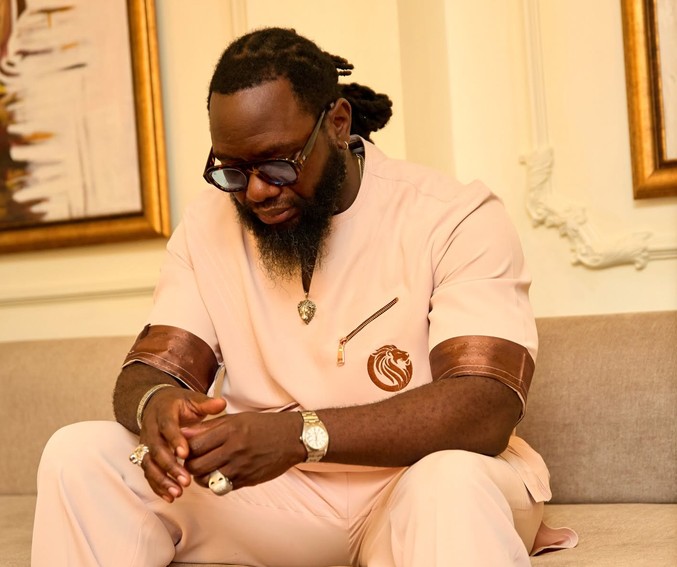
A 2021 video recording and a Lagos High Court order have placed The Fountain of Life Church at the centre of a wider question facing Nigerian Christianity: who inherits authority when a charismatic founder dies?
Who Owns the Pulpit When a Founder Dies?
A Thanksgiving service scheduled for Sunday, November 22, 2026, was abruptly postponed by a brief notice posted on X. That announcement, issued by The Fountain of Life Church in Lagos, signalled that a private struggle over authority inside one of Nigeria’s prominent Pentecostal ministries had spilt entirely into public view.
Three days earlier, members of the church’s Board of Trustees had circulated a video recorded in December 2021. In the video, the ministry’s late founder, Pastor Taiwo Odukoya, was speaking before undergoing surgery. In the recording, the founder stated his preference for the future of his congregation: “Please, the next pastor of the church should be Kunle Areogun.”
That single sentence upended three years of settled appearance. Since Taiwo Odukoya’s death in August 2023, his son, Pastor Jimmy Odukoya, had led the Lagos ministry. Suddenly, the question of who rightfully leads a congregation built over decades became a matter of competing claims, rival statements and judicial intervention.
A Recording From the Past
The circumstances surrounding the 2021 video added a striking personal dimension to the dispute. According to accounts of the recording, Jimmy Odukoya filmed the message himself at his father’s request, while his elder brother, Pastor John Odukoya, stood by as a witness.
During that session, the late founder outlined a division of duties meant to take effect after his death or incapacitation. He named Kunle Areogun, a minister with a background in chemical engineering and the oil and gas industry, to assume spiritual leadership. Jimmy Odukoya was assigned to serve as administrative assistant to the incoming leader while heading the youth ministry.
Taiwo Odukoya indicated at the time that this arrangement formed part of an ongoing review of the church’s constitution. When trustees released the footage on November 17, 2026, they used it to announce that Jimmy Odukoya had ceased to be Senior Pastor and named another minister within the congregation, Rotimi Okpaise, to oversee interim spiritual and administrative affairs.
Competing Claims of Legitimacy
Jimmy Odukoya rejected the trustees’ declaration and challenged both the validity of their meeting and the authority of the recording. He contended that his father had later instructed him to delete the pre-surgery video. He further asserted that the trustees behind the announcement had themselves been directed in March 2026 to resign over alleged violations of the church’s constitution and founding principles.
Within days, the disagreement moved beyond internal meetings and social media statements. By November 20, 2026, the Lagos State High Court had granted an interim order restraining Jimmy Odukoya from presenting himself as Senior Pastor while the substantive legal questions awaited determination. What began as an internal disagreement over a founder’s intentions had become a formal dispute over constitutional interpretation and corporate governance.
The Founder’s Shadow Across Nigerian Christianity
The events in Lagos mirror a recurring test facing Nigerian Christianity. Over the past four decades, independent Pentecostal and indigenous ministries have grown from modest prayer gatherings into vast institutions. Many operate schools, media platforms, publishing arms and extensive property portfolios alongside their weekly worship services.
In founder – led churches, authority rarely rests on administrative procedures alone. A pioneer pastor often serves simultaneously as spiritual visionary, principal fundraiser, moral symbol and legal anchor. During the founder’s lifetime, personal charisma frequently bridges any gaps left in written governance rules. When that founder passes away, however, the institution must confront a question that many ministries delay answering while their leader is alive: how does spiritual calling translate into legal succession?
Across Nigeria’s religious history, similar transitions have repeatedly tested institutional cohesion. Prolonged leadership fractures have affected large denominations such as the Assemblies of God as well as indigenous movements including the Celestial Church of Christ and Cherubim and Seraphim. Post-founder transitions at ministries such as the Synagogue Church of All Nations have likewise drawn intense public scrutiny.
Three Paths to the Mantle
Whenever a founding pulpit becomes vacant in Nigeria, three distinct arguments for legitimacy tend to collide. The first rests on family continuity. Supporters of this view often argue that a spouse or child raised within the ministry possesses an unmatched familiarity with the founder’s vision and sacrifices.
The second appeals to institutional order. Long-serving associate pastors and trustees frequently maintain that leadership should follow established constitutional rules, vetting processes and collective oversight rather than family ties. The third invokes spiritual direction. Rival camps often cite prayers, personal convictions or private verbal instructions from the departed leader to justify their claims to authority. Because a church functions both as a spiritual community and as a legal entity registered with the Corporate Affairs Commission, tension arises whenever spiritual claims diverge from documented corporate rules.
Why the Stakes Reach Beyond Sunday Worship
To outside observers, the intensity of church leadership disputes can appear puzzling. Yet control over a major Nigerian ministry carries substantial institutional weight.
The office of senior pastor or chairman of a board of trustees shapes how tithes and offerings are administered, how branch pastors are appointed and how church assets are managed. In a country where religious leaders also command considerable civic respect, a leader of a prominent pulpit holds influence that extends into public life and national conversations.
When rival factions contest that office, the fallout quickly affects daily church life. Competing announcements confuse members, scheduled gatherings face postponement, and questions of authority play out in courtrooms rather than prayer halls.
The Strain on Ordinary Worshippers
Behind the legal filings and board resolutions stand thousands of ordinary congregants whose connection to the church is deeply personal. For many Nigerian families, a local congregation is where marriages are blessed, children are dedicated, and crises are navigated through communal support.
Public leadership disputes place those members in an uncomfortable position. Worshippers accustomed to hearing sermons on unity, humility and forgiveness suddenly find themselves parsing constitutional clauses and court orders. Some withdraw quietly to avoid taking sides, while others remain divided between loyalty to familiar pastors and respect for institutional trustees. Over time, protracted disputes also risk weakening the moral voice that churches seek to exercise in wider Nigerian society.
Rethinking Succession Before Crisis Strikes
The recurring nature of these disputes has prompted growing discussion among Nigerian clerics, lawyers and governance specialists about how ministries prepare for generational change.
Observers note that relying on informal understandings or last-minute recordings leaves institutions vulnerable once a founder is no longer present to clarify intentions. Clearer governance requires aligning spiritual succession plans with updated constitutions duly filed with regulatory authorities while founders remain active.
Equally important is defining the boundary between pastoral leadership and board oversight so that trustees and senior ministers understand their respective powers before disagreement arises.
As the legal battle over The Fountain of Life Church moves toward substantive court hearings, congregations across Nigeria are watching closely. How the dispute is resolved may offer more than an answer for one Lagos ministry; it could test whether Nigeria’s modern churches can build institutional rules strong enough to outlive their founders.