
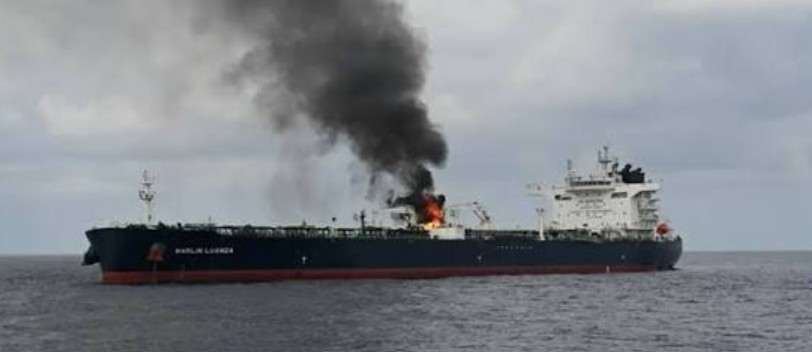
Iran’s Islamic Revolutionary Guard Corps Navy announced late on Monday that three oil tankers suffered severe explosions and caught fire after striking naval mines in the Strait of Hormuz. According to statements carried by Iranian state media, the vessels hit the explosives while transiting restricted corridors with United States military escort and air support. Tehran framed the blasts as proof that American naval protection cannot shield commercial shipping from Iranian maritime rules.
One tanker struck a mine near the southern coast of the strategic chokepoint, while the other two vessels hit explosives in the eastern section of the waterway. The IRGC Navy accused the ship captains of entering unauthorised routes and ignoring standing navigation warnings issued by Tehran. Iranian commanders stated that they plan to release video footage of the burning tankers to back up their account.
Neither the United States Central Command nor international maritime monitoring agencies immediately verified the damage or reported crew casualties. Washington had previously asserted that allied mine-clearing operations had secured the shipping lanes after weeks of regional hostilities. Monday’s blasts directly challenge that claim and underscore how cheaply deployed sea mines can disrupt heavily guarded sea lanes.
The reported strikes follow a steady escalation of maritime attrition in the Persian Gulf throughout November 2026. Over the past three weeks, Iranian naval forces have reported multiple separate incidents in which oil tankers and supertankers hit mines after switching off their tracking transponders. Iran has declared the strait closed to any vessel moving without direct coordination from Tehran, retaliating against an ongoing American naval blockade.
Roughly a fifth of the world’s seaborne crude oil passes through the narrow Strait of Hormuz, making every mine strike an immediate shock to global energy markets. War-risk insurance premiums for Gulf transit have surged as shipowners weigh the hazard of unmapped explosives against the cost of rerouting cargo. For oil-exporting nations outside the Gulf, including Nigeria, sustained disruption in the waterway tightens global supply and pushes crude prices upward.
Sea mines require minimal naval hardware to deploy yet force superpower navies into slow, perilous clearance operations. Until Washington and Tehran reach a diplomatic settlement to lift their rival blockades, commercial tankers will remain caught between American escorts and Iranian explosives. Shipping companies now face a stark choice between defying Tehran’s transit rules or halting Gulf shipments altogether.