
Daniel Otera
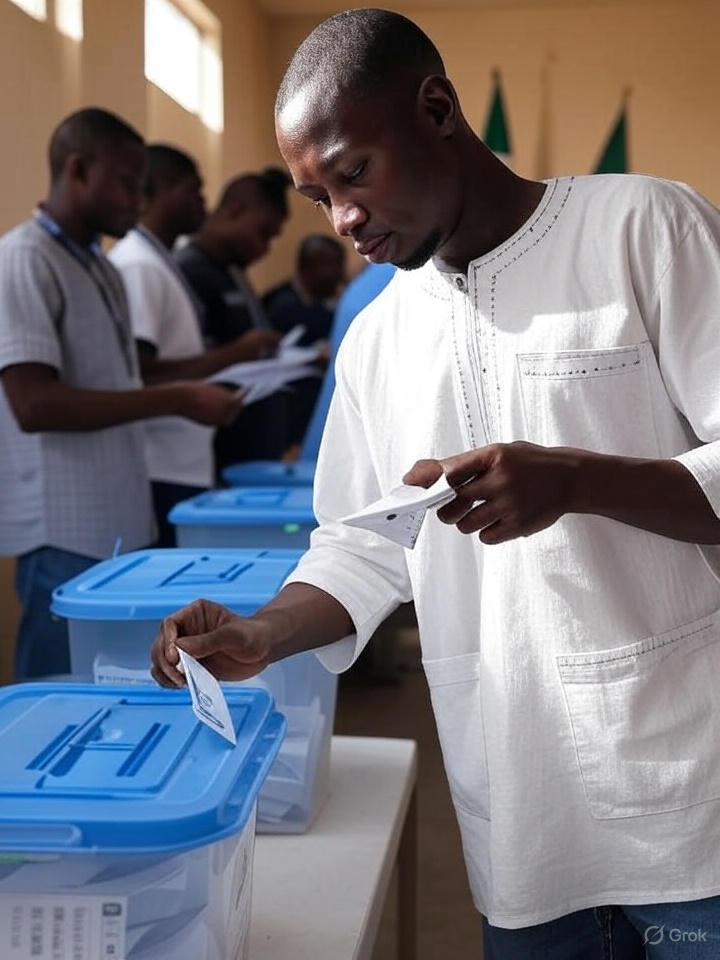
The by-elections held on 16 August 2025 across 12 Nigerian states have cast a revealing spotlight on the nation’s evolving political landscape. Organized by the Independent National Electoral Commission (INEC), the elections were held to fill 16 vacant seats in the Senate, House of Representatives, and State Houses of Assembly. These polls provide critical insights into voter behavior, party dominance, and the integrity of Nigeria’s electoral process.
The All Progressives Congress (APC) emerged as the dominant force in the 2025 by-elections, securing 12 out of the 16 contested constituencies. According to INEC, the APC clinched victories in two senatorial districts, five federal constituencies, and five state assembly seats across states including Edo, Kaduna, Jigawa, and Niger.
This performance underscores the party’s organizational prowess under its new national chairman, Prof. Nentawe Goshwe Yilwatda. Political analyst Dr. Chidi Amadi remarked, “The APC’s success reflects a well-coordinated campaign strategy and strong grassroots mobilization” (Vanguard Nigeria, 2025).
In Edo State, the APC swept both the Ovia Federal Constituency and the Edo Central Senatorial District. Omosede Igbinedion secured the Ovia seat with 77,053 votes, outpacing the Peoples Democratic Party (PDP) candidate Johnny Aikpitanyi, who garnered only 3,838 votes. Similarly, Joseph Ikpea triumphed in the senatorial district with 105,129 votes, defeating the PDP’s 15,146 votes. In Jigawa, Muktar Rabi’u of the APC won the Garki-Babura Federal Constituency with 38,449 votes, defeating the PDP’s Isa Auwalu, who garnered 13,519 votes, and the New Nigeria Peoples Party (NNPP) candidate Sabo Salisu, who polled 2,931 votes. In Kaduna, Felix Bagudu of the APC claimed the Chikun/Kajuru Federal Constituency with 34,580 votes, beating the PDP’s 11,491 votes.
The APC’s dominance was further evident in Niger, where Dogari Daje won the Munya Constituency with 12,556 votes against the PDP’s 5,646. In Taraba, Abner Shittu secured the Karim 1 State Constituency with 5,901 votes, narrowly defeating the PDP’s Ali Kanda, who polled 5,527 votes. These results, as reported by Abuja Reporters on 17 August 2025, highlight the APC’s ability to consolidate power in both northern and southern strongholds.
The Peoples Democratic Party (PDP) managed only one victory in the by-elections, with Fola Oyekunle winning the Ibadan North Federal Constituency in Oyo State with 18,404 votes against the APC’s Adewale Olatunji, who secured 8,312 votes. This solitary win underscores the PDP’s diminishing influence. Political commentator Aisha Bello observed, “The PDP’s poor showing raises serious questions about its ability to regroup and challenge the APC in 2027” (Tribune Online, 2025). The party’s loss in key battlegrounds like Edo and Kaduna, where it historically held sway, signals the urgent need for strategic recalibration.
The All Progressives Grand Alliance (APGA) and the New Nigeria Peoples Party (NNPP) recorded modest gains in the elections. APGA secured two seats in Anambra, including the Anambra South Senatorial District, previously held by the late Ifeanyi Ubah, and a state assembly seat. The NNPP retained a House of Representatives seat in Kano, reinforcing its growing influence in the North-West.
According to Abuja Reporters, these victories highlight the regional strength of both parties, with APGA solidifying its base in Anambra and NNPP maintaining relevance in Kano. However, the Labour Party (LP) and African Democratic Congress (ADC) failed to secure any seats, which is a disappointing outcome for parties that showed promise in the 2023 general elections.
Despite INEC’s deployment of the Bimodal Voter Accreditation System (BVAS) and the INEC Result Viewing Portal (IReV) to enhance transparency, the by-elections were marred by allegations of electoral malpractices. In Ogun State, two INEC officials were arrested with N2.5 million, suspected of facilitating vote-buying, according to the Ogun Police Command. In Kaduna, security operatives intercepted N25.9 million allegedly intended for vote-buying, with Shehu Aliyu Patangi, a suspected PDP agent, arrested on election day. Dr. Samson Itodo of Yiaga Africa, in a report published on 1 January 2025, said, “The interception of such large sums of money points to a persistent culture of vote-buying that undermines the democratic process.”
Violence also disrupted the polls in several areas. In Edo, a PDP agent at Ozolua Model Primary School was reportedly beaten by voters over disputes involving Permanent Voter Cards. In Anambra, Governor Chukwuma Soludo reported that thugs assaulted his commissioner during the senatorial by-election, describing the incident as a sign of “desperation” by political actors. Abuja Reporters noted that in Kano, the APC alleged that thugs disrupted voting in certain polling units, prompting calls for result cancellations.
These incidents, as observed by Yiaga Africa, reflect a “brazen utilization of election manipulation tactics” that threaten electoral integrity.
INEC’s logistical performance during the elections was a mixed bag. While most polling units recorded the early arrival of election materials, issues persisted in some areas. In Edo, Governor Monday Okpebholo expressed concerns about the slow performance of BVAS at his polling unit, a sentiment echoed in Legit.ng’s live updates. Yiaga Africa’s January 2025 report highlighted discrepancies between hardcopy result sheets and those uploaded on IReV, suggesting attempts by political actors to manipulate the system.
“The BVAS and IReV were introduced to safeguard electoral integrity, but their manipulation in 2025 shows that technology alone cannot eliminate fraud,” said Dr. Itodo.
Data on voter turnout remains limited, but preliminary reports suggest low participation in several constituencies. According to Dataphyte Elections, by-elections typically see lower turnout compared to general elections due to their off-cycle nature. In Ibadan North, Oyo State, only 17 votes were cast at Unit 27, Ward 10, where the APC candidate lost to the PDP.
This low turnout, as noted by Situation Room Nigeria, reflects voter apathy, possibly driven by distrust in the electoral process. Cynthia Mbamalu, a programme director at Yiaga Africa, remarked, “Low turnout in by-elections is a warning sign that citizens are losing faith in the system.”
The 2025 by-elections offer a preview of the political dynamics likely to shape Nigeria’s 2027 general elections. The APC’s dominance signals its organizational strength and ability to mobilize resources, but it also raises concerns about the concentration of power. The PDP’s struggles highlight the need for internal reforms to regain relevance, while APGA and NNPP’s regional gains suggest that smaller parties could play pivotal roles in future coalitions.
“These by-elections are a litmus test for 2027. The APC’s sweep shows it’s in pole position, but the opposition must regroup to ensure a competitive race,” said Dr. Amadi.
The persistence of vote-buying, violence, and technological manipulation underscores the urgency of electoral reforms. Yiaga Africa’s report calls for stronger enforcement against electoral offenses and greater independence for INEC and State Independent Electoral Commissions (SIECs). “Without addressing these issues, the legitimacy of electoral outcomes will continue to be questioned,” Dr. Itodo warned.
The August 2025 by-elections in Nigeria reveal a complex interplay of political dominance, electoral challenges, and regional dynamics. The APC’s sweeping victories affirm its status as the country’s leading political force, but the PDP’s lone win and the gains of APGA and NNPP show that regional strongholds remain contested. However, persistent issues like vote-buying, violence, and logistical hiccups highlight the fragility of Nigeria’s electoral process.
These elections also serve as a valuable lesson in the importance of electoral reforms to secure the legitimacy of future elections, especially as Nigeria prepares for its 2027 general elections.