

Cardoso Signals Shift to Economic Growth
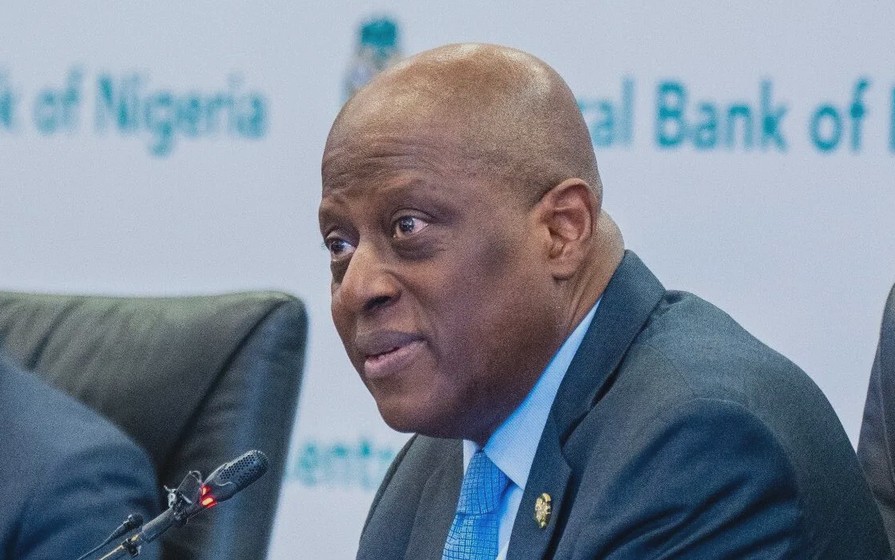
The Governor of the Central Bank of Nigeria (CBN), Olayemi Cardoso, has announced that Nigeria’s economy has successfully transitioned from a period of stabilisation to one of capital mobilisation. Speaking on Wednesday at the Africa Capital Forum in London, held on the sidelines of President Bola Tinubu’s state visit to the United Kingdom, Mr. Cardoso revealed that global investors have contributed approximately 28% of the total inflows into the country’s ongoing banking recapitalisation programme.
The Governor’s address highlighted a significant shift in Nigeria’s macroeconomic landscape over the past two years. Under the current leadership, inflation has reportedly fallen from 34% to 15%, while foreign reserves have climbed above $50 billion. Mr. Cardoso noted that these “measurable stability gains” have been underpinned by a new foreign exchange manual that eliminated capital controls and simplified trade processes, leading to a more transparent and liquid market.
The banking sector’s resilience emerged as a central theme of the forum. Mr. Cardoso reported that more than 30 banks have already met the new capital requirements, with the remaining institutions currently undergoing verification. The 28% foreign participation in this exercise was cited as a “resounding vote of confidence” in the Nigerian financial system. To further future-proof the industry, the CBN is set to launch a new “Payments System Vision” aimed at establishing Nigeria as a regional hub for digital and cross-border transactions.
British and European partners echoed this optimism. Jonny Baxter, the British Deputy High Commissioner to Nigeria, stated that the next phase of the relationship must focus on converting this renewed interest into “long-term sustainable investments.” Madame Odile Renaud-Basso, President of the European Bank for Reconstruction and Development (EBRD), also lauded Nigeria’s ability to embrace new technologies, noting the immense potential of its growing population and digital fintech ecosystem.
Despite the celebratory tone, the CBN leadership remains “cautious.” Deputy Governor Muhammad Sani Abdullahi emphasized that while net and gross reserves are high and exchange rate volatility has eased, the apex bank will remain vigilant to ensure inflation stays on its downward trajectory. The Governor added that the bank is currently reviewing its policies to establish a “predictable framework” that minimises individual discretion and guards against the policy missteps of the past.
The forum concluded with a unified show of support from the CEOs of Nigeria’s “Tier-1” banks, including Access Bank, Zenith Bank, and UBA. The executives acknowledged that the reforms have increased their capacity to fund large-scale local projects and attract “sticky” equity capital from abroad. For the global financial community, the message from London was clear: Nigeria’s banking system is being rebuilt to become one of the strongest in Africa, shifting from a state of repair to one of expansion.