


China Breaks Automobile Records: Produces 34.5 Million Vehicles in 2025
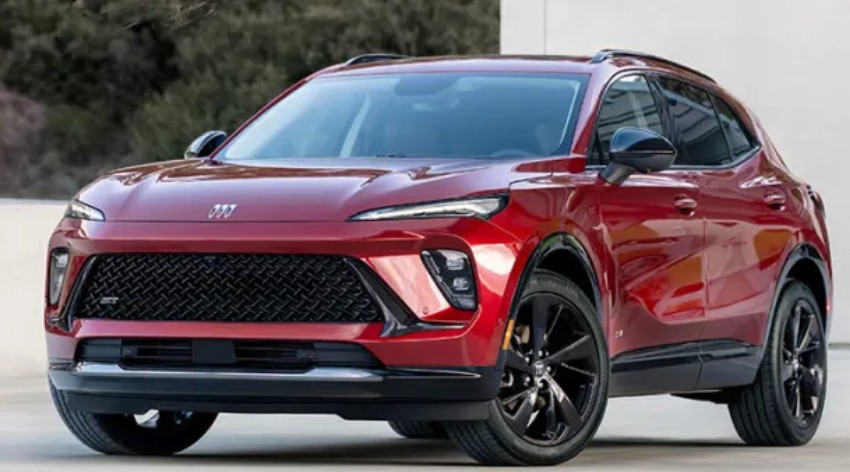
China has cemented its status as the world’s automotive factory, producing a record 34.5 million vehicles in 2025. This marks the 17th consecutive year the country has led global production, with sales following closely at 34.4 million units. Data from the China Association of Automobile Manufacturers (CAAM) shows a 10.4% jump in production and a 9.4% rise in sales. These historic highs reinforce China’s position as the primary engine of the global motor industry. The surge is no longer a domestic phenomenon; it is a structural shift in how the world buys cars.
New Energy Vehicles (NEVs) are the specific catalyst for this growth. For the first time, electric and hybrid units accounted for more than half of all domestic car sales, with production exceeding 16 million units. The export market also reached a fresh peak of 7 million vehicles. Within that figure, NEV exports more than doubled over the previous year to 2.6 million units. China is effectively exporting its green energy transition to the rest of the world.
The global leaderboard is feeling the pressure. While Toyota, Volkswagen, and Hyundai still hold the top three spots, Chinese brands are climbing the ranks. BYD has ascended to sixth place globally, selling 4.6 million vehicles. Crucially, BYD has overtaken Tesla as the world’s top seller of pure electric vehicles. Other Chinese giants like SAIC and Geely also improved their standings, while traditional stalwarts like Nissan have dropped out of the top ten entirely.
State policy remains the invisible hand behind this rapid expansion. Government-backed trade-in programmes generated approximately $380 billion in sales in 2025 alone. These incentives reached 360 million consumers and facilitated the trade-in of 11.5 million older vehicles. By heavily subsidising the switch to electric, Beijing has ensured that nearly 60% of all new trade-ins are NEVs. This internal demand provides the scale necessary for Chinese firms to lower costs and dominate international markets.
Western executives are taking note of the shifting tide. Tesla CEO Elon Musk recently described Chinese car companies as the most competitive in the world. Similarly, Volkswagen Group CEO Oliver Blume highlighted China as a hub of innovation for battery technology and artificial intelligence. China’s global market share has now climbed to 35.6%. This growth is not merely cyclical; it represents a permanent change in the industry’s centre of gravity.
The “overseas” push is accelerating at a dizzying pace. BYD’s international sales jumped by 145% last year, while Geely surpassed the 4-million-unit mark for the first time. As Chinese brands like SAIC and Geely overtake legacy names like Ford and Honda, the traditional automotive hierarchy is being dismantled. The industry is moving from a Western-centric model to one where software, speed, and battery efficiency, all Chinese strengths, dictate the winners.