

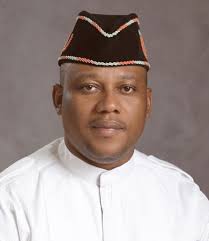
Court Rejects Kanu’s Request to Move from Sokoto Prison

The Federal High Court in Abuja on Monday turned down Nnamdi Kanu’s urgent plea to be moved from the Sokoto Correctional Centre to a facility closer to the capital. The ruling comes just weeks after the Indigenous People of Biafra (IPOB) leader received a life sentence on terrorism charges, rekindling debate over security, fairness, and prisoner placement in Nigeria.
Presiding judge, Justice James Omotosho, stated that the ex parte motion—filed without notifying the Federal Government—could not stand. “A law school student will know that this application cannot be granted ex parte,” the judge remarked during the ruling.
Kanu had argued that the more than 700-kilometre distance between Sokoto and Abuja makes it difficult for him to properly pursue his appeal. His team asked that he be moved to a facility in Suleja, Niger State, or Keffi in Nasarawa State, both much closer to where the case is being heard.
Counsel from the Legal Aid Council, Demdoo Asan, representing Kanu, conceded that the Federal Government and Correctional Service must be heard before any transfer could be considered. “My Lord, the respondents have the right to be heard,” he noted.
Justice Omotosho struck out the main prayer in the motion and ordered that all papers be served on the respondents. The case will be fully examined on January 27, 2026.
This development is the latest in a decade-long legal and political battle between Kanu and the Nigerian state over Biafra self-determination.
Born in 1967 in Abia State during the Nigerian Civil War, Kanu grew up hearing the stories and pain of the conflict that left deep wounds among Igbo communities. After studying at the University of Nigeria, Nsukka, he moved to the United Kingdom where he acquired British citizenship and built his activism.
From London, he launched Radio Biafra in 2009, a pirate station broadcasting pro-Biafra messages across southeast Nigeria. In 2012, he founded IPOB, a movement that claimed to pursue restoration of Biafra through peaceful means such as referendums, though critics link it to unrest across the region. The movement gained a massive following, driven by sentiments of marginalization and economic frustration, but quickly collided with federal authority.
Kanu was arrested in October 2015 by the Department of State Services in Lagos on treason-related charges tied to his broadcasts. His detention sparked protests in the southeast that led to violent clashes and loss of lives. He was granted bail in 2017, but a military operation at his residence later that year Operation Python Dance prompted his disappearance, and his bail was revoked. IPOB was subsequently declared a terrorist organization in September 2017.
Kanu reappeared in 2021 in Nigerian custody after the government announced he had been seized in Kenya and returned to Nigeria, a move his supporters describe as unlawful rendition. His charges were expanded to seven counts of terrorism, including incitement to violence and running an unauthorized radio station.
Legal battles intensified, with the Supreme Court in 2023 briefly dismissing then reinstating the charges. During the process, Kanu dismissed his legal team, attempted self-representation, and boycotted some sessions—steps that accelerated proceedings.
On November 20, 2025, Justice Omotosho convicted Kanu on all counts, ruling that his broadcasts encouraged attacks on security personnel and civilians. Prosecutors sought the death penalty, but the judge imposed life imprisonment instead, stating that capital punishment is increasingly rejected globally.
Immediately after sentencing, Kanu was sent to Sokoto Prison, following concerns from the court about frequent jailbreaks at Abuja’s Kuje facility. His family and supporters condemned the verdict, vowing an appeal. An early appeal notice filed by his team, however, was invalid because it preceded the judgment. On December 4, the court dismissed an attempt by Kanu’s brother, Prince Emmanuel, to speak for him, insisting only licensed lawyers could represent him. That paved the way for Asan of the Legal Aid Council to officially take over.
The push to relocate Kanu highlights the broader struggle to manage high-profile inmates in a strained correctional system. While Sokoto is viewed as more secure, its remoteness raises questions about fair access to legal counsel, especially in an active appeal process. Kanu’s motion spelled it out bluntly: the long distance “renders his constitutional right to appeal impracticable, occasioning exceptional hardship.”
For now, the legal fight shifts to January 27, when both sides will argue the transfer motion on full notice.