
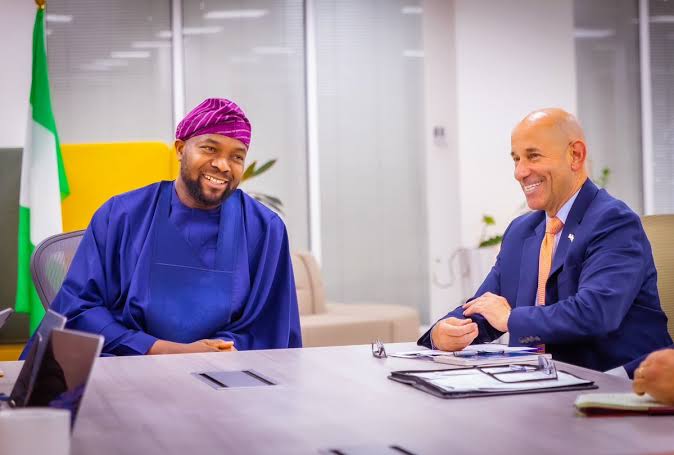
The United States has said Nigeria has not done enough to halt attacks on Christian communities and that the country’s classification as a Country of Particular Concern should remain in place, keeping one of the most sensitive questions in relations between the two nations unresolved. The assessment came from the Assistant Secretary of State for African Affairs, Frank Garcia, at a congressional hearing in Washington on Thursday that reviewed Nigeria’s record one year after the designation was reimposed.
Garcia told lawmakers that Nigeria was not dismissing American concerns and was taking steps to respond, but that those steps had yet to produce any real impact. He described the country’s security effort as still building capacity, adding that the capacity was not yet deployed, not effective and not moving fast enough, even while he acknowledged signs of seriousness on the part of the government.
The questioning was led by Congressman Riley Moore, who pressed for details of what had been done to dismantle militia strongholds and kidnapping camps in the Middle Belt, particularly in Benue and Plateau, since American officials first flagged the slow pace of Nigeria’s response in August. He noted that two of the worst affected states had been left out of a new forest guard scheme covering ten states, and that 1,000 guards approved for Plateau were still to be deployed. Moore argued that the designation should stay, saying the country had not done enough.
The label carries real weight. Washington reserves the Country of Particular Concern tag for governments it accuses of severe violations of religious freedom, and it can open the way to sanctions and aid restrictions under American law. President Donald Trump reimposed it on Nigeria on 31 October 2025, putting the country on the same watch list as China and North Korea. Nigeria had briefly held the same status after a 2020 designation during Trump’s first term, before it was lifted in 2021.
What followed hardened the dispute. Within days of the 2025 designation, Trump ordered the Pentagon to prepare for possible action, threatened to cut off American aid and said any intervention would be fast and decisive. In early November 2026 he announced that United States forces had carried out air strikes against suspected terrorist targets in northern Nigeria, while Abuja has maintained that it welcomes support against terrorism only so long as its territorial integrity is respected.
The scale of the bloodshed is not seriously contested, even where its character is. The Observatory for Religious Freedom in Africa, tracking attacks between October 2019 and September 2025, documented roughly 55,000 deaths and more than 20,000 abductions, and found that for every Muslim killed about six to seven Christians died. A separate tally by the International Society for Civil Liberties and the Rule of Law put the number of Christians killed in the first seven months of 2025 above 7,000, with thousands more abducted. Benue State accounted for a heavy share, including a June massacre at Yelwata in which about 200 people were killed.
Reports from monitoring groups, among them the Open Doors watch list, have repeatedly named Nigeria as the deadliest place in the world to be a Christian. The Nigerian government disputes the framing rather than the deaths. It has consistently rejected the idea of a Christian genocide or a coordinated campaign of religious persecution, insisting the violence cuts across faiths and is driven by terrorism, banditry and long running clashes between farmers and herders over land and water. Officials also point out that many Muslims, especially in the north east, have been killed.
Garcia set out what the two governments have been doing together. He pointed to a joint working group, which first met in Abuja in January and again in Washington in August, as the main channel for holding Nigeria to its commitments. He said the United States had provided training and equipment to police units protecting vulnerable communities, widened the sharing of biometric information to help identify attackers, and worked with Nigerian banks to cut off the financing of groups behind church attacks.
The two sides remain some way apart. Washington says it will keep using diplomacy, the designation and security cooperation to push for results, while admitting that Nigeria’s forces are overstretched and that parts of the Middle Belt lie beyond the reach of the courts. Abuja insists it is making progress and wants the label dropped. Whether the next few months bring measurable change on the ground, rather than another round of pressure, will decide how far the relationship is tested.