


Dangote Refinery Buffers Nigeria Against Global Oil Shock
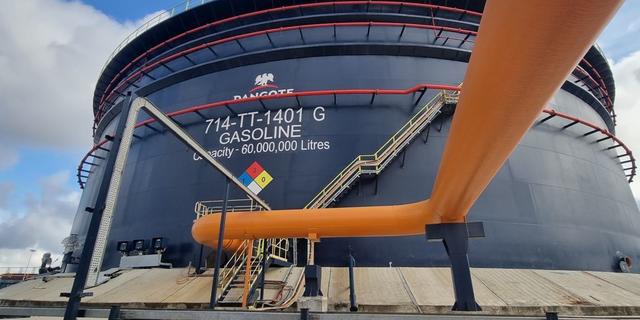
The Dangote Petroleum Refinery has pledged to prioritise the Nigerian market as a surge in Middle Eastern hostilities sends global energy prices into a tailspin. In a statement released this week, the firm confirmed it is absorbing a portion of rising costs to shield domestic consumers from the full impact of the crisis. While benchmark Brent crude has jumped 26% to over $84 per barrel, the refinery implemented a modest 12% adjustment to its ex-depot price. This ₦100 per litre increase is significantly lower than the total cost escalation the company now faces.
The refinery is currently grappling with a “double squeeze” of rising feedstock prices and logistics hurdles. Nigerian crude is trading at a premium of $3 to $6 above the Brent benchmark, while freight costs have added another $3.50 per barrel. Consequently, the landing price of crude in the refinery’s tanks has climbed to nearly $91 per barrel, up from $68 just weeks ago. By keeping the price hike to ₦100, the company claims it is subsidising approximately 20% of the actual cost increase.
Supply remains a logistical headache for the Lekki-based facility. The refinery requires 13 crude cargoes monthly to meet production needs, but currently receives only five from the NNPC under the Naira-for-crude arrangement. To fill the gap, Dangote must source the remaining eight cargoes from international traders at open market rates. The firm alleged that upstream producers in Nigeria are still failing to meet the domestic crude supply obligations mandated by the Petroleum Industry Act, forcing a reliance on expensive foreign exchange.
Read Also: Petrol Prices Near N1,000 as NNPC Adjusts Pump Price
The global context for this domestic pressure is increasingly bleak. Beyond the war-induced volatility, China has halted its exports of gasoline and diesel, tightening an already strangled global market. Dangote argued that selling products below cost would be suicidal, as it would exhaust the capital needed to buy future crude cargoes. However, the refinery maintains that large-scale domestic production is the only thing preventing a repeat of the “dark days” of total product scarcity and dry pumps.
To combat rising distribution costs, the company is pivoting to alternative fuels for its own fleet. It will begin rolling out a massive deployment of Compressed Natural Gas (CNG)-powered trucks this month to move fuel across the country. By reducing its dependence on diesel for logistics, the refinery hopes to further moderate the final price at the pump. This move aligns with a broader federal push to integrate gas as a cheaper, more stable energy source for the Nigerian transport sector.
The refinery’s position remains a critical firewall between the Nigerian economy and the chaos of the Persian Gulf. If the facility can maintain its current production levels despite the lack of local crude cooperation, it may prove the “bankability” of Nigerian industrialisation. For the average motorist, the price adjustment is a bitter pill, but the refinery insists the alternative, total dependence on imported fuel in a time of war, would be far more expensive.