
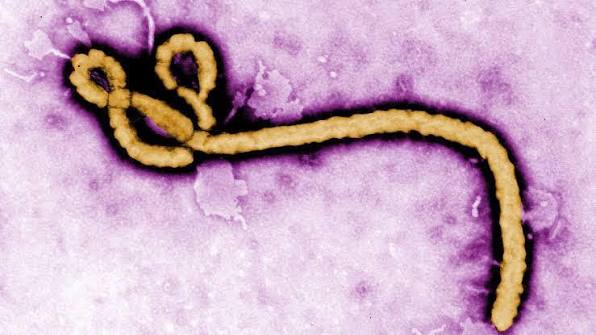
The year 2014 remains etched in the memory of many Nigerians. It was a time when handshakes gave way to elbow bumps, bush meat disappeared from tables, and temperature checks at school gates became a daily ritual. When Ebola landed in Lagos that July, an entire nation held its breath. That story ended well for Nigeria. But Ebola never really left Africa. It simply moved to places beyond the immediate headlines.
Now, in 2026, the disease is back in the news, this time from the Democratic Republic of Congo and Uganda. Nigerian health authorities have been working behind the scenes for weeks. Before panic sets in or WhatsApp forwards begin doing the explaining, here is a breakdown of what is happening, how bad it actually is, how it differs from 2014, and what Nigeria is doing about it.
In mid-May 2026, doctors in Ituri Province, in the northeastern part of the Democratic Republic of Congo, started noticing something alarming: healthcare workers were falling seriously ill and dying at unusual rates. Lab tests in Kinshasa confirmed the culprit on May 15: a form of Ebola called the Bundibugyo virus. Uganda’s Ministry of Health declared its own outbreak the same day, after a case linked to travel from DRC turned up in the capital, Kampala.
This is Congo’s 17th recorded Ebola outbreak since the virus was first identified there in 1976, proof of how often this disease resurfaces in Central Africa. Two days later, on May 17, the World Health Organisation declared the outbreak a public health emergency of international concern, its highest level of global alarm, reserved for situations that could affect multiple countries and need a coordinated international response.
By mid-July, the numbers had grown grim. As of July 15, DRC had recorded 2,124 confirmed cases and 828 deaths, with a case fatality ratio of 39 per cent. Ituri Province remains the hardest hit, accounting for 89.6 per cent of all confirmed cases and 83.6 per cent of all reported deaths nationwide. Uganda’s outbreak has stayed smaller, with 20 confirmed cases and two deaths, and no new cases have been reported since June 21. On July 28, Uganda’s Ministry of Health declared the end of the outbreak. Cases linked to the outbreak have also turned up outside Africa entirely. An American aid worker was flown to Germany for treatment, and France reported an imported case as well, both people who had been in DRC.
Both are thrown around a lot in Ebola coverage, and they are easy to mix up, but they are not the same body.
CDC stands for the Centers for Disease Control and Prevention, America’s public health agency. It tracks disease threats globally, issues travel advisories and works to stop outbreaks from reaching American shores. Since May, the CDC has been screening travellers arriving in the US from DRC, Uganda, and neighbouring South Sudan, and it has restricted entry for certain travellers coming from the outbreak zones.
NCDC stands for the Nigeria Centre for Disease Control and Prevention, the national agency responsible for protecting Nigerians from disease outbreaks, whether that is Lassa fever, cholera, mpox, or now, Ebola. Think of NCDC as Nigeria’s frontline defence system. It coordinates surveillance, trains rapid response teams, manages laboratories, and works with state governments to prepare for and respond to outbreaks before they spiral out of control.
Both organisations exist for the same basic reason: to stop diseases before they become disasters. They just serve different countries.
This is the part that actually matters most for public understanding, so let us slow down here.
The 2014 outbreak that reached Nigeria was caused by a different strain entirely: the Zaire Ebola virus, the same one behind the massive West African epidemic that devastated Liberia, Sierra Leone, and Guinea. That strain now has a licensed vaccine, Ervebo, and approved treatments that can meaningfully improve survival odds when given early.
The current outbreak is caused by the Bundibugyo virus, a distinct species of Ebola, which was first identified in Uganda in 2007. There is currently no licensed vaccine or approved treatment specifically for Bundibugyo virus disease. Scientists have tested whether the existing Zaire vaccine offers any cross-protection, and the evidence so far is not strong enough for the WHO to recommend using it in this outbreak. That means containment now depends almost entirely on the basics: early detection, isolation, contact tracing, and supportive medical care, rather than a vaccine shield.
The other major difference is speed. This outbreak surpassed 1,000 confirmed cases in roughly 40 days after the response was activated. Compare that to the 2018 Ebola outbreak in North Kivu, DRC, which took about 235 days to reach the same number. Health officials attribute the faster spread partly to the ongoing armed conflict in eastern DRC, which makes contact tracing dangerous, disrupts healthcare access, and has already led to attacks on health workers and shortages of protective equipment. Population displacement, active mining sites drawing workers in and out of affected areas, and cross-border movement into Uganda, South Sudan and Rwanda add further complications that were not as severe in 2014.
To put the danger of Bundibugyo virus in perspective: previous outbreaks of this strain, in 2007 and 2012, had case fatality rates ranging from 30 to 50 per cent, meaning it kills a higher share of the people it infects than some other Ebola strains. In the current outbreak, the case fatality ratio has risen from about 20 per cent in early June to 46 per cent, according to government data, meaning nearly one in every two confirmed cases is now fatal. Experts say the trend does not indicate the virus has become more lethal. Instead, it points to persistent shortcomings in surveillance, case detection and access to care.
Nigeria’s 2014 story is genuinely one of the country’s proudest public health moments, and it is worth remembering exactly how it happened. On July 20, 2014, a Liberian American traveller named Patrick Sawyer collapsed at Lagos airport, exposing dozens of people before anyone knew what they were dealing with. What followed was one of the fastest, most disciplined outbreak responses on record. The Federal Ministry of Health declared an emergency within hours, an emergency operations centre was activated using infrastructure originally built for polio eradication, nearly 900 contacts were traced, and close to 19,000 home visits were carried out. Just 42 days later, on October 20, the WHO declared Nigeria Ebola-free. Nigeria recorded 20 cases and eight deaths.
That playbook speed, coordination, and disciplined contact tracing is exactly what NCDC is now leaning on again.
The good news first: as of August 2026, Nigeria has recorded zero confirmed Ebola cases linked to this outbreak. But if there is anything 2014 taught the NCDC, it is that you do not wait for a case to show up at your airport before you start moving. So the agency, led by Dr Jide Idris, has been building a wall of preparedness for weeks now.
In June, President Bola Tinubu approved the establishment of a Presidential Task Force on Ebola Virus Disease Preparedness and Emerging Public Health Threats and ordered the immediate release of N10 billion as emergency intervention funding. The fund is to strengthen the operational preparedness of the NCDC and support critical national public health emergency response activities.
Picture the preparedness effort in layers, like a set of checkpoints stacked on top of each other, each one designed to catch what the last one might have missed.
The first layer is at the airport, before anyone even sets foot on Nigerian soil. Travellers arriving from DRC, Uganda, and other affected areas now have to complete health declaration forms before boarding, and Lagos and Abuja airports have stepped up screening for anyone showing symptoms. The Presidential Task Force has also mandated the activation of QR code-based pre-arrival health declaration systems for passengers originating from or transiting through designated high-risk countries.
The second layer is geography. NCDC ran a full risk assessment and came back with an uncomfortable but honest conclusion: Nigeria’s chances of importing this disease are high, mostly because of how much international travel, trade, and cross-border movement passes through the country. Based on that, states have been sorted into risk tiers, with Lagos, the FCT, Rivers, Kano, Enugu, Borno, Akwa Ibom, Cross River, Taraba, and Adamawa sitting at the top of the list because of their airports, seaports, and busy land borders.
The third layer is what happens if a suspected case actually appears. Readiness assessments have been completed in 549 health facilities across 32 states and the Federal Capital Territory. Seventeen designated treatment centres have also been assessed to evaluate screening capacity, isolation readiness, infection prevention and control systems, healthcare worker protection, and treatment preparedness. Lagos’s biosafety level 3 laboratory, a facility purpose-built to safely test for dangerous pathogens like Ebola, is operational, backed up by similar capacity in Abuja, Osun, and Kano.
And then there is the layer that has nothing to do with laboratories or checkpoints at all: trust. Dr Idris has been just as vocal about calm communication as he has about logistics, and there is a reason for that. In 2014, misinformation convinced people that drinking salt water could protect them from Ebola, and some Nigerians died trying. So the advisory now is almost stubbornly simple: wash your hands, do not sit on a strange fever hoping it passes, and get to a real hospital instead of turning to rumours or home remedies. It sounds too basic to matter. It is exactly what worked the last time.
Not panicked, but alert and informed. Ebola spreads through direct contact with the bodily fluids of an infected person. It is not airborne, and casual contact like sharing a bus seat or a market stall does not put you at risk. Nigeria has already proven, in 2014, that fast and disciplined action works. The difference this time is that there is no vaccine safety net for this particular strain, which makes early detection and honest, calm public communication even more important than before.
The best thing any of us can do right now is simple: wash your hands regularly, do not ignore a sudden unexplained fever, go to a proper health facility rather than treating yourself at home, and resist the urge to spread unverified stories before the facts are confirmed. That quiet discipline, more than anything dramatic, is what kept Lagos safe the last time. It can do it again.