
Federal High Court Strikes Out Meta, X Corp From Sowore’s Cyberstalking Trial
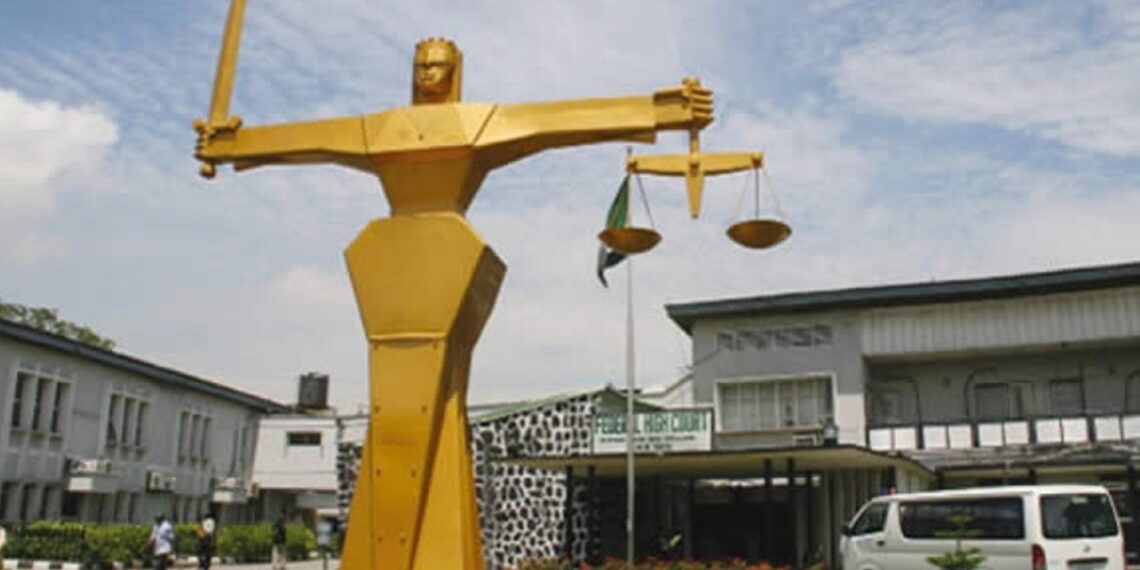
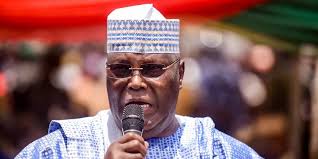
An Abuja Federal High Court has struck out Meta Platforms Inc. and X Corporation from the cyberstalking case filed by the Federal Government against activist and former presidential candidate Omoyele Sowore.
The development followed the prosecution’s decision to amend the charge filed against the defendants, effectively leaving Sowore as the sole accused person in the matter.
Justice Umar of the Federal High Court sitting in Abuja delivered the ruling on Monday after the prosecution formally applied to withdraw the names of the second and third defendants from the charge marked FHC/ABJ/CR/484/2025.
Read Also: Nigerians Who Support and Incite Violence (Part 7) – Rev. Matthew Kukah and Omoyele Sowore
Sowore was initially arraigned on December 2nd, 2025, alongside Meta Platforms Inc., the parent company of Facebook and Instagram, and X Corporation, the entity operating the social media platform formerly known as Twitter. The inclusion of the tech giants in the original charge had raised questions within legal and civil society circles about the scope of liability for content published on social media platforms.
The prosecution had alleged that Sowore used his verified social media accounts to publish statements deemed false and defamatory against President Bola Tinubu, specifically referring to the president as a “criminal.” The charges stem from provisions of the Cybercrimes (Prohibition, Prevention, Etc.) (Amendment) Act, 2024, which criminalises the transmission of messages considered false and capable of inciting public disorder.
At the resumed hearing before Justice Umar, lead prosecution counsel Akinlolu Kehinde, SAN, informed the court that an amended charge had been filed on December 5th, 2025, and was ready to be presented. He stated that the defence had no objection to the amendment.
The prosecution subsequently withdrew the earlier charge and formally moved that the names of Meta Platforms Inc. and X Corporation be struck out from the case. Justice Umar granted the application without opposition, thereby removing both technology companies from the proceedings.
The amended charge now alleges that Sowore, on or about August 25th, 2025, knowingly or intentionally transmitted a message via his verified X handle, @YeleSowore, which the prosecution claims was false and capable of causing a breakdown of law and order.
Read Also: Nollywood Actress Doris Ogala Released After Arrest Over Posts About Lagos Pastor.
According to the particulars of the charge, Sowore is accused of posting the following statement: “This criminal @officialABAT actually went to Brazil to state that there is NO MORE corruption under his regime in Nigeria. What audacity to lie shamelessly!”
The prosecution contends that the post constitutes cyberstalking, contrary to Sections 24(1)(b) and 24(2)(a), (b) and (c) of the Cybercrimes (Prohibition, Prevention, Etc.) (Amendment) Act, 2024. The provisions under which Sowore is being prosecuted relate to the use of electronic communication to transmit false information with intent to cause annoyance, insult, or intimidation.
When the amended charge was read in open court, Sowore entered a plea of not guilty.
The prosecution, led by Kehinde, applied to proceed immediately with the trial and sought leave to present its first witness. However, the application was vigorously opposed by defence counsel Marshal Abubakar, who argued that the prosecution was not ready for trial and that the amended charge was fundamentally defective.
Abubakar contended that the charge failed to disclose the identity of any prosecution witness or attach witness statements, a requirement he argued was essential to ensure compliance with constitutional guarantees of fair hearing.
Relying on Section 36 of the 1999 Constitution, which enshrines the right to a fair trial, Abubakar submitted that the omission violated Sowore’s constitutional rights and prevented the defence from adequately preparing for cross-examination.
“The witness sought to be called is unknown to the defence and, indeed, unknown to the court,” Abubakar told the court, insisting that the prosecution’s failure to provide witness statements in advance undermined the defendant’s ability to mount a proper defence.
In response, Kehinde dismissed the objection as speculative and lacking in legal merit. He argued that Section 36(6) of the Constitution does not mandate the prosecution to disclose the identity of a witness before calling him or her to testify in court.
Kehinde further submitted that the defence was at liberty to seek an adjournment if additional time was needed to prepare for cross-examination, noting that the prosecution intended to call only one witness, who was already present in court and ready to testify.
After hearing arguments from both sides, Justice Umar directed the prosecution to provide the defence with the witness statement and adjourned the matter to Thursday, January 22nd, 2026, for definite hearing.
The case against Sowore is the latest in a series of legal actions involving the outspoken activist, who has been a persistent critic of successive Nigerian administrations. Sowore, a former presidential candidate under the platform of the African Action Congress (AAC) in the 2019 general elections, has faced multiple arrests and prosecutions over the years, often in connection with his activism and use of social media to criticise government policies and officials.
In 2019, Sowore was arrested by the Department of State Services (DSS) and charged with treasonable felony and money laundering following his call for a nationwide protest tagged #RevolutionNow. He was detained for several months despite court orders granting him bail, a development that attracted widespread domestic and international condemnation.
The current charge against him reflects the increasing use of cybercrime legislation to prosecute individuals for statements made on social media platforms. Civil rights groups and legal practitioners have expressed concern over what they describe as the weaponisation of cybercrime laws to stifle dissent and curtail freedom of expression.
The Cybercrimes Act, first enacted in 2015 and amended in 2024, has been criticised by human rights organisations as containing provisions that are vague and open to misuse. Critics argue that terms such as “false statements” and “breakdown of law and order” are subjective and can be deployed to criminalise legitimate criticism of public officials.