
Crystal Dike
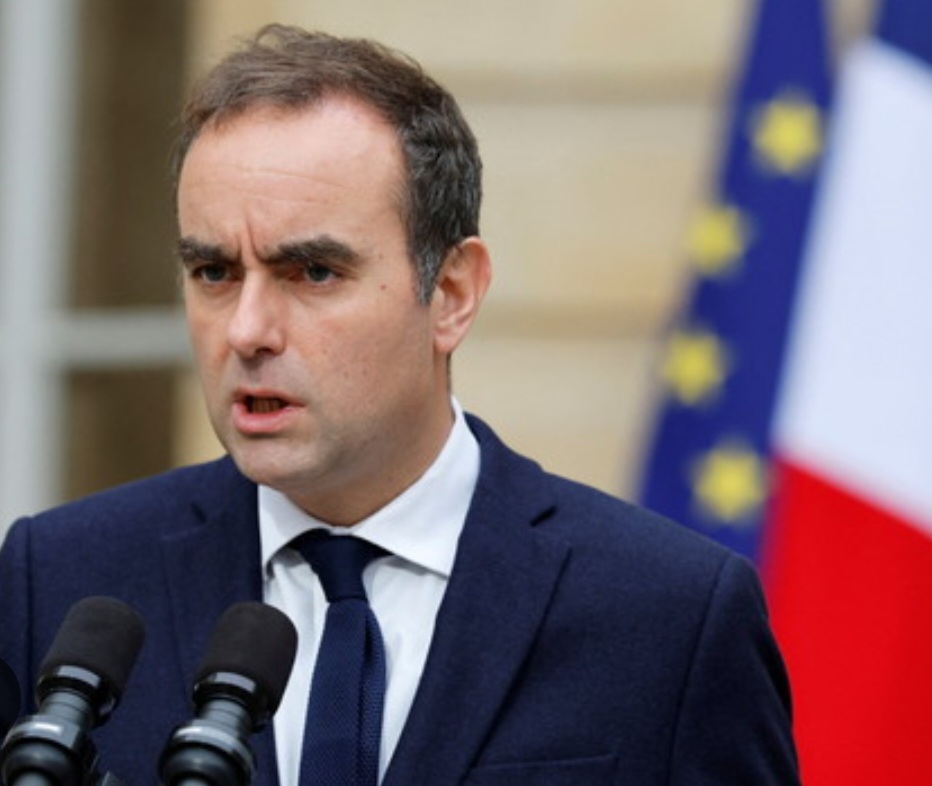
French Prime Minister Sébastien Lecornu has told parliament he supports suspending President Emmanuel Macron’s controversial 2023 pension reform, ahead of critical votes of no-confidence scheduled for Thursday.
The reform, which raised the retirement age from 62 to 64, had been one of Macron’s flagship policies. “This autumn I will propose to parliament that we suspend the 2023 pension reform until the [2027] presidential election,” Lecornu announced on Tuesday, drawing applause from left-wing MPs.
Lecornu, reappointed as prime minister last week just four days after resigning, faces a precarious parliamentary test. He needs Socialist Party backing to keep his government afloat amid censure motions from both the far right and far left, who are demanding new elections.
Socialist MP Laurent Baumel warned earlier on French TV that support from his party depends on Lecornu’s wording: “If he does not explicitly say the words ‘immediate and complete suspension of the pension reform,’ it will be censure.”
The 2023 pension law was pushed through parliament using Article 49.3 of the constitution after months of protests and strikes. Lecornu acknowledged last week that the move had left a “wound on democracy.”
Suspending the reform, he told MPs, would cost €400 million in 2026 and €1.8 billion in 2027—expenses that would require offsetting budget cuts. France’s public debt stands at €3.4 trillion, or nearly 114% of GDP, and the deficit is expected to reach 5.4% this year.
Despite his loyalty to Macron, Lecornu’s reversal underscores the government’s determination to avert further instability. Nobel economics laureate Philippe Aghion also voiced support for a suspension, saying it would cost less than the turmoil of another government collapse.
Promising a “serious and reliable budget,” Lecornu vowed to end reliance on Article 49.3 to pass legislation, insisting parliament will “have the final word.”
To MPs’ groans, he proposed creating a working group on pensions to deliver recommendations by the 2027 presidential election. He stressed that any reversal of the reform must be “financially compensated” and not widen the budget deficit.
Far-right National Rally (RN) and the radical-left France Unbowed (LFI) have both tabled no-confidence votes for Thursday. RN’s Sébastien Chenu said his party “cannot be bought,” while LFI’s Mathilde Panot declared that “nobody believes in you any longer.”
However, Socialist leader Boris Vallaud hailed the prime minister’s announcement as a “victory.” “The French were waiting for your statement and we were waiting for a sign that you’d heard them,” he said. “The suspension of the pension reform—here it is at last.”
If centrist and Socialist MPs hold together, Lecornu may scrape through Thursday’s votes and survive long enough to present his budget. But in France’s deeply divided National Assembly—fractured since the snap elections of summer 2024—his majority remains fragile.
Lecornu is the third prime minister in a year. He resigned eight days ago, only 26 days after first being appointed, before Macron reappointed him on Friday in a bid to stabilize his faltering administration.
The president’s latest move is widely seen as a last-ditch effort to regain control of a parliament that has already toppled two governments since mid-2024.