

House Of Reps Committee Confirms Illegal Alterations In Nigeria’s Tax Laws
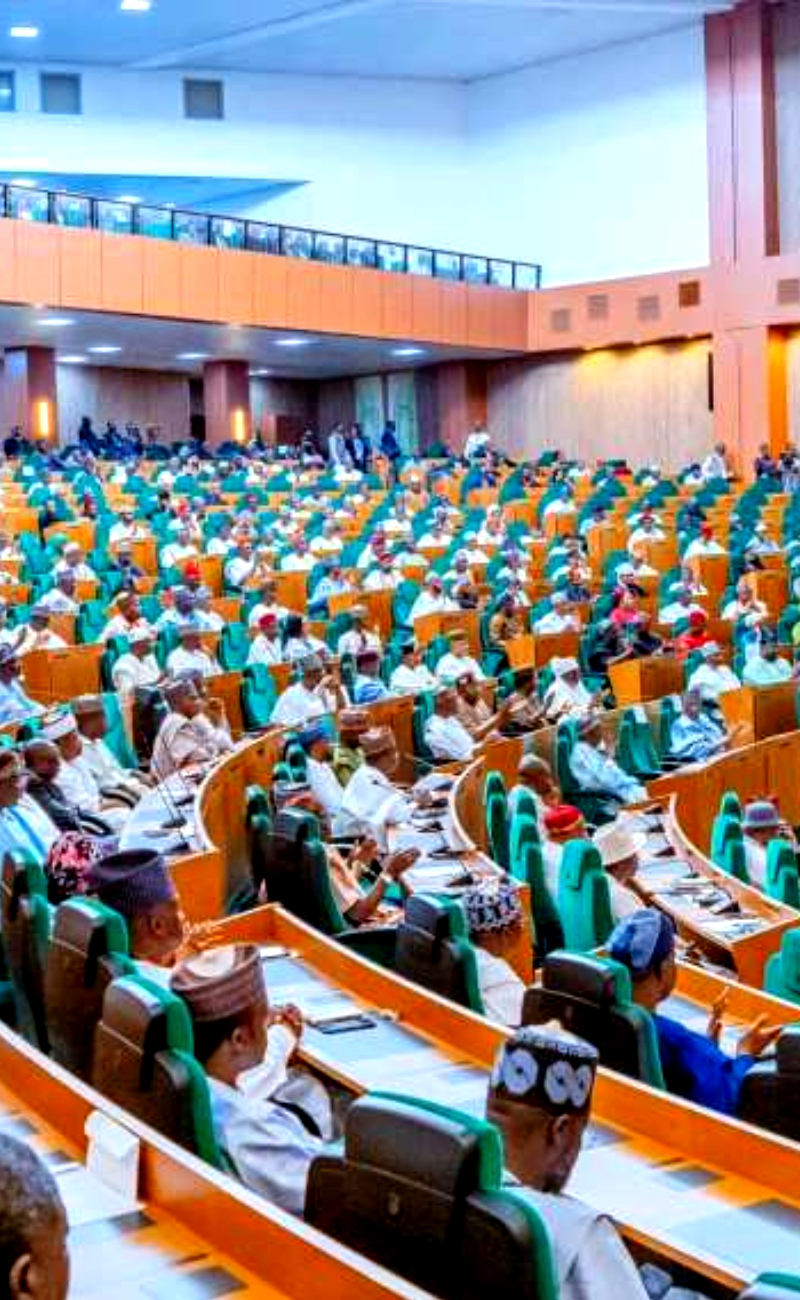
A House of Representatives Minority Caucus Ad-hoc Committee has confirmed that illegal alterations were made to some of Nigeria’s tax reform laws, including provisions signed into law by President Bola Tinubu, raising fresh concerns over legislative integrity and constitutional breaches.
The committee, in its interim report released on Friday, identified the Nigeria Tax Administration Act, 2025, as the most affected legislation, citing multiple discrepancies between the versions passed by the National Assembly and those later published in the official government gazette.
The probe followed public outrage after a lawmaker, Abdulsamad Dasuki, raised an alarm on the floor of the House over the circulation of altered tax laws that differed significantly from what lawmakers approved.
In response, the Minority Caucus had, in a statement dated December 28, 2025, vowed to “unconditionally protect the independence of the legislature and Nigeria’s democracy,” warning that the imposition of fake or altered laws constituted a direct attack on the constitutional authority of the National Assembly.
To investigate the claims, the caucus on January 2, 2026, constituted a seven-member fact-finding committee chaired by Victor Ogene, with members drawn from Bauchi, Oyo, Abia, Bayelsa, Kano and Nasarawa states.
Meanwhile, the House leadership disclosed on January 3, 2026, that Speaker Tajudeen Abbas had ordered the release of the four tax reform Acts signed by the President for public scrutiny. The laws include the Nigeria Tax Act, 2025; Nigeria Tax Administration Act, 2025; National Revenue Service (Establishment) Act, 2025; and the Joint Revenue Board (Establishment) Act, 2025.
In its preliminary findings, the committee confirmed that three different versions of the Nigeria Tax Administration Act, 2025, were in circulation, validating Dasuki’s allegations.
The report stated that directives to later “align” the Acts with the Federal Government Printing Press clearly indicated procedural anomalies and unlawful interference with legislation already passed by parliament.
Among the key discrepancies identified was Section 29(1) on tax reporting thresholds. While the certified version fixed thresholds at ₦50 million for individuals and ₦100 million for companies, the gazetted version reduced the individual threshold to ₦25 million, a move the committee described as an attempt to unlawfully widen the tax net.
The committee also flagged the insertion of new Sections 41(8) and 41(9) in the gazetted Act, requiring taxpayers to deposit 20 per cent of disputed tax sums before appealing decisions of the Tax Appeal Tribunal—provisions that were absent from the version passed by lawmakers.
Further concerns were raised over Section 64, which allegedly expanded the powers of tax authorities to include arrests and asset sales without court orders, as well as Section 3(1)(b), which removed petroleum income tax and VAT from the definition of federal taxes.
The report also noted that the altered version of Section 39(3) mandated tax computation for petroleum operations in US dollars, contrary to the National Assembly-approved version, which specified computation in the currency of transaction.
In addition, the committee identified serious alterations in the Nigerian Revenue Service (Establishment) Act, where provisions granting the National Assembly oversight powers—such as mandatory reporting and accountability mechanisms—were allegedly deleted in the gazetted copy.
Describing the findings as evidence of “anomalies, illegalities and impunity,” the committee warned that the alterations undermine constitutional governance, the doctrine of separation of powers and democratic accountability.
It has now requested an extension of time to deepen its investigation and submit a comprehensive report to the Minority Caucus.