
INEC Registers Two New Parties, Laments Rising Internal Crises Threatening Electoral Integrity
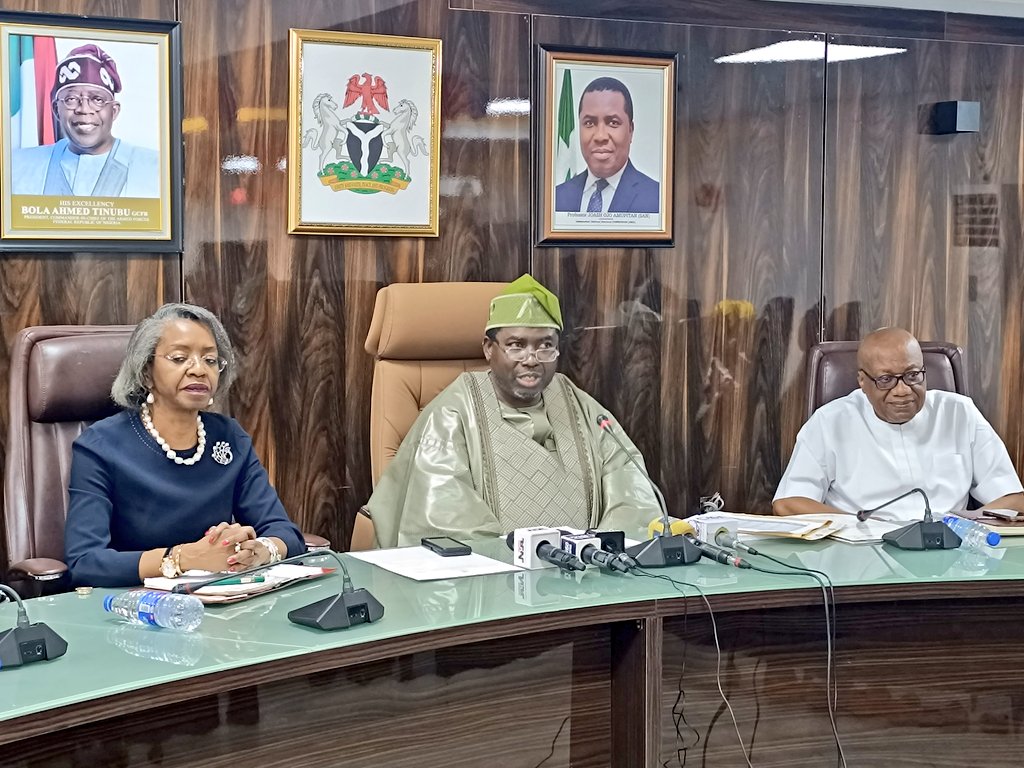
The Independent National Electoral Commission has registered two new political parties ahead of the 2027 general election while raising serious concerns about persistent leadership disputes within existing parties, which it described as a threat to Nigeria’s constitutional democracy.
Speaking on Thursday at the commission’s first regular consultative meeting with political parties, INEC Chairman, Prof. Joash Amupitan, SAN, announced the registration of the Democratic Leadership Alliance and the Nigeria Democratic Congress, bringing the total number of registered political parties in the country to 21.
According to the commission, the DLA was registered after successfully completing a rigorous verification process, while the NDC’s registration followed compliance with a Federal High Court order directing INEC to admit the party into the national register.
The development marks a continued expansion of Nigeria’s political landscape, which has seen dozens of parties emerge since the return to civilian rule in 1999. However, many of these parties have remained largely inactive or serve as platforms for a handful of politicians, raising questions about their viability and contribution to democratic consolidation.
Read Also: 3,000 Persons with Disabilities Registered to Vote in FCT — INEC
Prof. Amupitan expressed frustration over what he described as the “growing spate of internal disputes” plaguing several registered political parties, warning that the trend undermines the integrity of the electoral process and diverts the commission from its core mandate.
“Our collective commitment to the integrity of the electoral process is being challenged by the unfortunate and increasingly frequent leadership crises within political parties. These disputes often spill into needless litigations that tax the judicial system and divert the Commission from its core mandate,” he said.
The INEC chairman noted that the commission is frequently joined as a defendant in internal party disputes, a situation he described as a significant distraction from the essential work of preparing for elections and mobilising voters.
“Each litigation consumes time and resources and distracts from the important work of mobilising voters. Sometimes, you wonder whether one should even continue to register or retain some political parties, given the recurring leadership struggles and court orders declaring different individuals as party leaders,” he added.
Leadership crises have become a recurring feature of Nigeria’s political party system, with major and minor parties alike experiencing debilitating internal conflicts. In recent years, parties including the Peoples Democratic Party, the All Progressives Congress, the Labour Party, and the New Nigeria Peoples Party have witnessed public disputes over leadership positions, often resulting in court cases that produce conflicting judgments.
These disputes have frequently led to factionalisation, with rival camps claiming legitimacy and seeking recognition from INEC. In some instances, courts have issued contradictory orders recognising different individuals as the authentic leaders of the same party, leaving INEC in the difficult position of determining which faction to recognise for the purpose of sponsoring candidates in elections.
The situation has been further complicated by provisions in the Electoral Act 2022, which grants INEC limited powers to intervene in the internal affairs of political parties. While the commission is mandated to monitor party activities and ensure compliance with constitutional requirements, it is generally prohibited from interfering in matters of internal democracy, leaving disputes to be resolved through party mechanisms or the courts.
Legal experts have argued that the proliferation of court cases arising from intra-party disputes reflects deeper governance challenges within political parties, including weak institutional structures, lack of internal democracy, imposition of candidates, and manipulation of party congresses and primaries.
Some analysts have also pointed to the role of “godfathers” and moneyed interests in fueling disputes, as powerful individuals seek to control party structures to advance personal political ambitions. This phenomenon, they argue, has turned many political parties into personal fiefdoms rather than democratic institutions.
Beyond party crises, Prof. Amupitan also lamented the declining voter turnout in Nigerian elections, describing it as a “sobering trend” that threatens the legitimacy of the democratic process. He revealed that presidential election data shows a progressive decline in participation over the past four election cycles.
According to the figures presented by the INEC chairman, voter turnout in presidential elections fell from 53.7 per cent in 2011 to 43.6 per cent in 2015, dropped further to 34.7 per cent in 2019, and reached a record low of 26.7 per cent in the 2023 general election.
The sharp decline in voter participation has raised concerns among election observers, civil society organisations, and political stakeholders, many of whom attribute the trend to widespread disillusionment with the political process, lack of trust in electoral institutions, and a perception that elections do not produce meaningful change in governance or quality of life.
Read Also: NNPP Disowns Planned Protest Against INEC, Describes Organisers as Expelled Members
“Technology alone cannot solve voter apathy. Citizens’ trust is often eroded by a perceived lack of democratic dividends or the fear that their voices do not matter. We must change this narrative together,” Prof. Amupitan declared.
The 2023 general election, despite the introduction of the Bimodal Voter Accreditation System and other technological innovations, recorded the lowest turnout in Nigeria’s recent democratic history. Out of over 93 million registered voters, only about 25 million voted in the presidential election, representing roughly 26.7 per cent participation.
Analysts have attributed the low turnout to several factors, including voter suppression in certain regions due to insecurity, logistical challenges on election day, late arrival of materials and INEC officials at polling units, and a widespread belief among young voters that the system is rigged and their votes do not count.
The situation has been compounded by post-election disputes and perceptions of bias against INEC, particularly following allegations that the commission failed to upload results in real time to its Result Viewing Portal as required by law, fueling suspicions of manipulation.
Prof. Amupitan’s comments on Thursday appeared to acknowledge these concerns, as he emphasised the need for all stakeholders, including political parties, election observers, and the media, to work together to restore public confidence in the electoral process.
The commission also confirmed its readiness for the upcoming FCT Area Council Elections scheduled for February 21, 2026. According to the INEC chairman, a total of 1,680,315 registered voters are expected to participate across 2,822 polling units in the Federal Capital Territory.
Additionally, the commission disclosed that it is making preparations for the Ekiti State Governorship Election scheduled for June 20, 2026, and the Osun State Governorship Election set for August 8, 2026. Both elections are expected to serve as important tests of INEC’s preparedness and capacity ahead of the 2027 general election.
To ensure the integrity of these elections and the 2027 general polls, INEC announced plans to conduct a nationwide Voter Revalidation Exercise aimed at sanitising the national register of 93.4 million voters by removing duplicates and entries of deceased persons.
The voter register has long been a subject of controversy in Nigeria, with political parties and civil society groups accusing INEC of retaining the names of dead voters, duplicates, and fictitious entries. These concerns have led to calls for a comprehensive audit and cleaning of the register to ensure that only genuine, living voters are listed.
The planned revalidation exercise is expected to involve physical verification of voters’ details, biometric capturing, and reconciliation of data across INEC’s databases. However, details of the timeline, methodology, and scope of the exercise have not yet been fully disclosed by the commission.
In his remarks at the meeting, the National Chairman of the Inter-Party Advisory Council, Dr Yusuf Mamman Dantalle, urged INEC to remain a neutral arbiter and to be “firmly” guided by party constitutions in resolving disputes to avoid perceptions of bias.
Dantalle, who leads the umbrella body representing all registered political parties in Nigeria, also called for significant electoral reforms, including the abolition of State Independent Electoral Commissions, which conduct local government elections across the country.
“IPAC therefore reiterates its position that SIECs be scrapped and INEC empowered to conduct all elections nationwide, given its institutional expertise and capacity,” Dantalle said.
SIECs have been widely criticised for lacking independence and credibility, with opposition parties accusing them of being extensions of state governors who appoint their members. In many states, local government elections conducted by SIECs have been characterised by low turnout, lack of genuine competition, and outcomes that heavily favour the ruling party at the state level.
In some instances, the ruling party in a state has won all available seats in local government elections, raising questions about the fairness and transparency of the process. Critics argue that governors manipulate SIECs to install loyalists in local government positions, thereby consolidating political control and access to resources.
Dantalle also pushed for the mandatory real-time transmission of election results to INEC’s Result Viewing Portal, a proposal that has been at the centre of electoral reform debates in recent years. He argued that making electronic transmission compulsory would enhance transparency, reduce manipulation, and restore public confidence in the electoral process.
Furthermore, the IPAC chairman suggested that all elections—presidential, governorship, National Assembly, and state assembly—should be held on the same day to “reduce costs, prevent bandwagon effects, and address voter fatigue.”
The proposal to hold all elections on the same day is not new and has been debated by electoral reform advocates for years. Proponents argue that it would reduce the financial burden on INEC and political parties, eliminate the bandwagon effect where the outcome of earlier elections influences later ones, and increase voter turnout by reducing election fatigue.
However, critics have expressed concerns that holding all elections simultaneously could overwhelm INEC’s logistical capacity, create confusion among voters, and make it difficult for parties to campaign effectively across multiple levels. They also argue that staggered elections allow for lessons to be learned and improvements to be made between polls.
The Electoral Act 2022 currently provides for separate election dates, with presidential and National Assembly elections held on the same day, followed by governorship and state assembly elections two weeks later. Off-cycle governorship elections are held in states such as Ekiti, Osun, Kogi, Bayelsa, Imo, Edo, and Ondo, whose electoral calendars do not align with the general election cycle.
Prof. Amupitan assumed office as INEC’s sixth substantive chairman on October 23, 2025, succeeding Prof. Mahmood Yakubu, who served two terms totalling 10 years from 2015 to 2025. The 58-year-old Senior Advocate of Nigeria outlined his plans to reform Nigeria’s electoral system, strengthen institutional independence, and rebuild public trust in the commission during his Senate screening.