
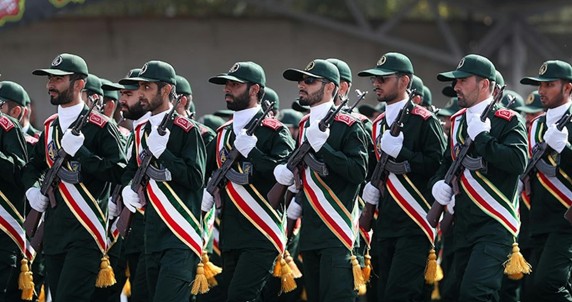
Iran’s Islamic Revolutionary Guard Corps threatened on Thursday, 22 October 2026, to launch direct strikes against American military garrisons across the Middle East if Washington keeps encouraging commercial crude oil tankers to enter mined waters in the Persian Gulf. Naval forces loyal to Tehran struck four ships conducting fuel transfers within the last forty-eight hours, while three additional vessels sustained heavy damage after striking submerged explosive mines near the Strait of Hormuz. Uncontrolled naval warfare destroys fragile sea corridors fast. Brent crude jumped nearly three per cent to 112.01 dollars a barrel on European exchanges as commercial shipowners pulled their remaining vessels from regional loading docks. The White House insists that the crisis will resolve quickly, yet naval gunboats continue to harass commercial merchant traffic with absolute impunity.
Iranian commanders are moving their operational posture away from reactive coastal defence toward an aggressive asymmetric campaign designed to hold western economic interests hostage. Major-General Mohsen Rezaei, secretary of the Supreme National Security Council, warned that the industrial infrastructure of countries funding the military offensive will lose its immunity if strikes against Iranian oil loading jetties and coastal terminals continue. Regional combat alters political red lines overnight. He insisted that Tehran will never accept ceasefire terms that rely on political goodwill alone, while army chief Amir Hatami paraded new fleets of combat drones and unmanned surface craft built to counter superior Western air wings. Tehran knows that cheap robotic weapons can neutralise expensive naval battle groups.
The security crisis deepened further on Thursday as allied Houthi units in Yemen unleashed coordinated drone and missile strikes against vital commercial and aviation centres across Saudi Arabia. Rebel missiles hit King Fahd International Airport in Dammam, killing two people and wounding several others, while separate barrages targeted the defence ministry in Riyadh, petroleum installations at Yanbu, and regional runways at Abha. Escalating proxy strikes shatter regional aviation safety. Gulf neighbours Qatar and the United Arab Emirates joined Kuwait in condemning the lethal strikes as flagrant violations of international borders, yet the attacks prove that regional missile defences remain dangerously porous. Washington cannot protect its partners from relentless swarms of cheap loitering munitions.
The expanding perimeter of violence reveals that Western economic sanctions and tactical air strikes have completely failed to alter Tehran’s core regional calculations. American officials keep making the basic mistake of equating severe economic hardship with strategic collapse, forgetting that hardened political regimes absorb domestic financial pain far longer than democratic electorates tolerate surging petrol prices. Starving civilian markets does not crush military resolve. As the European Parliament passes symbolic resolutions urging the designation of Houthi fighters as terrorists, the actual flow of physical oil through the Strait of Hormuz continues to dry up under the constant threat of lethal floating ordnance. Western leaders are discovering that tactical airstrikes cannot guarantee safe maritime transit when their adversary holds the geographical high ground.