

Jos Violence Claims 2 UniJos Lives
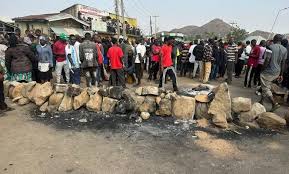
Two students of the University of Jos lost their lives and three others, including a staff member, sustained gunshot injuries following a wave of violence that swept through parts of Jos North Local Government Area of Plateau State, beginning on the night of March 29, 2026.
Vice-Chancellor Prof. Tanko Ishaya disclosed the casualties on Thursday during a press briefing, offering the institution’s first comprehensive official account of how the bloodshed reached inside the university community. He also firmly ruled out any plan to relocate the institution.
On the night of March 29, gunmen attacked the Angwan Rukuba community, killing several people and injuring many others. Angwan Rukuba is home to numerous staff and students of the university, and the incident prompted the Plateau State Government to impose a 48-hour curfew.
The deceased were identified as Abel Joro Gershon, a 300-level Building student, and Adeyomo Oluwafemi Temitope, a 500-level Quantity Surveying student. Gershon was shot in the stomach during the Angwan Rukuba attack and admitted to the Intensive Care Unit of the Jos University Teaching Hospital, where he died on April 5. He was buried on April 8. Temitope, according to the vice-chancellor, was shot and macheted to death by hoodlums on April 1 along Bauchi Road, having left the campus alone when fresh violence broke out after the curfew was lifted.
Three others remain hospitalised. Ishaya Patrick, a 300-level Geography and Planning student, was shot in the leg and is receiving care at JUTH. Longji Molshap Wumnokol, a 300-level Geology student, sustained critical injuries during the April 1 Bauchi Road attack and was transferred from Ola Hospital to JUTH, where he remains. Duguryil Ufialas Daniel, a staff member of the Directorate of Student Affairs, was shot in the thigh and is also receiving treatment.
Confronting claims that the university was shut down or evacuated, Prof. Ishaya was categorical: “Management made it clear that the university was not closed,” he said. He acknowledged that the uncoordinated arrival of vehicles from different state governments and organisations had created unnecessary panic, but maintained that no evacuation directive was issued for all students and staff, and that no section of the campus was breached.
Several state governments did, however, evacuate some of their students, a move the university described as counterproductive, noting that it heightened fear that the campuses were insecure.
The institution had commenced its first-semester examinations on March 16. Papers scheduled for March 30 and 31 were rescheduled following the security situation and the government-imposed curfew. Examinations set for April 1 and 2 were similarly postponed after the second round of violence. Management later aligned the resumption of academic activities with the end of the Easter break, with examinations set to continue on April 13 to allow students who had travelled to return safely. Normal academic activities resumed on Tuesday, April 7.
On the question of relocation, Prof. Ishaya was direct: “There are no plans to relocate the institution from its current location. We are working in collaboration with security operatives to ensure the safety of our students and staff,” he said.
He commended the response of security agencies, noting visits to the institution by the Chief of Army Staff, Waidi Sahibu, and the General Officer Commanding 3 Division, E.F. Onyinlola, both of whom assured that UNIJOS remains a top security priority. He also expressed gratitude to Governor Caleb Mutfwang, the Minister of Humanitarian Affairs, Bernard M. Doro, the managements of JUTH and Ola Hospital, and community leaders of neighbouring areas for protecting students during the crisis.
Prof. Ishaya assured that campus security had been significantly strengthened: “I want to assure students and parents that security has been beefed up on campus and in the entire city of Jos,” he said.
The vice-chancellor also stressed the university’s longstanding bond with its host communities. “We have never had any instance of our students being at loggerheads with our immediate community. We have had cordial relations, and we will continue to sustain them,” he said.