


Lukashenko and Kim Forge “New Era” Alliance in Pyongyang
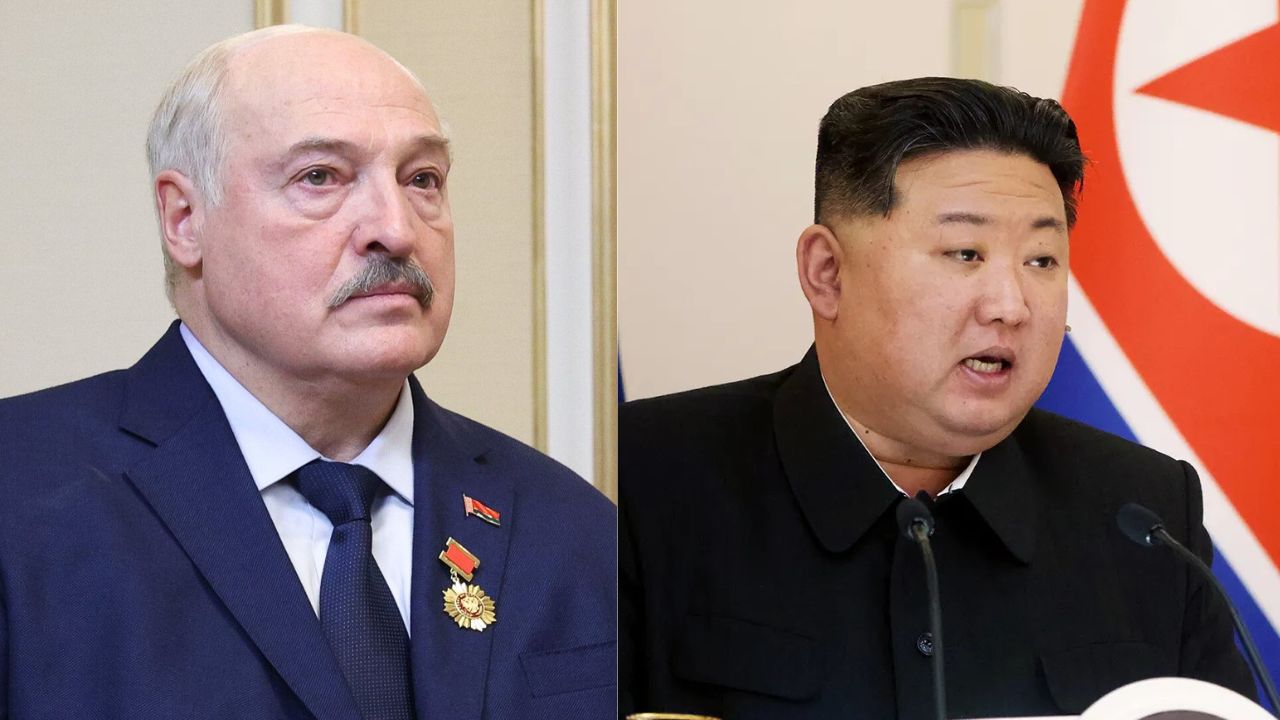
Belarusian President Alexander Lukashenko arrived in Pyongyang on Wednesday for his first official visit to North Korea, a move designed to formalise a burgeoning strategic axis. United by heavy Western sanctions and their mutual roles as primary enablers of Russia’s war in Ukraine, the two leaders are expected to sign a “treaty of friendship” and approximately 10 additional cooperation agreements. Lukashenko, who has ruled Belarus for over three decades, told state media that “the time has come to step up relations,” adding that geopolitical pressure is “simply pushing us into each other’s arms.”
The visit signals a shift in the global diplomatic order as authoritarian states consolidate their own “anti-Western” bloc. While Belarus served as the primary launchpad for Russia’s 2022 invasion, North Korea has more recently provided the critical muscle, reportedly dispatching thousands of soldiers to the Kursk region and millions of artillery shells to the frontlines. In return, Pyongyang is receiving Russian military technology, food, and energy supplies that have allowed Kim Jong Un to lessen his historical dependence on China and project a more assertive foreign policy.
The diplomatic theatre in Pyongyang comes at a delicate moment for US-Belarus relations. Despite Lukashenko’s closeness to the Kremlin, US President Donald Trump has pursued a “personal diplomacy” track in his second term, recently welcoming Belarus to his newly formed “Board of Peace.” This controversial international body, established as a Trump-led alternative to the United Nations, has already seen Minsk release over 500 political prisoners as a gesture of goodwill. While hundreds more remain in Belarusian jails, the White House is reportedly weighing an invitation for Lukashenko to visit Washington or Mar-a-Lago later this year.
For Kim Jong Un, the visit is a high-profile opportunity to elevate his diplomatic standing beyond Beijing’s shadow. In a letter to Lukashenko earlier this month, Kim expressed a desire to bring bilateral ties to a “new, higher stage in line with the demands of the new era.” This “new era” is increasingly defined by a rejection of American-led global standards, with Kim explicitly accusing the US of “state terrorism and aggression” during a parliamentary speech on Monday. The partnership with Belarus offers North Korea a rare European foothold and a fellow pariah state with which to share “survival strategies” under global embargoes.
The strategic depth of this alliance extends to advanced military cooperation. Western intelligence suggests that the “friendship treaty” will likely cover the joint development of drone technology and satellite systems, areas where North Korea has made rapid gains with Russian assistance. By aligning with Belarus, North Korea gains access to a secondary channel for Russian industrial expertise. This trilateral synergy—Moscow, Minsk, and Pyongyang—is effectively creating a self-sustaining military-industrial complex that operates entirely outside Western financial systems.
The regional implications of this Pyongyang summit are already being felt in Seoul and Tokyo. South Korean analysts view the Belarus-North Korea treaty as a direct threat to stability in the Indo-Pacific, as it further integrates North Korea into the broader European conflict. As Lukashenko pays his respects at the Kumsusan Palace of the Sun, the message to the West is clear: the “axis of outcasts” is no longer a temporary marriage of convenience, but a permanent fixture of the 2026 geopolitical landscape.