
Daniel Otera
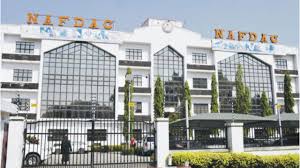
The National Agency for Food and Drug Administration and Control (NAFDAC) has exposed a clandestine network of illegal manufacturing in Abuja, arresting a local footballer, Mr. Ikechukwu Elijah, for producing unregistered and hazardous chemicals in the Apo-Waru area. This revelation underscores the growing menace of counterfeit goods infiltrating Nigeria’s markets. Alongside Elijah’s arrest, NAFDAC uncovered an unlicensed water factory and seized fake rice, shedding light on the pervasive threat to public health and economic stability.
In Apo-Waru, Elijah operated an illegal factory within a residential building, counterfeiting popular chemical and insecticide brands. NAFDAC’s statement detailed his initial denial of involvement:
“When contacted for interrogation by detectives, he denied any knowledge of chemical production in the area.” A meticulous search of the premises led to his confession, resulting in the arrest of his younger brother inside the facility.
Led by Mr. Embugushiki Godiya, a Desk Officer in NAFDAC’s Investigation and Enforcement Directorate and a member of the Federal Taskforce on Counterfeit and Substandard Medicines and Unwholesome Processed Foods, the operation seized sealing machines, high-capacity cylinders, large chemical containers, and all finished products.
In a related crackdown, NAFDAC shut down MZEE Table Water in Abuja’s Damangaza district, a facility producing packaged water under unsanitary conditions with a fake and expired license. The factory lacked a certified borehole or water treatment system, failing to meet basic regulatory standards.
“When the leader of the enforcement team, Mr. Godiya, contacted the owner of MZEE Table Water, she claimed that her factory was registered and that she was in Gwagwalada at the time,” NAFDAC reported. Only a co-tenant was present to witness the operation, as no staff were found on-site.
The agency’s efforts extended to a shopping plaza opposite the World Trade Centre on Constitution Avenue, where operatives, acting on intelligence, confiscated counterfeit rice and packaging materials used to repackage popular brands. Mr. Godiya estimated the total street value of seized items at over N60 million, crediting the operation’s success to the directive of NAFDAC’s Director-General, Prof. Mojisola Adeyeye, to ensure safe food and medicines for Nigerians.
The proliferation of counterfeit goods in Nigeria poses a significant risk to both public health and the economy. According to a 2021 World Health Organization (WHO) report, substandard and falsified products contribute to over 100,000 deaths annually in Africa, with Nigeria bearing a substantial share of this burden. This is largely due to Nigeria’s large consumer market, which is particularly vulnerable to counterfeit goods in various sectors, including pharmaceuticals, food, and electronics.
The economic impact of counterfeit goods is also profound. A 2022 study conducted by the Standards Organisation of Nigeria (SON) reveals that counterfeit products result in an estimated loss of N200 billion annually in tax revenue. This loss significantly affects legitimate businesses, depriving the government of funds needed for essential infrastructure and social services. It hampers the nation’s overall economic growth, making it harder to address Nigeria’s ongoing development challenges.
In response to the growing threat of counterfeit goods, NAFDAC has launched several initiatives aimed at combating this issue. One of the most prominent efforts is the establishment of the Federal Taskforce on Counterfeit and Substandard Medicines and Unwholesome Processed Foods, which seeks to strengthen collaboration between NAFDAC and law enforcement agencies.
In 2024, NAFDAC intensified its enforcement operations, particularly in Abuja, a major commercial hub. During these operations, counterfeit goods worth over N3 billion were confiscated. These efforts primarily targeted unregistered chemicals, contaminated water, and fake food products issues that severely undermine consumer safety and public trust.
Despite these efforts, the ongoing prevalence of counterfeit goods presents a substantial challenge to Nigeria’s consumer market, requiring continued vigilance and more robust enforcement measures. The widespread availability of counterfeit products is a testament to the scale of the issue, with unscrupulous manufacturers and vendors exploiting gaps in the regulatory system.
Mr. Godiya called on citizens to shun suspicious products, stating, “Nigerians must desist from patronising products suspected to be fake, counterfeit, or unwholesome to reduce demand for such goods.” He confirmed that all suspects, including Elijah, would face legal consequences.