


NAFDAC Issues Final Warning on Multi-Dose Malaria Syrups
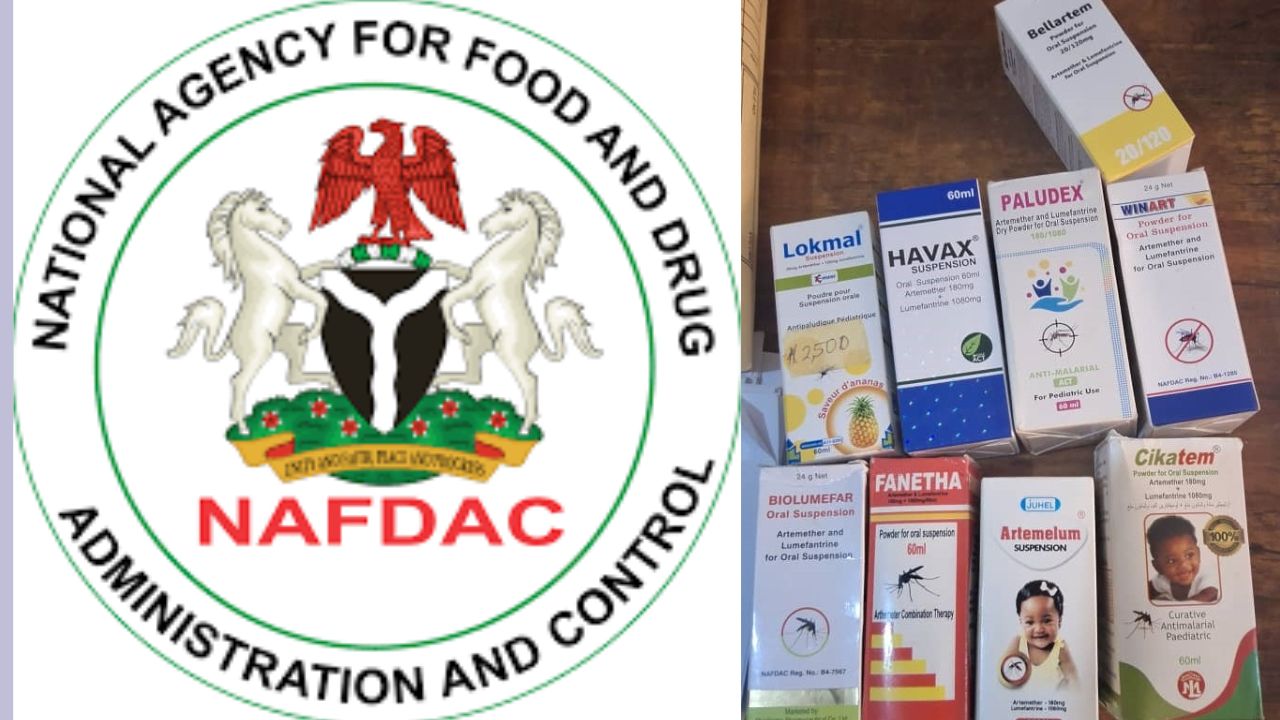
The National Agency for Food and Drug Administration and Control (NAFDAC) has issued a final warning regarding the sale of multi-dose Artemether/Lumefantrine oral suspensions. In a public alert released via its X (formerly Twitter) account (@NafdacAgency) on February 27, 2026, the regulator reminded the public that the registration for these multi-dose dry powders was discontinued last year. Despite the 2025 directive, surveillance reports indicate that these products remain on pharmacy shelves. NAFDAC has now ordered its zonal directors to begin a nationwide mop-up to remove the offending medicines from circulation.
The ban is rooted in significant stability concerns. Investigations revealed that once these powders are mixed with water, the active ingredients break down rapidly. This instability leads to a loss of efficacy, meaning the medicine fails to kill the malaria parasite. For a patient, particularly a child, ineffective treatment can lead to a worsening of the condition or severe complications. In the worst-case scenarios, the failure of these “unstable” formulations can result in death.
Manufacturers and importers are no longer permitted to submit new or renewal applications for these multi-dose formats. Instead, NAFDAC has mandated a shift toward single-dose alternatives. These include dispersible tablets or powder granules packed in individual sachets. These formats ensure that the correct dose is delivered without the risk of the drug losing its potency after the first use. It is a necessary pivot to ensure that malaria treatment remains reliable across the country.
The directive applies to every brand of multi-dose Artemether/Lumefantrine, whether manufactured locally or imported. Healthcare professionals and retailers have been told to stop the sale and distribution of these products immediately. The agency’s state coordinators are now tasked with visiting hospitals and pharmacies to seize any remaining stock. For the regulator, this is a matter of purging the market of “substandard” options that provide a false sense of security to caregivers.
Consumers and parents are advised to check the packaging of any malaria medication they purchase. If the medicine is a powder intended for multiple doses over several days, it should be avoided. Reporting suspicious sales to the nearest NAFDAC office is encouraged to help clear the market. The agency has provided dedicated helplines and email addresses for the public to report both the sale of these drugs and any adverse reactions experienced by patients.
The persistent circulation of these drugs highlights the difficulty of enforcing pharmaceutical standards in a fragmented market. However, the agency’s “mop-up” order suggests a move toward more aggressive field enforcement. Protecting the integrity of malaria treatment is a top priority in a region where the disease remains a leading cause of mortality. Manufacturers who fail to switch to single-dose formats now risk significant disciplinary action and the loss of their operating licences.