
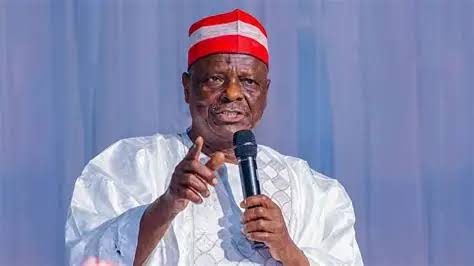
The vice-presidential candidate of the Nigeria Democratic Congress, Rabiu Musa Kwankwaso, has pledged that a government led by his running mate, Peter Obi, would serve every Nigerian regardless of ethnic, religious, political or social leaning, as the opposition party sharpens its message with about two months left before the January 2027 presidential election.
Kwankwaso made the promise at a reception held in his honour at Toru-Orua in Bayelsa State, the country home of the NDC National Leader and the party’s senatorial candidate for Bayelsa West, Senator Henry Seriake Dickson. According to a statement by the coordinator of the campaign council’s Ofurumapepe Media, Gabriel Ukuta, the former Kano State governor said Nigeria needed a government that deliberately carried its citizens along in the making and delivery of policy, and that leadership had to be people-oriented.
He tied that appeal to a sharp criticism of the ruling All Progressives Congress, pointing to the hunger, economic hardship and insecurity many Nigerians have faced, and urged voters to use the coming election to change the government. Kwankwaso also warned that casting a ballot would not be enough. “Voting is not enough; Nigerians must also take responsibility for protecting their votes,” he said, raising concern about possible manipulation of the results.
The reception was the latest in a run of mobilisation events built around one of the most consequential realignments of the election cycle. Obi has accepted the NDC presidential ticket and named Kwankwaso as his running mate, months after both men left the African Democratic Congress, the coalition platform fronted by former Vice President Atiku Abubakar, and moved to the NDC in May. The NDC, registered by the Independent National Electoral Commission early in 2026, has zoned its presidential slot to the South for a single four-year term, with the North expected to produce the candidate in 2031.
The arithmetic behind the pairing explains much of its ambition. Official results from the 2023 presidential election credited Bola Tinubu of the APC with about 8.8 million votes, Atiku of the then dominant Peoples Democratic Party with roughly 7 million, Obi, then on the Labour Party, with about 6.1 million, and Kwankwaso, then of the New Nigeria Peoples Party, with about 1.5 million. Supporters of the new ticket argue that bringing the Obi and Kwankwaso blocs together, a combined vote of around 7.6 million in 2023, could reshape the contest, particularly in the South East, parts of the North West and among younger urban voters.
That case comes with a heavy caveat, which is turnout. Only about 27 per cent of registered voters took part in 2023, the lowest figure since the return to civilian rule in 1999, and Kwankwaso’s repeated stress on turning out and guarding votes reflects an understanding that enthusiasm has not always translated into ballots.
The economic backdrop gives the hardship message its force. Headline inflation stood at 15.43 per cent in July 2026, down from the levels of a year earlier but still heavy on households, while petrol has traded well above 1,000 naira a litre for most of the past two years following the removal of fuel subsidy in 2023. These pressures have become the central argument of nearly every opposition platform heading into the vote.
Timing has added to the urgency. The presidential and National Assembly elections were moved to 16 January 2027 from an earlier date of 20 February, after the Electoral Act 2026 shortened the notice period and following complaints that the February date clashed with Ramadan. The shift has compressed the campaign calendar and pushed parties into earlier and more intense grassroots work.
Dickson, who hosted the event, used his remarks to decry the hardship, insecurity and intimidation he said Bayelsans were enduring, and described the Obi and Kwankwaso ticket as experienced and trustworthy. He urged supporters to return to their communities and intensify mobilisation for every NDC candidate, from the presidential race to the state assembly polls. The reception also featured a traditional Ijaw war boat display known as Ama-Aru along the River Forcados, and the presentation of party flags to the party’s candidates in Bayelsa.
For all the momentum on display, the opposition remains divided. Atiku is pressing his own bid on the ADC, which raises the prospect of a split anti-APC vote, while the ruling party has played down the threat. The APC national chairman, Nentawe Yilwatda, and the Imo State governor, Hope Uzodimma, have both said the NDC and the ADC pose no danger to the party’s re-election plans. Whether the Obi and Kwankwaso alliance can convert its combined 2023 numbers into a single, disciplined bloc, rather than two movements sharing a stage, is likely to be the question that decides how far the NDC travels in January.