
Kehinde Ishola
The Federal Government has said Nigeria is among the countries with the highest prevalence of Noma, a deadly gangrenous disease of the mouth and face that mainly affects malnourished children.
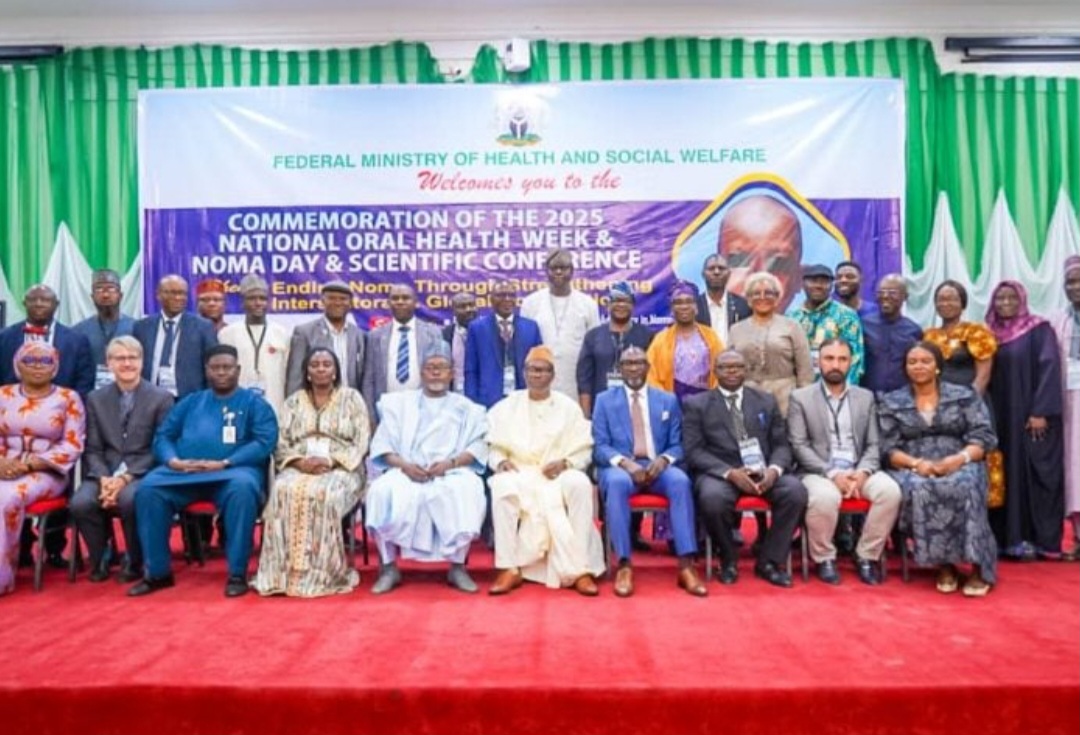
The Minister of State for Health and Social Welfare, Dr Iziaq Salako, disclosed this on Tuesday in Abuja during the commemoration of the 2025 National Oral Health Week and Noma Awareness Day and Scientific Conference, themed “Ending Noma through Strengthening Intersectoral and Global Cooperation.”
Salako said Nigeria falls within the Noma belt of Sub-Saharan Africa, with the North-West region most affected. He attributed the persistence of the disease to poverty, malnutrition, poor oral hygiene and weak surveillance systems, which allow many cases to go undiagnosed and untreated.
He described poor oral health as a “silent epidemic” that undermines productivity, self-esteem and quality of life, adding that millions of Nigerians, particularly children and the elderly, continue to suffer from preventable oral diseases such as dental caries, periodontal disease and oral cancers.
Citing World Health Organisation (WHO) data, the minister said oral diseases are the most common non-communicable diseases globally, affecting nearly 50 per cent of the world’s population.
“Noma is a rapidly progressing gangrenous infection that starts as a simple gum infection and can lead to severe disfigurement or death within days if untreated. It is completely preventable and treatable. It is unacceptable that any child in our country should suffer irreversibly or die from it,” he said.
Salako said the Federal Government is expanding access to oral healthcare and increasing funding for services, especially for vulnerable populations. He added that oral health is being fully integrated into Primary Health Care (PHC) through oral hygiene education, counselling, diagnostics, fluoride treatments, restorative services and referrals.
He further disclosed that dental facilities across the country will be upgraded, more dental professionals employed, and primary health workers, community health workers and traditional birth attendants trained to identify and refer oral diseases early.
According to the WHO, Noma is a severe gangrenous disease linked to polymicrobial infections and social risk factors. It mainly affects children aged two to six years living in extreme poverty. Africa remains the most affected continent, although cases have been recorded in other regions.
The Country Representative of Médecins Sans Frontières (MSF), Ahmed Aldikhari, said the organisation has partnered with Nigeria since 2014 to provide comprehensive Noma care, including reconstructive surgery, physiotherapy, nutrition and mental health support.
He said over the past decade, more than 1,600 major reconstructive surgeries have been carried out for 1,074 patients through 33 surgical missions. In 2025 alone, 99 surgeries have been performed for 89 patients.
Aldikhari added that 28 national surgeons and 14 anaesthetists have been trained by international specialists to strengthen local capacity. He also noted that the inclusion of Noma in the WHO list of neglected tropical diseases was achieved through joint advocacy by the Nigerian government and MSF.
Chairman of the Noma Aid Nigeria Initiative (NANI), Mathis Winkler, said Nigeria bears the highest burden of Noma in Africa, prompting the organisation’s strong investment in prevention and treatment.
On his part, NANI Country Director, Dr Charles Ononiwu, said the centre had conducted 237 free Noma surgeries since 2023, with full support covering transportation, surgery, medication, feeding and social assistance.
Chairman of the House of Representatives Committee on Health, Amos Magaji, said the National Assembly recognises Noma as both a public health emergency and a social justice issue.
“Ending Noma is possible within our lifetime. No child should live with a preventable deformity, and no parent should suffer avoidable grief,” he said, adding that elimination would require tackling poverty, malnutrition, lack of clean water, and strengthening PHC systems.