
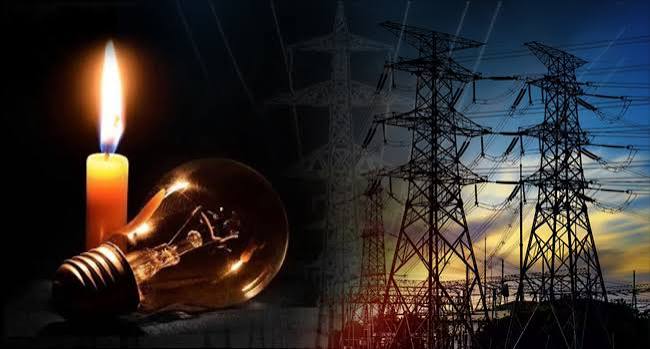
Millions of homes and businesses across Edo, Delta, Ondo and Ekiti have been without power since Monday morning after members of the National Union of Electricity Employees shut down operational facilities of the Benin Electricity Distribution Company. The union is pressing for the resolution of welfare and emolument disputes that have lingered since a 14-day ultimatum expired without agreement.
BEDC serves about 1.3 million customers across the four states, a territory covering 57,353 square kilometres and a population of roughly 18 million people, according to the Nigerian Electricity Regulatory Commission. The company employs about 2,765 workers. The shutdown has affected hospitals, small businesses and households that depend on the grid for basic services.
The Edo State Council of the Nigeria Labour Congress declared support for the strike, listing the unresolved issues as salary harmonisation, implementation of the National Minimum Wage, promotion of workers and the threat of mass sack. The NLC said BEDC management refused to use the seven-day grace window after the ultimatum expired.
A senior BEDC official said management had recently reviewed workers’ emoluments and expressed surprise at the action. The company had not issued a formal statement as of Tuesday afternoon.
The dispute sits against a mixed operational record. NERC data showed BEDC’s aggregate technical, commercial and collection losses stood at 39 per cent in December 2023 and 29 per cent in March 2024, among the higher rates in the industry. The company later reported a record low ATC&C loss of 16.27 per cent in October 2025 and a collection efficiency of 93.74 per cent, figures it presented as evidence of a turnaround under its acting managing director, Jonathan Lawani.
Those gains have not resolved the labour dispute. The union’s action follows a pattern across the sector. In February 2025, workers at the Ibadan Electricity Distribution Company shut offices in Ogun, Osun and Oyo states over minimum wage and staff welfare. Kaduna Electric faced similar disruptions. The disputes typically turn on the gap between the cost-reflective tariffs that distribution companies say they need and the revenues they actually collect.
For customers in the BEDC franchise, the immediate concern is the duration of the outage. The company has not announced a timeline for restoration. The NLC has called on the Edo State Government to stay out of the dispute and allow the union and management to negotiate.
Separately, in Akure, commercial motorcycle operators and ticket sellers clashed on October 7 over a N7,000 emblem that riders said was being enforced by the Akure South Local Government. Riders alleged they had already paid for stickers earlier in the year, including one during the Ogun Festival, and were being asked to buy a third. The council chairman, Gbenga Fasua, denied authorising the sale and said no proceeds had reached the local government.
The Ondo State Government has since moved to standardise revenue collection, introducing official jackets for ticket collectors to curb sharp practices. The measure is intended to make it easier for riders to identify authorised agents and reduce the repeated levies that triggered the confrontation.
Both incidents point to the same underlying problem: the delivery of basic public services, whether electricity or local government revenue, remains vulnerable to disputes over money and mandate. For BEDC’s 1.3 million customers, the resolution of the labour impasse will determine when the lights come back on. For Akure’s riders, the test is whether the new jacket regime restores order to a revenue system that had become a flashpoint.