
Olabode George Blames APC, INEC for PDP Peril
A divergence of perspectives has emerged among senior opposition figures regarding the source of Nigeria’s escalating pre-election turbulence, with contradictory assessments appearing within hours from two prominent PDP leaders. The discord highlights internal analytical fractures as the party confronts institutional challenges ahead of the 2027 electoral cycle.
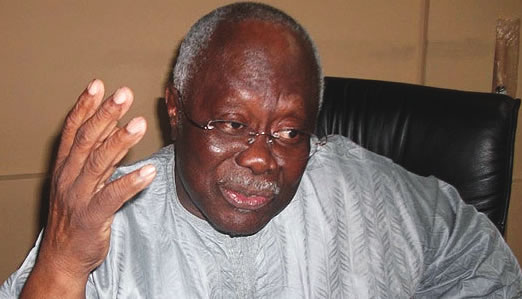
Olabode George, the former Deputy National Chairman who holds the traditional title of Atona Oodua of Yorubaland, issued a statement yesterday framing the political landscape as an existential threat to multi-party democracy. His intervention employed biblical allegory, referencing Abimelech from the Book of Judges—a figure he characterised as destroying rivals to consolidate authority—to illustrate perceived patterns in current governance.
“The actions and pronouncements we are witnessing suggest a systematic effort to ensure no viable presidential alternative emerges against the incumbent,” George stated, explicitly naming the All Progressives Congress and the Independent National Electoral Commission as collaborative actors in this alleged constriction of electoral choice. He warned that such trajectories risk national stability and called upon cross-party elders to mount institutional resistance.
George’s historical framing drew upon personal experience spanning multiple Nigerian political epochs, with the veteran operative stressing that the country’s demographic complexity and territorial scale necessitate robust partisan competition rather than contracted options.
This external attribution of responsibility contrasted sharply with analysis offered hours later by Abba Moro, the Senate Minority Leader, during an Arise News appearance. Moro redirected explanatory focus inward, asserting that party operatives themselves generate the destabilisation frequently attributed to outside manipulation.
“I want to say straight away that the political actors are primarily responsible for what is going on,” Moro stated. “If you look at the crisis, the apparent crisis in the political parties, it is generated and aggravated by the political actors.” The lawmaker specifically implicated governors, legislators, and organisational leadership across the spectrum as architects of their own institutional difficulties.
Moro rejected characterisations of the PDP as fragmented into competing blocs, declaring categorically: “There is only one PDP. There are no two.” His historical reconstruction identified the Ibadan convention as a critical inflection point where internal discord—particularly disagreements involving Nyesom Wike and Seyi Makinde over venue selection—compounded legal complications surrounding court order compliance.
Despite acknowledging these procedural wounds, Moro maintained that the party retains operational legitimacy, citing INEC-monitored convention processes that produced recognised leadership structures. His assessment suggests that while internal governance requires improvement, the fundamental entity persists and functions within regulatory frameworks.
The juxtaposed interpretations—one locating causality in ruling party-electoral management collusion, the other in opposition self-sabotage—illustrate the analytical contestation complicating unified strategic response. Both perspectives, however, converge on the necessity of preserving competitive electoral architecture, whether through resisting external compression or internal discipline.