
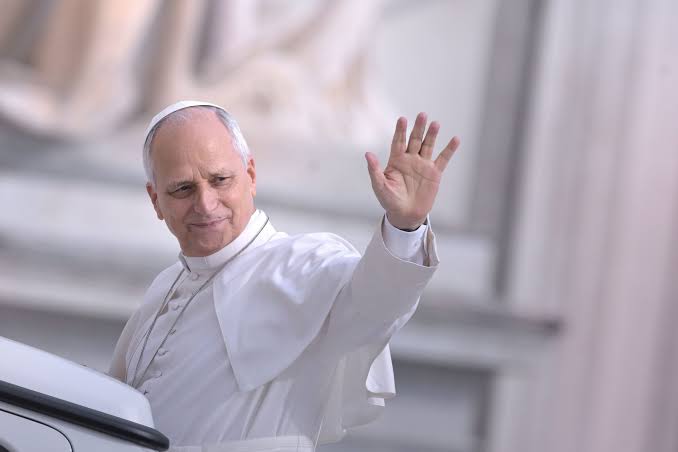
Pope Leo XIV was due to leave Rome’s Gemelli hospital on Saturday afternoon, four days after surgeons removed the lower lobe of his right lung to treat cancer. The Vatican said his doctors had declared him “fit for discharge” after blood tests and a chest X-ray taken that morning. The 71-year-old pontiff is expected to recite the Angelus on Sunday from the window of the papal apartment overlooking St Peter’s Square.
In a note published by the Vatican, his physicians, Luigi Carbone and Stefano Margaritora, said the decision followed a review of his tests and overall clinical condition. Margaritora heads thoracic surgery at the Agostino Gemelli University Polyclinic, where the Pope was admitted on Tuesday, October 13. The Vatican had earlier said his stay was expected to last about a week, making Saturday’s discharge earlier than planned.
The diagnosis came to light in stages. Leo himself told pilgrims after the Angelus on October 11 that a routine medical examination had revealed a nodule in his lung, which he described as detected at a very early stage and well localised. The Vatican later confirmed that the tissue removed was a pulmonary adenocarcinoma, as pre-operative tests had suggested, and said the operation was successful and without complications.
According to his doctors, the Pope spent about three hours in the operating theatre, with the procedure itself lasting roughly 90 minutes. The day after surgery, he began respiratory therapy, walked around his room and resumed eating, the Vatican said. By Thursday, a chest X-ray showed good recovery of the affected lung, and he had resumed some work from his tenth-floor room, where he has celebrated Mass daily.
Adenocarcinoma is the most common form of lung cancer. It is a type of non-small cell lung cancer, which the American Lung Association says accounts for about 80 per cent of all cases, while adenocarcinoma alone makes up roughly 40 per cent, according to the Lung Cancer Foundation of America. The disease affects smokers and non-smokers alike, and Leo has no known history of smoking. Globally, lung cancer is the most frequently diagnosed cancer and the leading cause of cancer deaths, with about 2.5 million new cases and 1.8 million deaths in 2022, according to the International Agency for Research on Cancer.
The Vatican has not said whether the Pope will need further treatment. His doctors are awaiting results of additional tests, including genetic and biomarker analysis, which will determine the next course of action. That uncertainty hangs over his travel plans, particularly a scheduled trip to Uruguay, Argentina and Peru from November 6 to 17.
Cardinal Pietro Parolin, the Vatican Secretary of State, told journalists on Friday that the decision on the trip would depend on how the Pope feels after leaving hospital. The journey carries personal weight for Leo, born Robert Francis Prevost in Chicago, who spent about two decades in Peru as an Augustinian missionary and later as Bishop of Chiclayo. All his audiences have been cancelled until October 20.
Leo has not been entirely off duty. On Friday, he telephoned Russian President Vladimir Putin to urge a ceasefire in Oleshky, a Russian-occupied city in southern Ukraine. Days before his surgery, he also confirmed Cardinal Luis Antonio Tagle as Dean of the College of Cardinals, and Tagle later read the Pope’s prepared homily at the close of a Vatican meeting of bishops’ conference presidents.
The episode is the first major surgery Leo has publicly disclosed since his election on May 8, 2025, as the first American pope. It also revives memories of his predecessor’s long struggles at the same hospital. Pope Francis was discharged ten days after colon surgery at Gemelli in 2021 and nine days after abdominal surgery in 2023. In 2025, he spent 38 days there with double pneumonia and died on April 21, less than a month after returning to the Vatican.
By comparison, Leo’s four-day stay points to a quicker recovery, though his doctors have yet to give a long-term prognosis. Before the diagnosis, he was widely regarded as a healthy and active pontiff, and the news unsettled many among the world’s estimated 1.4 billion Catholics. Leaders across faiths and governments, including the Archbishop of Canterbury, Sarah Mullally, sent prayers and good wishes this week.
For Nigeria’s Catholics, the Pope’s health carries particular interest. More than 70 Nigerian bishops met Leo at the Vatican during their ad limina visit in March, where they briefed him on insecurity and violence affecting their communities. His return to public duties, beginning with Sunday’s Angelus, will be closely watched for signs of how fully he can resume a demanding schedule.