
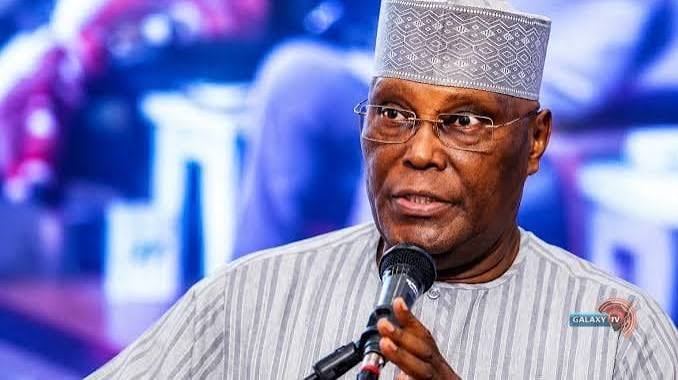
A lawyer representing the African Democratic Congress, Kalu Kalu, has argued that the Federal High Court judgment sacking the David Mark-led leadership of the party did not strip former Vice President Atiku Abubakar of his ticket for the January 16, 2027 presidential election. He said the ruling by Justice Peter Lifu carried no order expressly cancelling Atiku’s nomination, and accused sections of the public of reading meanings into the decision that its orders did not contain.
Speaking in a television interview on Thursday, Kalu insisted that nothing in the verdict voided the candidacy of Atiku or of other candidates nominated under the Mark leadership. He blamed the confusion on social media, saying commentators had credited the court with conclusions that were never written into the judgment.
His position speaks to the most consequential legal fight of the 2027 build-up. On November 5, Justice Lifu nullified the emergence of Mark and former Interior Minister Rauf Aregbesola as National Chairman and National Secretary, and declared every action and decision taken by their National Working Committee from July 29, 2025, null and void. The same judgment struck down the nominations the party made for the coming elections under that leadership, and restrained the Independent National Electoral Commission from recognising the Mark group as officers of the party.
The dispute traces to a suit by Nafiu Bala Gombe, a former Deputy National Chairman of the ADC, who challenged how the Mark team filled the vacancies created when the former National Chairman, Ralph Nwosu, and other executives resigned in July 2025. Gombe argued that the positions should have been filled through democratic elections under the party’s constitution and the Electoral Act. Justice Lifu agreed, holding that the process fell short of Section 82(3) of the Electoral Act 2022 and breached both the party’s constitution and the 1999 Constitution.
Counsel to Gombe, Lukman Fagbemi (SAN), said after the ruling that it had effectively invalidated every action taken by the leadership since it assumed control. Because that committee organised the primary that produced Atiku and his running mate, former Rivers State Governor Rotimi Amaechi, the judgment has been widely taken to place the ticket in jeopardy, the very outcome Kalu disputes. The court recognised Gombe as the only validly elected member of the National Working Committee still in tenure, but declined to pronounce him substantive National Chairman.
The ADC has rejected the outcome. Atiku described it as a calculated move to weaken the opposition and frustrate his ambition, and vowed to approach the Court of Appeal. The party’s National Publicity Secretary, Bolaji Abdullahi, called the judgment politically motivated and warned that its effect reached beyond Atiku to thousands of candidates fielded for other offices.
On November 6, the party’s legal team, led by Shaibu Enejoh Aruwa (SAN), filed a notice of appeal and an application for a stay of execution, and formally notified INEC of both steps. The ADC urged the commission to hold off on any decision until the appeal is heard, insisting that a court of coordinate jurisdiction cannot set aside an earlier ruling. It leaned on a July 2, 2026 judgment by Justice Musa Liman of the same court, which the Mark camp has relied on to defend its leadership.
INEC has said it will study the certified true copy of the judgment and seek legal advice before deciding its next move, stressing that it will not take a position without first examining the orders. The commission had earlier published Atiku’s name as the ADC presidential candidate for 2027.
For now, the standing of the ticket rests on two competing readings of a single judgment and on how fast the appeal moves. With the presidential election fixed for January 16, 2027, the calendar leaves little room, and the next firm word on Atiku’s place on the ballot is likely to come from the Court of Appeal rather than the campaign trail.