

The Debt Trap: How African Governments’ Debt Burdens Are Crippling Development
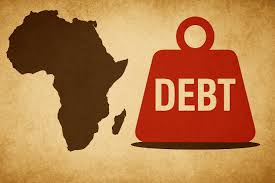
Africa’s development challenge is fundamentally a fiscal crisis. Across the continent, African governments allocate the majority of their revenues to servicing external debt, leaving critically inadequate funding for healthcare, education, and infrastructure—the very sectors required for sustainable economic growth. According to recent data, the pattern is stark and deeply troubling: nations that should be investing in their people are instead transferring wealth to foreign creditors, perpetuating cycles of poverty and underdevelopment.
Former Central Bank of Nigeria deputy governor Kingsley Moghalu captured the essence of this crisis in recent comments, drawing attention to research revealing that many of Africa’s poorest countries now spend more on servicing debt than on healthcare, education and infrastructure combined. “Debt is blocking Africa’s development, instead of facilitating it,” Moghalu stated, highlighting a harsh reality documented across multiple independent assessments.
The statistics underscore the severity of the problem. In 2024, African countries were projected to spend close to $90 billion on external debt servicing alone, according to data cited in a United Nations report released in November 2024. This figure represents a sharp rise compared with levels recorded before the COVID-19 pandemic, and it comes at a time when millions across the continent lack access to basic healthcare and educational services.
The fiscal priorities across Africa reveal an economy-wide distortion of public spending. Between 2019 and 2023, African governments on average spent several times more on debt service than on infrastructure development, according to analysis by the United Nations Conference on Trade and Development (UNCTAD). In at least 15 countries, payments on interest and principal exceeded total infrastructure spending. In more than 25 countries, debt service costs were higher than public spending on health, whilst in several others they surpassed education budgets entirely.
More than half of Africa’s population—approximately 751 million people—lives in countries where government spending on debt service exceeds spending on healthcare and education combined, according to UNCTAD research. This represents one of the most damaging fiscal inequities in the global economy, leaving vulnerable populations bearing the consequences of borrowing decisions made without adequate regard for development outcomes.
Nigeria exemplifies the scale of the crisis. The Federal Government spent 69 per cent of its total 2024 revenues on debt servicing, according to the Budget Implementation Report released by the Budget Office of the Federation in September 2025. Of the N19.354 trillion earned in 2024, N11.887 trillion went into debt payments alone, leaving severely limited resources for infrastructure and development spending. This represents nearly seven naira out of every ten earned, leaving minimal fiscal space for development.
The World Bank and the International Monetary Fund recommend that debt service should not exceed 30 to 40 per cent of government revenue for developing economies. Nigeria’s ratio of 69 per cent is nearly double this threshold, reflecting a fiscal emergency that constrains every developmental ambition
Africa’s debt crisis has been exacerbated by a fundamental shift in the composition of external borrowing. Commercial debt, which includes bonds and loans from private creditors, now accounts for 43 per cent of Africa’s total external debt, up from just 26 per cent in 2000, according to data from the World Bank’s International Debt Statistics database. These loans typically attract substantially higher interest rates and shorter repayment periods than traditional bilateral or multilateral financing, dramatically increasing annual debt service obligations.
The rise of Eurobonds—international bonds denominated in foreign currency—has made Africa’s debt burden particularly vulnerable to currency fluctuations and global interest rate shocks. When global interest rates rise, as they did significantly between 2022 and 2024, African governments face higher repayment bills on both new and existing debt, particularly on variable-rate and market-based loans. This dynamic has reduced fiscal flexibility across the continent and increased the share of national budgets devoted to debt servicing.
Bilateral debt from government-to-government lending now accounts for only a quarter of total external debt, a decrease of 52 per cent from 2000, whilst multilateral debt from institutions such as the World Bank and International Monetary Fund has remained relatively stable at 34 per cent of total external debt. The diversification of creditors—now including numerous private entities and commercial lenders—has made debt restructuring far more complex and protracted.
The consequences of debt-driven budgets are evident in deteriorating social outcomes across the continent. In 2023, more than half of Africa’s population lived in countries where government spending on debt service exceeded spending on healthcare. In several countries, funds allocated to education have declined in real terms as governments have prioritised meeting repayment schedules over educational investment.
In Zambia, where external debt servicing ballooned to consume 24 per cent of government revenue, the government cut public spending on healthcare by 13 per cent between 2014 and 2022, whilst spending per person on education fell by a staggering 40 per cent during the same period, according to research by Christian Aid. These are not abstract budget figures; they represent children not attending school, patients unable to access medical care, and communities unable to access basic health services.
The Christian Aid report “Between Life and Debt,” released in December 2024, examined five African countries—Kenya, Ethiopia, Zambia, Nigeria, and Malawi—finding that four out of the five spent more on repaying external debt than on education and healthcare combined. Ethiopia and eight other countries spent more on external debt servicing than on healthcare alone, though not on education.
Ethiopia, Rwanda, Mozambique, and Senegal have recorded staggering increases in external debt. According to the Debt Relief for a Green and Inclusive Recovery (DRGR) Project, a collaborative initiative of the Boston University Global Development Policy Center, Heinrich-Böll-Stiftung, and the Centre for Sustainable Finance at SOAS, these countries have recorded a tenfold increase in external debt in recent years, drastically constraining their ability to fund social programmes.
The debt servicing burden extends beyond government budgets to constrain broader economic development. In 2022, debt servicing absorbed more than 11 per cent of Africa’s export revenues, according to UN Trade and Development data. This diverts precious foreign exchange earnings away from development-related imports such as medical equipment, educational materials, and industrial inputs necessary for manufacturing and industrial development.
For developing economies, export earnings represent critical resources for purchasing essential goods that cannot be produced domestically. When debt servicing consumes such a substantial share of export revenues, the ability of governments to import capital goods and development materials is severely compromised, creating a cycle of underdevelopment perpetuated by the debt burden itself.
The debt crisis reflects deeper structural problems in the international financial architecture, which critics argue is poorly suited to Africa’s development needs. According to Christian Aid and partner organisations, African countries have received loans at a rate of two to one compared to grant-based funding. This lending-based approach to development finance has forced nations into a debt trap, as repayment obligations accumulate faster than capacity to generate the growth necessary to service them.
The G20 Common Framework, established in 2020 to assist countries in debt distress, has proven inadequate. Only Chad, Ethiopia, Ghana, and Zambia have applied for debt relief under this framework, and negotiations have been slow and complex due to protracted disputes between multiple creditors and limited private creditor participation. The framework’s failure to rapidly facilitate debt relief reflects the broader dysfunction in how global financial institutions address African debt.
Patrick Njoroge, former Governor of the Central Bank of Kenya and co-chair of the DRGR Project, described the current situation as “the worst crisis in 80 years,” emphasising that external public debt service ratios have reached record levels with a growing number of countries risking default not only on debt, but also on their development and climate goals. Four African nations—Zambia, Ghana, Kenya, and Chad—have already sought debt restructuring since 2020, a signal of the crisis’s depth.
Despite the evident fiscal strain, African governments continue borrowing, partly because development needs far exceed available domestic resources. The continent requires between $130 and $170 billion annually for infrastructure development alone, according to figures from the African Development Bank. To finance this infrastructure, governments have little choice but to turn to international capital markets, where loans come at steep interest rates and onerous terms.
A fundamental challenge involves currency mismatches. African governments often borrow in US dollars whilst the income generated from infrastructure investments is produced in local currency. When the local currency depreciates against the dollar—as the Nigerian naira has done significantly—repayment costs escalate dramatically in naira terms, making debt service increasingly unaffordable.
Experts across multiple institutions agree that the current trajectory is unsustainable. Kingsley Moghalu has argued that African countries must fundamentally reconsider their approach to borrowing, reducing dependence on external debt and prioritising domestic revenue generation. “African countries must borrow less, and spend more wisely and responsibly,” he stated.
The African Union has obligated member governments to allocate at least 9 per cent of their gross domestic product to education under the Dakar Declaration on Education, whilst international frameworks recommend 4 to 6 per cent of GDP. Yet many African nations allocate less than these targets, with debt servicing consuming resources that should fund educational expansion.
Solutions require multifaceted action. The United Nations Conference on Trade and Development recommends substantial infusion of low-cost financing, comprehensive debt relief, and a fundamental restructuring of the international financial architecture. This includes reformed multilateral lending terms, enhanced private creditor participation in debt relief initiatives, and expanded use of public-private partnerships to reduce pressure on public borrowing.
Revenue mobilisation represents another critical avenue. Many African countries have tax-to-GDP ratios below 15 per cent, far below the 25 per cent average in developed nations. Strengthening tax administration, broadening the tax base, and reducing corruption could expand fiscal space without requiring additional borrowing. However, such reforms require institutional capacity and political will that many governments lack.
The African debt crisis, whilst severe, remains addressable through coordinated international action and domestic policy reform. The continent requires debt relief sufficient to restore fiscal space for development investment, alongside restructuring of the international financial architecture that governs borrowing terms for developing nations.
Former UK Prime Minister Gordon Brown, writing in the Christian Aid report, termed the debt crisis an “injustice” perpetuated by an interconnected economic system that has failed the global majority.
“Christian teaching tells us that injustice anywhere is a threat to justice anywhere. The scale of this inequality between Africans and the rest of the world is so great that I am not sure the world will ever forgive us for failing to deliver urgent debt restructuring,” he wrote.