
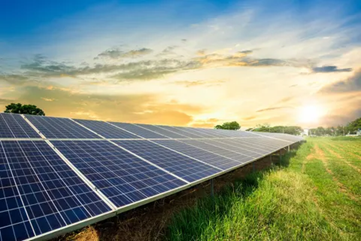
The Federal Government recently retreated from its proposal to restrict and heavily tax imported solar panels, after concerted pushback from commercial operators, renewable energy developers, and energy access advocates. The trade barriers were formally introduced as an infant-industry measure designed to spur domestic photovoltaic manufacturing. The shelved plan prevented an immediate commercial disaster. Yet the episode exposed a deep structural confusion within Nigeria’s economic and energy planning apparatus. The readiness with which fiscal and trade authorities considered penalising clean energy hardware, even briefly, reveals a policy machine working at cross-purposes with itself.
The context of this misstep makes it inexcusable. Nigeria’s national electricity grid remains prone to frequent collapses, rarely delivering more than four thousand megawatts to a population exceeding two hundred million people. The simultaneous removal of the premium motor spirit subsidy pushed retail fuel prices to punitive heights, making petrol-powered generators unaffordable for small businesses and urban households alike. In this severe energy squeeze, decentralised solar power ceased to be an experimental ecological alternative. It became the primary survival mechanism for cold-chain operators, micro-enterprises, clinics, and rural communities. Threatening this lifeline with punitive tariffs strikes at the core of national economic resilience. It undermines international decarbonisation commitments under the Energy Transition Plan while punishing the productive informal sector that keeps the real economy afloat.
The most corrosive consequence of such policy gambits is the severe distortion introduced into long-term capital formation. Utility-scale off-grid schemes, rural minigrids, and commercial solar installations require patient capital and multi-year investment horizons. Developers operate on thin financial margins driven by equipment procurement expenses, foreign exchange volatility, and local community purchasing power. When trade authorities signal erratic changes to import classifications or threaten sudden border tariffs, the underlying risk profile spikes. Debt financiers pause disbursements, international development finance institutions reassess their exposure, and local operators must price regulatory instability into consumer tariffs. Rural minigrid expansion slows to a crawl because a developer cannot commit to a five-year electrification concession when the customs duty on photovoltaic modules may double overnight on the whim of a ministry circular.
The rationale for these import penalties—that immediate trade barriers will create a domestic solar manufacturing sector—rests on a profound misreading of industrial economics. One cannot mandate an advanced high-technology industry into existence through customs prohibitions alone. Photovoltaic panel production is not an isolated assembly activity; it sits at the apex of a complex industrial pyramid. True solar manufacturing requires semiconductor-grade polysilicon processing, specialised glass fabrication, chemical encapsulation layers, precision robotics, and ultra-reliable baseline electric power.
Nigeria does not possess the processing facilities to refine quartz into solar-grade silicon, nor does it have an uncorrupted electricity supply to run clean-room assembly lines without costly heavy-fuel generators. The few domestic assemblers that operate locally rely almost entirely on imported photovoltaic cells, busbars, EVA sheets, and specialised tempered glass. Restricting the importation of completed panels while the domestic supply chain lacks basic sub-components does not grow industrial capacity. It merely enriches rent-seekers who re-box imported knocked-down kits, starves the wider economy of cheap electricity, and drives up end-user costs for consumers who have no alternatives.
This structural disconnect highlights the institutional conflict between the Ministry of Finance and the country’s wider economic interests. The Federal Ministry of Finance and the Nigeria Customs Service face intense domestic pressure to expand non-oil revenue receipts to service sovereign debt obligations. In collection targets, revenue agencies often treat the ports as crude tollgates, viewing imported solar panels, inverters, and lithium-iron batteries simply as taxable consumer goods rather than critical productive capital.
This view is penny-wise and pound-foolish. The immediate customs revenue from a five or 10% duty on solar hardware is trivial compared to the systemic economic losses caused by energy poverty. When a tailor, a welder, or a pharmacist adopts off-grid solar, their operating costs drop, business hours expand, and taxable net income grows. By contrast, taxing solar inputs keeps those enterprises dependent on expensive fuel or forces them to shut down entirely, destroying the broader tax base that the state seeks to cultivate. The Ministry of Finance must recognise that zero-rating clean energy equipment is not a fiscal concession or a subsidy to importers. It is an investment in aggregate economic productivity.
The retreat from the proposed import restrictions was a necessary damage control, but it does not resolve the structural policy volatility that enabled the blunder. Nigeria cannot afford a trade policy that treats energy access as a bargaining chip for premature import-substitution experiments. Domestic industrial capacity requires systematic investment in technical education, steady baseline power within dedicated special economic zones, and targeted tax holidays for raw input materials. Until those foundations exist, clean energy hardware must flow through the ports unhindered. Confronting an electricity crisis requires total administrative coherence: you cannot proclaim an industrial revolution in the dark.