


Tinubu Approves 65 Ambassadors to Fill Global Vacancies
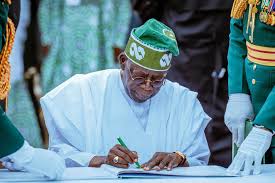
President Bola Ahmed Tinubu has approved the posting of 65 ambassadors-designate to diplomatic missions across the world, filling critical vacancies in Nigeria’s foreign service more than a year after the recall of several envoys and following their confirmation by the Senate in December 2025.
The list, released by the Ministry of Foreign Affairs on Wednesday, comprises 31 career ambassadors drawn from the foreign service and 34 non-career appointees, a category typically reserved for political allies and prominent Nigerians with extensive networks. The postings span strategic bilateral missions and multilateral representations, including the United Nations.
Among the high-profile non-career postings, Senator Grace Bent has been assigned to Lomé, Togo, while Lt. Gen. Abdulrahman Bello Dambazau (retd), a former Chief of Army Staff and Minister of Interior, has been posted to Beijing, China. Mr. Reno Omokri, a former presidential aide and author, is designated for Mexico City, Mexico.
Other notable names on the list include Senator Ita Enang, a long-time legislative aide and adviser to previous administrations, who has been posted to Pretoria, South Africa. Femi Fani-Kayode, a former Minister of Aviation and controversial political commentator, has been assigned to Berlin, Germany. Aminu Dalhatu, whose name appears in the non-career category, is designated for the United Kingdom, one of Nigeria’s most significant bilateral posts.
The career ambassadors have been assigned to countries including Côte d’Ivoire, Niger Republic, Egypt, India, Ghana, Ethiopia, and Morocco. The full breakdown of postings reflects an effort to cover Nigeria’s extensive network of 109 diplomatic missions worldwide, though some postings remain unfilled.
According to a statement from the Ministry of Foreign Affairs, host country agreement—the formal diplomatic clearance required before an envoy can assume duties—has already been secured for two of the designated ambassadors.
The United Kingdom has accepted the nomination of Aminu Dalhatu as High Commissioner-designate, while French authorities have granted agreement for Ambassador Ayo Oke. The ministry has confirmed that requests for agreement have been forwarded to the remaining 62 host countries, in line with standard diplomatic practice which requires receiving states to consent to foreign envoys before they can present their credentials.
The processing of these agreements can vary significantly depending on bilateral relations and administrative timelines. Some countries routinely grant approval within weeks, while others may delay for political or procedural reasons. The ministry has not indicated whether any of the nominations have encountered resistance from host nations.
The composition of the list suggests a calculated blend of career diplomats with institutional memory and political appointees who bring personal relationships and political capital to their assignments. The posting of Fani-Kayode to Germany places a figure with strong media presence and political connections in a key European capital where Nigeria seeks investment and technical cooperation.
Omokri’s assignment to Mexico positions a social media-savvy former aide in Latin America, a region where Nigeria has sought to expand trade and cultural ties. His appointment follows his years as a vocal defender of the previous Goodluck Jonathan administration and more recent role as a commentator on governance issues.
The choice of Lt. Gen. Dambazau for Beijing places a former service chief and security sector reform advocate in China, Nigeria’s largest bilateral lender and a critical partner in infrastructure development. Dambazau served as Minister of Interior from 2015 to 2019 under former President Muhammadu Buhari and has maintained ties with Chinese officials through security cooperation frameworks.
Senator Ita Enang’s posting to South Africa comes at a time when Nigeria and its continental rival are navigating complex trade relations and periodic tensions over immigration and the treatment of Nigerian citizens. Enang served as Senior Special Assistant to the President on National Assembly Matters under Buhari and later as adviser on Senate matters to Tinubu.
The envoys were confirmed by the Senate in December 2025 after screening by the Committee on Foreign Affairs. Their confirmation followed nominations submitted by Tinubu earlier in 2025, part of a broader reorganization of Nigeria’s diplomatic corps.
The postings come more than a year after the federal government recalled some ambassadors from foreign missions, a move that left several key posts without substantive heads. Charge d’Affaires have been managing diplomatic affairs in many missions during the interim period, operating with limited authority to sign agreements or represent Nigeria at the highest levels.
Diplomatic sources have previously attributed the delay in postings to the thoroughness of the screening process and the political calculations involved in distributing slots across the country’s six geopolitical zones. The current list reflects an effort to balance regional representation while accommodating presidential allies and experienced foreign service officers.
President Tinubu has directed the Ministry of Foreign Affairs to immediately organize an induction programme for all ambassadors-designate and high commissioners before their departure to postings. The programme is designed to brief envoys on Nigeria’s foreign policy objectives, current bilateral priorities, and the operational protocols of diplomatic service.
The induction will cover standard diplomatic training but also include briefings from intelligence agencies, trade promotion bodies, and the Nigerians in Diaspora Commission. Envoys are expected to understand their roles in promoting investment, protecting citizens abroad, and advancing Nigeria’s interests in multilateral forums.
The timing of the induction suggests the administration intends to move quickly toward deployment once host country agreements are finalized. However, envoys cannot assume their posts until receiving formal agrément and presenting their letters of credence to host heads of state.
The practice of appointing non-career ambassadors is well-established in Nigerian diplomatic tradition, with every administration since independence blending foreign service professionals with political loyalists. The ratio of career to non-career appointees has varied across administrations, with some favouring experienced diplomats while others prioritize political rewards.
The current ratio of 31 career to 34 non-career represents a slight tilt toward political appointees, continuing a trend observed in recent decades. Critics of political postings argue that inexperienced envoys often struggle with diplomatic protocols and fail to advance national interests effectively. Proponents maintain that political appointees bring access, relationships, and negotiating weight that career officers may lack.