

Trump Demands Veto Power Over Iran’s Next Supreme Leader Selection
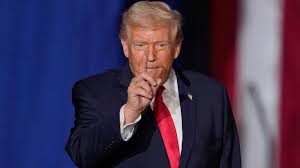
United States President Donald Trump has issued a stark warning that any new supreme leader appointed by Iran will require his personal approval to remain in power, directly challenging Tehran’s sovereignty as the country’s clerical establishment prepares to announce its choice to succeed the slain Ayatollah Ali Khamenei. The statement, delivered during an interview with ABC News on Sunday, came just hours before Iran’s Assembly of Experts concluded a private session to select the next head of state, nine days after US and Israeli strikes killed Khamenei and triggered a full-scale regional war.
Members of the Assembly of Experts, the constitutional body charged with appointing Iran’s supreme leader, confirmed that they had convened in secret and reached a decision, though they declined to identify the chosen candidate. Several members indicated that Mojtaba Khamenei, the 56-year-old son of the late leader, had emerged as the likely successor. The younger Khamenei maintains close operational ties to the Islamic Revolutionary Guard Corps, the ideological military force that serves as the backbone of the Islamic Republic’s security architecture, and is widely regarded as a conservative hardliner within the regime’s internal power structure.
Trump had previously dismissed Mojtaba Khamenei as a political “lightweight” and explicitly demanded influence over the succession process. “He’s going to have to get approval from us,” Trump told ABC News. “If he doesn’t get approval from us he’s not going to last long.” The president’s remarks represent an extraordinary assertion of extraterritorial authority over a sovereign state’s internal political arrangements, one that Tehran immediately rejected.
Foreign Minister Abbas Araghchi, speaking on NBC’s “Meet the Press” earlier Sunday, stated unequivocally that the succession decision belonged exclusively to Iran’s domestic institutions. “We will allow nobody to interfere in our domestic affairs,” Araghchi said. He went further to demand that Trump “apologise to the people of the region” for what he described as the spiralling consequences of American military intervention.
The diplomatic confrontation unfolded against a backdrop of intensifying military operations that have now entered their second week. Israel’s military leadership issued its own direct threat to any incoming Iranian supreme leader, warning through official channels that “we will not hesitate to target you.” That threat was substantiated within hours through two major strikes: a series of attacks against fuel storage facilities in and around Tehran, and a precision strike against a hotel in central Beirut believed to house Iranian commanders coordinating regional operations.
Israeli warplanes struck five separate oil facilities in the Tehran metropolitan area overnight, killing at least four people according to a senior state oil executive who spoke to domestic media. The assault generated massive fires that burned for more than twelve hours, releasing dense columns of acrid black smoke that enveloped the capital city of ten million inhabitants. Tehran’s governor confirmed to the Islamic Republic News Agency that fuel distribution networks had been “temporarily interrupted,” while health authorities issued urgent warnings that airborne contaminants could prove toxic.
Residents described apocalyptic conditions across the capital. “The blaze has been burning for more than twelve hours, the air has become unbreathable. I can’t even go out to do the daily shopping,” said a 35-year-old Tehran resident who communicated by text message with contacts in Europe. She recounted an abrupt shift in civilian sentiment: “At first, I supported this war. After Khamenei’s death, I celebrated with my friends: we drank wine and we danced. But since yesterday… people say there’s not even any gasoline left at the gas stations.”
The environmental damage extended beyond immediate health concerns. Photographs and video footage from Tehran showed a dark atmospheric haze blocking sunlight across entire districts, with the smell of burning petroleum products permeating residential neighbourhoods. The force of the explosions had shattered windows in multiple structures, exposing civilians to both physical debris and toxic fumes despite official advisories to remain indoors.
Iran’s military response has shown no indication of imminent collapse despite the sustained bombardment. Islamic Revolutionary Guard Corps spokesman Ali Mohammad Naini announced Sunday that the force possessed sufficient materiel to sustain drone and missile operations across the Middle East for “up to six months” at current expenditure rates. Naini disclosed that Iranian forces had thus far deployed only “first- and second-generation missiles,” reserving “advanced and less-used long-range missiles” for forthcoming operations.
That threat materialised partially Sunday with multiple explosions reported over Tel Aviv, Israel’s primary commercial centre, following detection of an incoming Iranian missile salvo. Magen David Adom, Israel’s national emergency medical service, confirmed six wounded civilians in central Israel, though the full extent of damage remained under assessment.
The geographical scope of Iranian retaliation has expanded well beyond the immediate Israel-Iran confrontation. Saudi Arabia’s interior ministry confirmed Sunday that a projectile strike in Al Kharj province, located southeast of Riyadh, killed two people and wounded twelve others. The incident followed Saudi military statements that air defence systems had intercepted a wave of Iranian drones targeting locations including Riyadh’s diplomatic quarter, where numerous foreign embassies maintain operations.
Kuwait’s government reported that fuel storage tanks at its international airport had sustained damage from an identified attack, while Bahrain announced that a water desalination facility critical to the island nation’s freshwater supply had been hit. Both Gulf states have historically maintained complex diplomatic relationships with Tehran, and the extension of hostilities onto their territory represents a significant escalation in regional risk calculations.
Iran’s health ministry released casualty statistics Sunday claiming at least 1,200 civilian deaths and approximately 10,000 wounded since hostilities commenced. These figures could not be independently verified by international monitoring organisations due to restricted access and ongoing security conditions. Lebanon’s health minister provided separate accounting indicating that 394 people had been killed in Israeli air strikes since that country was drawn into active conflict one week prior, including 83 children and 42 women. The Israeli military confirmed two soldier fatalities during ground operations in southern Lebanon.
Trump has consistently resisted pressure to definitively exclude the deployment of American ground forces to Iranian territory, while simultaneously maintaining that the conflict is “all but won” despite continuing Iranian ballistic and unmanned aerial vehicle attacks. This contradictory positioning drew fresh scrutiny following the president’s telephone conversation Sunday with British Prime Minister Keir Starmer, which occurred after Trump had publicly insulted the British leader and accused him of attempting to join “a war we’ve already won.”
Downing Street’s official statement characterised the discussion as focused on “military cooperation,” noting specifically that Britain had authorised American use of British military installations for “collective self-defence of partners in the region.” This formulation carefully distinguished current permissions from Britain’s refusal to permit its bases to be used for the initial strikes against Iran, a nuanced position reflecting domestic political constraints on London’s involvement.
The human costs of the conflict received ceremonial acknowledgment Saturday when Trump attended the repatriation ceremony for six American service members killed in a drone strike against a US military installation in Kuwait the previous Sunday. The attack, which targeted American personnel at a base in a country that has hosted US forces since the 1991 Gulf War, demonstrated Iranian capabilities to strike at American interests across the region’s geography.
Strategic analysts caution that no discernible diplomatic pathway has emerged to terminate hostilities, with both US and Israeli officials privately suggesting the conflict could extend for a month or longer. Trump has floated the possibility of Iranian economic reconstruction conditional upon the installation of a supreme leader “acceptable” to Washington, framing the succession crisis as an opportunity for regime recalibration under external supervision.
Major international powers have largely refrained from substantive intervention despite their historical relationships with Tehran. China and Russia, both permanent members of the United Nations Security Council with significant economic and military ties to Iran, have maintained observational positions rather than active mediation roles.
Chinese Foreign Minister Wang Yi addressed the conflict during a press conference in Beijing, stating that the Middle East war “should never have happened” and warning that “the world cannot return to the law of the jungle.” The statement, while critical of the military escalation, stopped short of proposing concrete diplomatic mechanisms or assigning specific responsibility to either party.
Pope Leo XIV, installed as head of the Roman Catholic Church in May 2025 following the death of Pope Francis, offered spiritual intervention Sunday. “I pray that the roar of the bombs may cease, the weapons may fall silent, and a space for dialogue may open,” the pontiff said during public prayers. The statement marked the first major Vatican commentary on a conflict that has now drawn in multiple religious communities across the Middle East.
The succession process now underway in Iran carries profound implications extending far beyond the immediate military crisis. The Assembly of Experts, an elected body of senior clerics constitutionally empowered to select, supervise, and if necessary remove the supreme leader, has historically operated with extreme deliberation. Its current accelerated timeline, compressing what would normally require months of theological and political consultation into mere days, reflects the extraordinary pressure of wartime conditions.
Ayatollah Ali Khamenei, who died at age 86, had occupied the position since 1989 following the death of Ayatollah Ruhollah Khomeini, the founder of the Islamic Republic. Khamenei’s 36-year tenure saw the consolidation of clerical control over all state institutions, the expansion of the Revolutionary Guard Corps into a parallel economic and military empire, and the development of Iran’s regional influence through proxy networks in Lebanon, Syria, Yemen, and Iraq. His death in military strikes rather than natural causes has deprived the succession process of the gradual preparation that accompanied previous leadership transitions.
Mojtaba Khamenei, though lacking his father’s formal religious credentials and popular recognition, has reportedly managed key patronage networks within the Revolutionary Guard and the Basij paramilitary force. His potential elevation would represent a departure from the republic’s republican pretensions toward more explicit dynastic succession, a shift that has generated internal opposition among clerical factions committed to republican principles.
The confrontation between Trump’s demands for veto authority and Araghchi’s assertion of sovereign independence sets up a structural crisis regardless of whom the Assembly of Experts selects. An Iranian leadership candidate acceptable to Washington would likely face immediate delegitimisation domestically, while a candidate who defies American preferences risks facing the military and economic coercion Trump has explicitly threatened.
Israel’s parallel warning that it “will not hesitate to target” any new supreme leader creates a convergent pressure environment where the physical survival of Iran’s next head of state may depend upon alignment with external powers rather than domestic legitimacy. This condition, unprecedented in the Islamic Republic’s 46-year history, raises fundamental questions about the state’s continued capacity to function as an autonomous political entity.
The regional architecture established since the 1979 Iranian Revolution now faces comprehensive stress testing. The network of militia proxies that extended Iranian influence across the Arab world, the economic relationships built through sanctions evasion and energy exports, and the domestic social contract that traded political freedom for stability and development subsidies have all been simultaneously disrupted by military bombardment and leadership decapitation.
For civilian populations across multiple countries, the immediate crisis manifests in more elemental terms: breathable air, accessible fuel, functioning infrastructure, and physical safety. The Tehran resident who shifted from celebratory wine consumption following Khamenei’s death to anxiety over basic shopping access within 72 hours illustrates the velocity with which conflict conditions can transform political sentiment. Similar calculations are occurring in Beirut, where Israeli strikes have targeted suspected Iranian operational cells in civilian neighbourhoods, and in Gulf capitals where missile defence systems now represent essential rather than theoretical infrastructure.
The absence of any negotiating framework, combined with Trump’s insistence that the war is already won while refusing to exclude ground invasion, suggests a prolonged period of military operations with indeterminate political objectives. Iran’s announced intention to escalate to “advanced and less-used long-range missiles” indicates that both sides retain significant unutilised capabilities, raising the prospect of further geographical expansion and civilian harm as the conflict continues.