

UEFA Slams Premier League’s ‘Unsustainable’ Spending Hike
The English Premier League has formally adopted a new financial framework allowing member clubs to allocate up to 85% of their revenue toward squad costs, a threshold that substantially exceeds the 70% limit imposed by European football governing body UEFA on clubs competing in continental competitions. The decision, finalised through a vote of Premier League clubs, establishes the Squad Cost Ratio (SCR) as the league’s primary cost control mechanism, covering player wages, transfer fees, and associated adjustments within the system.
UEFA has publicly contested the move, warning that the elevated spending cap could destabilise financial sustainability across European football. In a statement reported by BBC Sport on Tuesday, the governing body cautioned that the Premier League’s approach may compel clubs continent-wide to assume greater financial risks and absorb higher costs and losses simply to retain playing talent. The Premier League has rejected this assessment, maintaining that its framework will preserve competitive balance and asserting its position against a uniform financial fair play system applicable to all leagues.
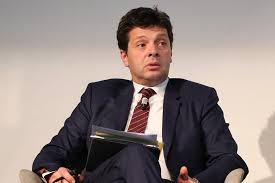
Andrea Traverso, UEFA Director of Financial Sustainability and Research, articulated these concerns during the Financial Times Business of Football Summit held last month. “The Premier League alone now generates a quarter of all European club revenues. With additional spending power, this will create market tensions,” Traverso stated. He drew a sharp distinction between the governing bodies’ objectives, noting that “the objective at UEFA is financial sustainability. The objective in the Premier League is competitiveness.”
Traverso pointed to the concentration of elite talent within English football as evidence of emerging market distortion. He observed that 40% of the world’s highest-value players currently reside at Premier League clubs, yet many remain unused, “sitting on the bench or, even worse, in the stands.” He characterised this as “an extraordinary and worrying concentration of talent.” Traverso further warned that inconsistent application of financial regulations across jurisdictions could exacerbate these tensions.
The regulatory landscape across Europe’s major leagues presents a fragmented picture. Last week, the German Bundesliga voted to implement a 70% cost threshold, aligning with UEFA’s stricter standard. Italy’s Serie A maintains a focus on cost sustainability while actively discussing alignment with UEFA’s framework. French football, navigating the aftermath of the domestic league’s collapsed television broadcast agreement, prioritises audited financial viability, requiring clubs to demonstrate solvency and rigorous budget control. Spain’s La Liga has operated under the stringent 1:1 rule since 2022, a domestic financial control model that assigns each club a specific spending limit based solely on self-generated funds.
Javier Tebas, president of La Liga and a consistent critic of Premier League financial dominance, addressed these divergent standards last month. “The regulations will cause more inflation and more problems,” Tebas said. He called for regulatory harmonisation across competitions, stating that “someone has to harmonise all of this. Financial fair play for La Liga, the Bundesliga, UEFA – this isn’t rocket science.”
The Premier League’s 85% threshold represents a significant departure from the cost control models adopted or under consideration by its continental counterparts. While the league argues that its approach sustains domestic competitiveness, UEFA and several rival leagues contend that the disparity threatens to inflate transfer markets and wage structures beyond sustainable levels for clubs operating under tighter constraints.