


US Slaps Visa Restrictions On Rwandan Officials Over M23 Support
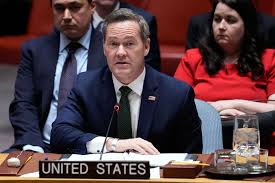
The United States has imposed visa restrictions on several senior Rwandan officials, accusing them of fuelling instability in the eastern Democratic Republic of the Congo through continued support for the M23 rebel militia and violations of the Washington Accords. The sanctions, announced by Secretary of State Marco Rubio on Friday, represent the latest escalation in American pressure on Kigali as the humanitarian catastrophe in the Great Lakes region deepens despite months of internationally mediated peace efforts.
“By continuing to support M23 and violating the Washington Accords, these individuals are driving violence and undermining the stability of the entire Great Lakes Region,” Rubio stated in an official release from the Department of State. “The United States expects all parties to the Washington Accords to fully implement their commitments.” The visa restrictions come days after the US imposed economic sanctions on Rwanda’s military and four senior officers, including army chief of staff Lieutenant General Vincent Nyakarundi, targeting those Washington identified as critical to M23’s territorial gains.
The M23, or March 23 Movement, is an armed rebel group operating primarily in North Kivu Province, an area bordering Rwanda and Uganda. The group’s name derives from March 23, 2009, the date of a peace agreement between the Congolese government and the National Congress for the Defence of the People (CNDP), an earlier rebel movement led by warlord Laurent Nkunda. When the 2009 accord collapsed due to failed integration of CNDP fighters into the national army and broken promises of amnesty, defecting officers formed the M23 in April 2012, citing the government’s failure to honour the March 23 agreement. The group briefly seized control of Goma in November 2012 before international pressure and military pushback from a UN Force Intervention Brigade compelled its retreat to Rwanda and Uganda.
The current M23 offensive, which resumed in earnest in late 2021, has dramatically intensified since January 2025. On January 26, 2025, M23 fighters backed by the Rwanda Defence Force recaptured Goma, the capital of North Kivu Province. By February 16, the rebels had taken Bukavu, the capital of South Kivu Province, effectively consolidating control over vast swathes of eastern Congo rich in critical minerals including cobalt, lithium, and coltan. The United Nations Group of Experts on the DRC has consistently documented Rwandan military support for M23, including the deployment of between 3,000 and 4,000 RDF troops alongside rebel forces and the supply of advanced weaponry and logistics.
The Washington Accords, signed with considerable fanfare at the United States Institute of Peace on December 4, 2025, were intended to arrest this deterioration. Presidents Felix Tshisekedi of the DRC and Paul Kagame of Rwanda appended their signatures to the agreement in a ceremony presided over by then President-elect Donald Trump, attended by multiple African heads of state including Kenya’s William Ruto, Angola’s João Lourenço, Burundi’s Évariste Ndayishimiye, and Togo’s Faure Gnassingbé. The accords built upon an earlier Peace Agreement signed on June 27, 2025, which established a framework for the neutralisation of the Democratic Forces for the Liberation of Rwanda (FDLR) and the withdrawal of Rwandan troops from Congolese territory.
The FDLR, a Hutu-led armed group active in eastern DRC, contains elements linked to the 1994 Rwandan genocide against the Tutsi. The Washington Accords require the DRC to immediately neutralise the FDLR and associated groups while demanding Rwanda withdraw its troops and military equipment from Congolese soil. The agreement also established a Regional Economic Integration Framework intended to unlock the vast economic potential of the Great Lakes region through cooperation on energy, infrastructure, mining, and public health, contingent upon full implementation of security commitments.
Implementation has stalled repeatedly. A deadline to sign a final peace deal with M23 in Doha was missed on November 11, 2025, and the heads of state signing ceremony was delayed from November 21 to December 4. Even after the December signing, M23 launched multiple attacks against government forces in South Kivu on December 2 and 3, targeting the Congolese army, Wazalendo militia, and Burundian National Defence Force troops. By December 10, the rebels announced capture of the last major settlement in South Kivu, Uvira, despite the ceasefire and peace deal. DRC and Burundian foreign ministers Therese Kayikwamba Wagner and Edouard Bizimana subsequently called on Washington to sanction Rwanda for non-compliance, while Rwandan Foreign Minister Olivier Nduhungirehe denied allegations of troop presence in the DRC as “ridiculous.”
The Joint Security Coordination Mechanism, established under the June 2025 agreement and comprising representatives from the US, Qatar, Togo as African Union mediator, and the AU Commission, has convened multiple times in Washington to review progress. The fourth meeting on November 19 and 20, 2025, acknowledged slowness in implementation, while a subsequent meeting on February 18 and 19, 2026, continued discussions on the Operations Order for neutralising the FDLR and Rwandan troop withdrawal. Throughout these proceedings, Qatar has maintained parallel facilitation efforts between the Congolese government and M23 in Doha, resulting in a framework agreement signed on November 15, 2025, though final terms remain unsettled.
The visa restriction policy utilised by the State Department authorises the Secretary of State to render inadmissible any alien whose entry into the United States “would have potentially serious adverse foreign policy consequences for the US.” Certain family members of designated individuals may also be covered by these restrictions. The Department did not specify which Rwandan officials were targeted, noting that visa records remain confidential under US law.
Rubio’s statement on Friday reinforced the conditional nature of American engagement with the region. “Only then will the immense economic potential of the Great Lakes region be realised,” he said, referring to full implementation of the Washington Accords by both parties. “Individuals believed to be responsible for, complicit in, or directly or indirectly engaged in undermining or impeding a sustainable peace in the Great Lakes region will face consequences.”
The sanctions announcement coincided with a joint statement issued on Thursday by the United States, European Union, France, Britain, and Belgium, calling for “a permanent ceasefire and a permanent cessation of hostilities.” The statement declared that “there can be no military solution to the conflict” and urged all parties “to stop incitement to hatred, discrimination or violence,” including against people of Rwandan heritage inside the DRC.
Rwanda has consistently denied direct support for M23 while maintaining that its security concerns regarding the FDLR justify defensive measures. Kigali has long pressed Kinshasa to crack down on the FDLR, which remains active in eastern Congo decades after the 1994 genocide. The Congolese government, for its part, has accused Rwanda of using the FDLR as a pretext for territorial aggrandisement and resource extraction, pointing to M23’s establishment of parallel state institutions in controlled territories and its taxation of mineral flows.
The humanitarian toll of the conflict continues to mount. The United Nations Office for the Coordination of Humanitarian Affairs reported that over 700,000 people were displaced in the first two months of 2025 alone, adding to the millions already displaced by decades of conflict in eastern Congo. The M23’s capture of Goma and Bukavu has disrupted humanitarian access and created severe protection risks for civilians, particularly women and children in displacement camps.
Analysts remain sceptical that unilateral American sanctions will alter the strategic calculations of either Kigali or Kinshasa. The International Crisis Group noted in a December 2025 assessment that the Washington Accords were criticised as primarily serving US geopolitical and economic interests, opening up mines to American private sector access, including those controlled by M23. The same analysis observed that US efforts have been “too little to pressure either Rwanda or the DRC to make the compromises necessary to stop the conflict.”
The visa restrictions follow a pattern of escalating American pressure that included the December 2025 designation of Nigeria as a “Country of Particular Concern” over religious freedom concerns and subsequent military action. However, the targeted sanctions on Rwandan officials represent a more precise instrument than the broad economic measures imposed earlier in the week on Rwanda’s military establishment. Whether this calibrated approach can succeed where comprehensive diplomatic initiatives have faltered remains an open question as the humanitarian catastrophe in eastern Congo continues unabated.