
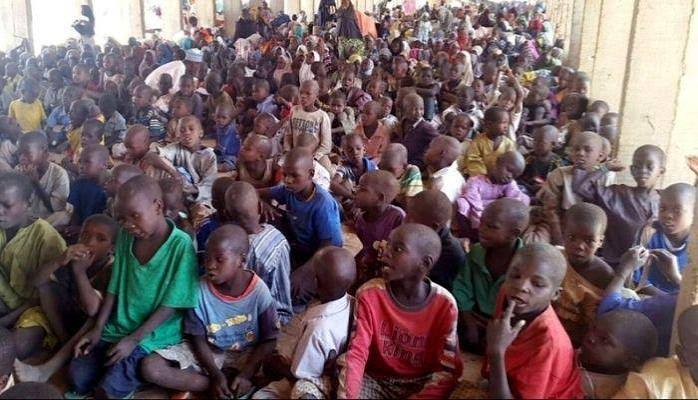
A privately authored, five-year blueprint proposing N154 trillion to overhaul Nigeria’s education system has entered public debate at a moment when the country still carries the world’s heaviest burden of out-of-school children and continues to fund the sector well below international benchmarks.
The plan, branded the Nigeria Education Transformation Initiative, was set out in an opinion essay published by The PUNCH on June 23, 2026, and written by Olusegun Ayo-Adebanjo, who identifies himself as a venture capitalist. He describes it as independent work produced outside government, built around six pillars covering teacher pay, professional development, infrastructure, learning materials, school feeding, and governance, and benchmarked against Singapore, Norway, China, and the United States.
At the centre of the document is a figure that has shadowed Nigeria’s education debate for two years. UNICEF first disclosed in May 2024 that 18.3 million Nigerian children were out of school, a tally drawn from earlier survey data and one that positions the country with the highest number globally. The agency has reported that only about 63 per cent of primary-age children attend school regularly, and that roughly half of basic education teachers lack the Nigerian Certificate in Education.
The fiscal backdrop the author invokes is partly accurate and partly dated. Nigeria’s 2026 Appropriation Bill was presented to the National Assembly in December 2025 at N58.18 trillion, with N3.52 trillion, about 6.1 per cent, earmarked for education. The figure of N54.99 trillion cited in the essay corresponds to the 2025 budget, not the current year. Either way, both allocations fall short of the UNESCO guidance that countries devote 15 to 20 per cent of public spending to education.
The proposal arrives against a worsening security situation. Schools across Kwara, Plateau, Niger, and Nasarawa states have suspended operations following attacks and abductions since late 2025, deepening a crisis that the United Nations has linked to hundreds of schoolchildren abducted in recent years. The Education Ministry itself has reported weak capital delivery, with only N19.5 billion of N335.2 billion released for capital projects in 2025, a 5.8 per cent release rate.
The author’s financing model proposes seven combined sources, including a phased rise in the federal education allocation to 15 per cent of the budget by 2027 and 20 per cent by 2030, sovereign bonds, World Bank results-based disbursements, and private-sector partnerships. He projects a 30-year net fiscal gain of N1,004 trillion, citing the World Bank Education Commission finding that each additional year of quality schooling raises lifetime earnings by roughly 9 per cent.
Government efforts already exist in this space. The Nigeria Education Sector Renewal Initiative, defended before the National Assembly in February 2026 by Education Minister Tunji Alausa, targets teacher shortages and out-of-school integration, while the Nigerian Education Loan Fund has supported hundreds of thousands of tertiary students. The author argues his framework does not compete with these programmes but supplies the costing and accountability architecture they lack.
As a citizen-authored proposal, the initiative carries no legislative backing and its assumptions remain untested. Its significance lies in reframing a familiar crisis around concrete numbers at a time when the political will to fund education at scale remains, by every official measure, unproven.