
Daniel Otera
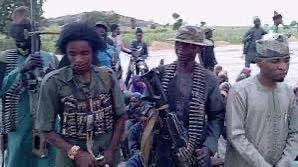
Nasarawa State Governor, Abdullahi Sule, has raised significant concerns regarding the rise of a new terrorist faction, Wulowulo, operating in the North-Central states of Kwara and Nasarawa. According to intelligence reports, this group is a breakaway faction from the notorious Boko Haram, further complicating the already volatile security situation in the region. Governor Sule expressed his deep worry over the group’s activities, noting that they have started infiltrating local communities and could escalate attacks on vulnerable settlements.
Wulowulo, which has reportedly begun to infiltrate the region, represents a growing threat to the safety and stability of the North-Central zone. Governor Sule emphasized that this is not just a regional issue but a significant security challenge for Nigeria at large. With fighters affiliated with the group reportedly moving into the area, fears of escalating violence and instability are mounting. This development is part of a broader trend of fragmentation within Boko Haram, with splinter factions like Wulowulo continuing to emerge and spread, raising questions about the effectiveness of current counterterrorism measures.
Boko Haram, officially known as Jama’at Ahlis Sunna Lidda’awati wal-Jihad (JAS), was founded in the late 1990s in Maiduguri, Borno State, Nigeria, by Mohammed Yusuf. The group initially arose as a response to what its members viewed as a corrupt, secular government system, advocating for the establishment of an Islamic state governed by strict Sharia law. The group’s name, “Boko Haram”, translates to “Western education is forbidden,” reflecting their opposition to Western ideals, particularly in the educational system.
The group gained momentum throughout the early 2000s, but it wasn’t until 2009, after clashes with Nigerian security forces, that Boko Haram escalated its insurgency. During these clashes, Mohammed Yusuf was killed by the police, leading to a power vacuum within the group. Following his death, Abubakar Shekau took over the leadership and pushed the group into more violent confrontations, intensifying their insurgent activities and targeting both security forces and civilians across the northeast of Nigeria.
In 2014, Boko Haram gained international notoriety when it kidnapped 276 schoolgirls from Chibok, Borno State, which further highlighted their extremist agenda and their ability to strike fear across the country. This event marked one of the most tragic and widely publicized actions of the group.
In 2011, tensions within Boko Haram over leadership tactics and strategies resulted in a splinter group led by Khalid al-Barnawi and Abubakar Adam Kambar, who broke away to form Ansaru. The division stemmed from Shekau’s harsh tactics, which included indiscriminate violence against Muslim civilians, an approach that members of the new faction deemed unnecessary and too extreme.
Ansaru, which means “Supporters of the Muslims in the Lands of the Sudan”, took a different approach. The group, also known as “Boko Haram’s more moderate offshoot”, aligned itself with Al-Qaeda in the Islamic Maghreb (AQIM) and focused primarily on targeting Western and secular forces rather than attacking local Muslim civilians. While Ansaru did engage in attacks, including kidnappings and assaults on foreign nationals, their operations were generally more selective than Boko Haram’s widespread assaults.
The split between the two groups marked the beginning of several rifts within Boko Haram, as members diverged in their ideological and tactical preferences. Over the following years, these groups would continue to clash and fragment, contributing to the ongoing instability and security challenges in the region.
The early origins of Boko Haram can be traced back to a response against the secular state and Western influence in Northern Nigeria. However, internal conflicts, particularly over the treatment of Muslim civilians, led to the formation of Ansaru, which distanced itself from Boko Haram’s more brutal methods. The split between these two factions exemplifies the complexities within the insurgency and the shifting alliances in the broader conflict.
In 2015, Boko Haram’s leadership under Abubakar Shekau made a pivotal shift when he pledged allegiance to ISIS. This marked the formation of the Islamic State West Africa Province (ISWAP), a faction that aligned itself with ISIS’s global jihadist agenda. However, Shekau’s leadership style known for its extreme brutality and indiscriminate attacks soon led to internal conflicts within the group.
By 2016, a significant split occurred when Abu Musab al-Barnawi, the son of Boko Haram’s founder Mohammed Yusuf, was appointed by ISIS as the leader of ISWAP, replacing Shekau. Al-Barnawi’s more moderate approach focused on targeting military and government installations, and he even implemented a more structured governance model that included taxes and services for local communities, distinguishing ISWAP from Shekau’s brutal tactics. Meanwhile, Shekau’s faction, Jama’atu Ahlis Sunna Lidda’awati wal-Jihad (JAS), continued its violent methods, including large-scale attacks on civilians and the use of child soldiers.
The split was a direct result of differing visions for leadership and governance. Al-Barnawi’s ISWAP sought to operate with some degree of discipline, while Shekau’s JAS favored chaos and opportunistic violence. This led to tensions and violent clashes between the two factions over territorial control and ideological differences.
In 2021, the death of Shekau during a confrontation with ISWAP forces in Sambisa Forest marked a turning point. His death resulted in a significant number of JAS fighters either surrendering to authorities or joining ISWAP. However, remnants of Shekau’s faction, such as the Bakura Doro group, continued to resist ISWAP’s dominance, particularly in the Lake Chad Basin area.
By late 2023, ISWAP was estimated to have between 4,000 to 7,000 fighters, while JAS had significantly fewer fighters, ranging from 1,500 to 2,000. Despite ISWAP’s larger size and more organized structure, JAS’s continued presence in the region, particularly in Sambisa Forest and other remote areas, demonstrated the persistence of Shekau’s ideology and the ongoing rivalry between the factions.
The conflict between ISWAP and JAS is further fueled by resource competition, as both groups fight over control of arms, ammunition, and financial resources from raids. ISWAP’s governance model, which includes administering taxes and offering protection to local communities, contrasts sharply with JAS’s looting and forced conscription practices. This ideological rift has resulted in clashes, and at times, ISWAP has targeted JAS strongholds to assert its authority over the region.
As of early 2023, efforts to broker peace talks between the two factions have failed, and territorial disputes continue to fuel the conflict, particularly in areas rich in resources like the Lake Chad Basin. These tensions indicate that the struggle for control in Nigeria’s northeastern states remains far from over.
The fragmentation of Boko Haram has given rise to several splinter groups, with Wulowulo being one of the most recent. Emerging from the internal rifts within ISWAP and JAS, Wulowulo has capitalized on the chaos and power struggles within Boko Haram’s offshoots. The group’s rise further exemplifies the persistent instability within the larger insurgency, as competition over resources, territory, and influence continues to drive violent conflict.
The recent increase in attacks by Wulowulo fighters has exacerbated security concerns in the North-Central region, particularly in Kwara and Nasarawa states. As these insurgents infiltrate local communities, there are growing fears of widespread violence and forced displacement. The government’s response, including an increase in counterterrorism funding, is seen as essential, though experts argue that further investment is needed to effectively combat the expanding insurgency, especially as it spreads to other regions like Nasarawa.
Local efforts have significantly increased in past hotspots to combat insurgency and violence. One of the earliest and most notable efforts was the formation of the Civilian Joint Task Force (CJTF) in Maiduguri, Borno, in early 2013. Initially, a group of young men, armed with nothing but sticks, began guarding against Boko Haram’s attacks on civilians, workers, and communities. The CJTF quickly grew in size and capability, with its ranks swelling to 26,000 members in Borno alone. This collective action helped prevent Maiduguri from falling to the insurgents and contributed to the eventual reclamation of all previously occupied territories by late 2017.
The collaboration between Nigeria and its neighboring countries in the fight against terrorism has significantly improved, particularly through the efforts of the Multinational Joint Task Force (MNJTF). This task force, composed of military personnel from Nigeria, Cameroon, Chad, and Niger, has proven to be an effective force in reducing terrorist-related deaths in the region. According to reports, the combined efforts of the MNJTF have led to a 63% reduction in terrorist deaths in Nigeria, decreasing from 4,940 deaths in 2015 to 1,832 deaths in 2016. This coordinated approach has not only been beneficial for Nigeria but has also led to a 75% reduction in neighboring countries like Cameroon and Chad.
While these international efforts have reduced terrorist-related deaths in the region, the rise of Wulowulo underscores the persistent challenges in curbing the spread of extremist factions. The Nigerian government’s decision to allocate ₦3.1 trillion (approximately $3.1 billion) to the Ministry of Defence in 2025 reflects the growing pressure on federal resources and the need for more robust counterterrorism measures.
The ongoing fragmentation of Boko Haram, with the rise of groups like Wulowulo, is a stark reminder of the enduring threat posed by insurgent factions in Nigeria and across the Sahel.