
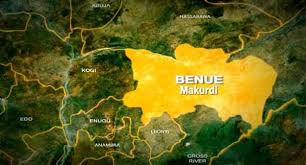
The Federal Government is preparing to arraign multiple suspects linked to the deadly Yelwata attacks before a Federal High Court in Abuja on Monday, in what marks a critical test of the administration’s pledge to prosecute violent crimes and restore confidence in communities repeatedly scarred by communal bloodshed.
The suspects, identified as having strong connections to the killings that devastated the Guma Local Government Area community in Benue State, will appear before Justice Joyce Abdul-Malik following what authorities described as exhaustive investigative work and inter-agency coordination.
Kamarudeen Ogundele, Special Adviser to the President on Communication and Publicity in the Office of the Attorney General of the Federation and Minister of Justice, confirmed in a Sunday statement that the arraignment represents a culmination of intensive investigative efforts involving multiple security and prosecutorial agencies.
Read Also: Former Benue Electoral Chief and 10 Others Arraigned Over ₦1.1bn Fraud Allegations
“Some suspects arrested and strongly linked to the killings in Yelwata, a town in Benue State, will be arraigned tomorrow (Monday, February 2) to answer for their crimes,” Ogundele stated, adding that the prosecution aims to “send a strong signal to enemies of the country, regardless of the guise under which they operate.”
The Yelwata community became the site of mass tragedy on the night of Friday, June 13, 2025, when suspected gunmen launched a coordinated assault that claimed scores of lives, adding to the grim tally of violence that has plagued Nigeria’s Middle Belt region for years.
The Middle Belt, spanning states including Benue, Plateau, Nasarawa, and Taraba, has endured cycles of communal violence often attributed to clashes between herders and farming communities, contests over land and resources, ethnic tensions, and criminal opportunism. Yelwata’s tragedy fits within this broader pattern of attacks that have displaced thousands, destroyed livelihoods, and deepened mistrust among communities.
In the immediate aftermath of the June attack, Nigeria’s security leadership mobilised a forceful response. Chief of Defence Staff, General Christopher Musa, and Inspector-General of Police, Kayode Egbetokun, announced a joint, cross-border operation designed to track down perpetrators and dismantle networks believed to be facilitating the violence.
By June 24, 2025, Egbetokun revealed that security forces had arrested 53 suspects in connection with attacks across Benue and Plateau States, with 26 of those individuals specifically tied to the Yelwata killings. The arrests represented one of the most significant law enforcement operations targeting communal violence in recent years.
The decision to prosecute suspects at the Federal High Court underscores the Federal Government’s assertion of jurisdiction over crimes it considers threats to national security and public order. Federal prosecution also signals the administration’s intent to centralise legal action on cases with broader implications for stability and inter-communal relations.
Read Also: Troops Neutralise Two Bandits and Recover AK-47 in Successful Benue State Ambush
The Office of the Attorney General emphasised that the arraignment forms part of President Bola Ahmed Tinubu’s constitutional obligation to safeguard lives and property, a responsibility enshrined in Section 14(2)(b) of the 1999 Constitution, which declares that “the security and welfare of the people shall be the primary purpose of government.”
However, the prosecution also arrives amid ongoing national debates about the effectiveness of Nigeria’s criminal justice system in deterring violence, securing convictions, and delivering justice to victims of mass atrocities. Critics have frequently pointed to delays, inadequate witness protection, weak investigative capacities, and insufficient follow-through as obstacles to accountability.
Benue State, often described as “the food basket of the nation” due to its agricultural productivity, has borne a disproportionate burden of violent attacks over the past decade. Communities across the state have faced repeated assaults, prompting calls from residents, civil society organisations, and political leaders for stronger security measures, judicial accountability, and long-term conflict resolution strategies.