
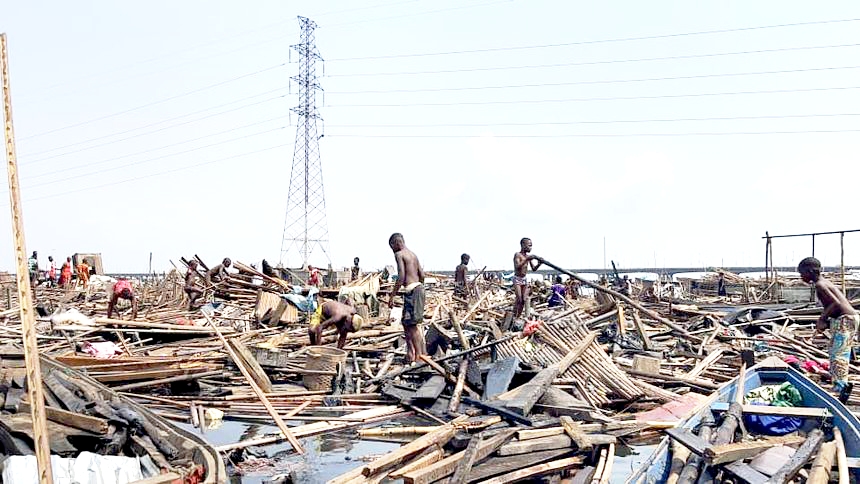
The Lagos State Government has announced plans to invest about $10 million in the regeneration of Makoko, the iconic waterfront community in Lagos, as part of efforts to transform the area through environmentally sustainable development.
The disclosure was made on Monday by the Special Adviser to the Governor on E-GIS, Dr Olajide Babatunde, during a press briefing at Alausa, Ikeja, following recent incidents and public concern surrounding demolitions in Makoko.
According to Babatunde, the Lagos State Government has committed $2 million to the project, while the United Nations is expected to provide up to $8 million in counterpart funding.
Read Also: Human Rights Groups condemn Police crackdown on Lagos anti-demolition protesters
He explained that the initiative centres on a proposed “water city” project designed specifically for the fishing community, noting that the regeneration plan is still in the preparatory stage and has not yet commenced.
“What we have done so far is to remove structures within the power line setback to avert possible tragedy, especially in the event of fallen electric wires into the water,” Babatunde said.
He acknowledged current funding constraints faced by international donor agencies but stressed that the state government remains committed to the project and is actively seeking additional support.
“Mr Governor has committed $2 million, and we are expecting $8 million counterpart funding from the United Nations. However, funds are no longer as readily available as before,” he added.
Babatunde said the government is calling on international partners, donor agencies, and private sector organisations within and outside Nigeria to support the regeneration initiative.
He further noted that Makoko residents have been consistently engaged, both by the state government and United Nations consultants, to ensure inclusiveness in the planning process.
The special adviser disclosed that two major proposals had initially been considered for Makoko — a shoreline extension project and the water city project — but environmental experts advised against shoreline extension due to ecological risks.
“We are left with the water city project, which is environmentally friendly. The exact location remains within the existing fishing community. The only areas affected are those within the high-tension power corridor,” he said.
Last week, Makoko residents staged a protest at the Lagos State House of Assembly over the demolition of structures in the community, demanding compensation from the state government.
Reports indicate that a House of Assembly committee is expected to meet with Makoko community representatives this week to address concerns arising from the demolitions.