
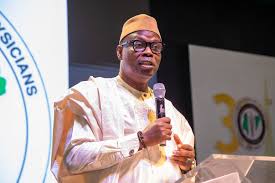
Nigeria’s Federal Government has announced plans to introduce routine hearing checks in primary schools and scale up newborn hearing screening across the country, in a move aimed at improving early detection of hearing impairment and building more inclusive learning environments for children. The announcement was made as Nigeria joined the rest of the world to observe World Hearing Day 2026.
The Minister of State for Health and Social Welfare, Dr Adekunle Salako, delivered the government’s position in a message read at the World Hearing Day event held in Abuja. Salako described hearing as fundamental to communication, learning and social integration, stressing that it plays a critical role in children’s cognitive development, academic achievement and emotional well-being.
The global burden of childhood hearing loss is far larger than is widely appreciated. According to the World Health Organisation’s Global Burden of Disease Study 2021, hearing loss affects approximately 90 million children and adolescents between the ages of five and 19 worldwide. The WHO further noted that the condition often goes undetected, particularly in low-resource settings where screening infrastructure is limited or entirely absent.
More striking, however, is the WHO’s assessment that more than 60 per cent of childhood hearing loss is preventable through simple and cost-effective public health measures. The organisation has consistently emphasised that early identification and care are crucial to prevent the long-term consequences of unaddressed hearing impairment on a child’s development, education and future economic prospects.
This year’s World Hearing Day theme, “From Communities To Classrooms: Hearing Care For All Children,” was chosen to highlight the urgent need to prevent avoidable childhood hearing loss and to ensure that children with ear or hearing problems receive early identification and appropriate care.
While the problem is global, Nigeria’s situation carries specific risk factors that make the issue especially urgent. Salako identified a range of preventable causes that continue to drive childhood hearing impairment in the country. These include untreated ear infections, exposure to excessive noise, maternal infections during pregnancy and the widespread lack of early screening services, particularly in rural and underserved communities.
The minister warned that when hearing loss is not identified and addressed at an early stage, the consequences extend well beyond the health dimension. Delayed speech development, poor educational outcomes and long-term socioeconomic challenges are among the documented effects of unaddressed childhood hearing loss. Salako reiterated that up to 60 per cent of childhood hearing loss in Nigeria could be prevented through timely and accessible interventions, including vaccination programmes, early detection screening and proper ear care education.
Nigeria’s public health system has historically prioritised communicable diseases, maternal health and malnutrition, with sensory health receiving comparatively limited attention in policy frameworks and resource allocation. The current administration’s announcement signals a shift in that orientation, though the scope and pace of implementation will determine whether the commitments translate into measurable outcomes.
One of the more structurally significant announcements Salako made concerns the reorganisation of an existing national health coordination body. The Federal Government has expanded the mandate of the National Eye Health Programme to incorporate ear, hearing and other sensory health activities. The programme will henceforth be known as the National Eye, Ear and Sensory Health Functions Programme.
Salako described the rebranding and mandate expansion as a demonstration of the government’s commitment to reducing the burden of hearing loss across Nigeria, and said it would strengthen national coordination of sensory health services. The move consolidates eye and hearing health functions under a single administrative umbrella, which proponents argue improves efficiency and resource utilisation within the health ministry.
To operationalise this at the sub-national level, the ministry has expanded the duties of Eye Health Desk Officers across all 36 states of the federation and the Federal Capital Territory to include hearing health responsibilities. These officers, previously focused exclusively on eye health programming, will now serve as entry points for hearing health coordination within their respective states.
The ministry is also developing governance structures, policies and national guidelines to institutionalise hearing and sensory health services within Nigeria’s broader healthcare system. The extent to which these frameworks will be funded and enforced remains to be seen, but their development represents a formal acknowledgment at the policy level that hearing health requires dedicated attention within the national health architecture.
The centrepiece of the government’s announced intervention is the planned introduction of routine hearing checks in primary schools and the nationwide expansion of newborn hearing screening. These two measures address the problem at different points in a child’s early life.
Newborn hearing screening, sometimes referred to as universal hearing screening, involves testing infants for hearing impairment shortly after birth, typically before they leave hospital. Where it is systematically applied, it enables families and healthcare providers to identify hearing loss at the earliest possible stage, allowing for interventions such as hearing aids or speech therapy to begin before critical windows of language and cognitive development close. In Nigeria, neonatal hearing screening has been available in some tertiary health facilities in major cities, but it has never been systematically extended to cover the broader population of newborns, particularly those born in primary health centres, private clinics or at home.
School-based hearing checks address a different gap. Many children develop hearing difficulties gradually, or arrive at school age with undetected impairments that have already begun to affect their language acquisition and social interaction. Without structured screening in schools, these children are often misidentified as slow learners, disruptive or inattentive, when the underlying issue is a sensory one that could be addressed through medical or assistive interventions.
Salako linked the school-based initiative directly to the broader theme of the year’s WHO campaign, saying the theme underscores the importance of connecting community awareness with school-based interventions to ensure that no Nigerian child is left behind.
The minister was equally emphatic that the government’s programmes alone would be insufficient without corresponding action at the community level. He urged parents, caregivers and primary healthcare workers to recognise early warning signs of hearing impairment in children. These warning signs include delayed response to sound, frequent ear pain and speech delays.
“Simple actions such as protecting children from excessive noise, ensuring timely vaccinations and promoting regular hearing checks can prevent the majority of childhood hearing loss,” Salako said.
He called on parents, educators, healthcare providers, development partners and the media to collaborate in protecting children’s hearing. The appeal to the media is notable in a public health context, as community-level awareness programmes in Nigeria have historically depended heavily on radio and television outreach to reach populations that may not engage directly with formal healthcare settings.
The World Health Organisation used World Hearing Day 2026 to reinforce its call for the systematic integration of hearing screening and early intervention programmes into school and child health plans globally. The organisation noted that hearing loss sometimes begins gradually and worsens over time, making the absence of structured monitoring particularly dangerous for children who may not articulate their difficulties clearly.
Left untreated, the WHO stated, hearing impairment can affect a child’s ability to hear and significantly impair speech, language, cognitive and social development, often leading to poorer educational outcomes, reduced employment prospects and long-term economic disadvantages. The organisation framed communities and classrooms as natural entry points for reaching children, parents and teachers, arguing that integrating hearing care into existing school and child health programmes offers a practical and scalable pathway to better outcomes.
WHO also called on stakeholders in ear and hearing care to collaborate with professionals working in school health, child health, eye care, primary healthcare and education to strengthen prevention and care efforts. This multisectoral approach reflects growing recognition within global health policy circles that sensory health cannot be addressed in isolation from the broader systems that shape children’s development.
Nigeria’s engagement with hearing health policy has been intermittent at best. The country’s first national ear and hearing care policy was developed years ago but suffered from inconsistent implementation and limited budgetary support. The Nigerian healthcare system, operating under chronic fiscal pressure, has often struggled to sustain specialised health programmes beyond the pilot stage.
The burden of hearing impairment in Nigeria is compounded by factors specific to the country’s health environment. Otitis media, the medical term for middle ear infection, is among the most common childhood illnesses in Nigeria and, when untreated or recurrently undertreated, is a leading cause of acquired hearing loss in children. Ototoxicity, hearing damage caused by certain medications, including some antibiotics and antimalarial drugs widely used in Nigeria, is another significant and underappreciated risk factor. Maternal rubella, a preventable infection that can cause severe hearing impairment in newborns when contracted during pregnancy, remains a concern in populations with incomplete vaccination coverage.
The costs of inaction are not merely individual. Children who grow up with undetected or unaddressed hearing loss are statistically less likely to complete school, less likely to gain formal employment and more likely to experience social marginalisation. At a macroeconomic level, the cumulative human capital loss from a generation of children whose cognitive and linguistic development was constrained by preventable hearing impairment is substantial, even if it is rarely quantified in national planning documents.
The Federal Government’s current announcement, if backed by consistent funding, robust implementation mechanisms and genuine inter-agency coordination, represents a meaningful step toward closing this gap.