
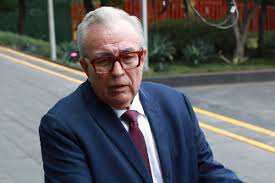
Fresh criminal charges filed in the United States have drawn a sitting Mexican governor into an international drug trafficking case, intensifying scrutiny of political links to organised crime in one of Mexico’s most volatile regions.
The US Justice Department announced on Wednesday that Ruben Rocha Moya and nine other officials are facing charges related to alleged collaboration with the Sinaloa Cartel. Prosecutors in the Southern District of New York accused the group of facilitating the distribution of “massive quantities” of narcotics into the United States.
Authorities said those charged include a senator affiliated with Mexico’s ruling Morena, the municipal president of Culiacán, and a senior official in the state attorney general’s office. The identities of all defendants were not publicly detailed in initial statements.
Mexico’s Foreign Ministry confirmed it had received extradition requests from US authorities for “various people,” but did not disclose names, reflecting the early and sensitive stage of the legal process.
Rocha Moya rejected the allegations in a public statement posted on X, stating he denies the charges “categorically and absolutely.” He described the case as politically motivated, adding that “this attack isn’t only against me, it’s against the Fourth Transformation,” a reference to the governing agenda of Morena, which has held federal power since 2018.
The case unfolds against the backdrop of sustained violence in Sinaloa, a north-western state long associated with cartel activity. Since Rocha Moya assumed office in 2021, the region has experienced ongoing conflict between rival factions of the Sinaloa Cartel, with thousands reported killed in clashes linked to control of trafficking routes and internal leadership struggles.
US authorities have, in recent years, expanded legal and security measures targeting transnational drug networks. Under the administration of Donald Trump, the Sinaloa Cartel was among six Mexican groups designated as foreign terrorist organisations, a move aimed at strengthening enforcement tools against narcotics trafficking and related financial networks.
Legal analysts note that extradition proceedings, if pursued, could take months or longer, depending on diplomatic coordination and judicial review within Mexico. The outcome of the case may also test bilateral cooperation on organised crime, an area that has historically involved complex legal and political considerations.
At the time of reporting, US prosecutors had not publicly disclosed detailed evidence underpinning the charges, and it remains unclear how many of the accused individuals are in custody or subject to active arrest warrants.
The allegations add to longstanding concerns about the intersection of politics and organised crime in parts of Mexico, where cartel influence has repeatedly surfaced in criminal investigations, electoral disputes, and security operations.