


Japan Begins Release of Strategic Oil Reserves
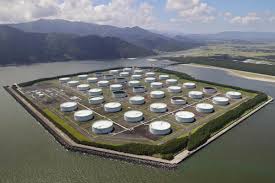
Japan has commenced the release of its strategic petroleum reserves in response to a coordinated global effort by International Energy Agency member states to stabilize oil markets following price surges triggered by escalating conflict in the Middle East.
The Japanese government confirmed the drawdown on Monday through an official notice published in the government gazette, stating that the level of oil reserves in the country “is being lowered.” The notice legally compels managers of oil stockpiles to release portions of their reserves to meet newly adjusted standards.
Chief Cabinet Secretary Minoru Kihara announced that Japan would release 15 days worth of private sector petroleum reserves as part of the initial phase of the coordinated response. The country’s strategic oil reserves, among the largest in the world, stood at more than 400 million barrels as of December 2025, equivalent to 254 days of domestic consumption.
The release follows a March 11 agreement by IEA members to tap oil stockpiles in what the agency described as the largest coordinated reserve release in its history. The IEA announced that a total of 271.7 million barrels of government-managed stocks would be released worldwide to cushion the impact of Middle East conflict-related supply disruptions and price volatility.
“Individual implementation plans have been submitted to the IEA by member countries. These plans indicate that stocks will be made available by IEA member countries in Asia Oceania immediately,” the IEA stated. “Stocks from IEA member countries in the Americas and Europe will be made available starting from the end of March.”
Japan’s decision to lead the release underscores its acute vulnerability to Middle East oil supply disruptions. The country depends on the Middle East for 95 percent of its oil imports, making it one of the most exposed industrialized economies to geopolitical instability in the region. This heavy reliance has historically driven Japan to maintain exceptionally large strategic reserves as a buffer against supply shocks.
Minister of Economy, Trade and Industry Ryosei Akazawa confirmed on Friday that private oil reserves would be released before government stockpiles, indicating a phased approach to the drawdown. Economy Minister Sanae Takaichi had stated last week that Japan planned to release one month’s worth of national reserves, though the timing and sequencing would prioritize private sector stocks.
The current release marks a significant deployment of Japan’s strategic petroleum reserve system, which was established following the 1973 oil crisis when an Arab oil embargo caused severe economic disruption across oil-dependent nations. Japan subsequently built one of the world’s most robust reserve systems, storing crude oil and petroleum products in underground caverns, above-ground tanks, and offshore facilities across the country.
The IEA, established in 1974 in response to the same oil crisis, coordinates emergency response measures among its 31 member countries, which collectively hold strategic reserves equivalent to at least 90 days of net oil imports. The agency’s coordinated stock release mechanism has been activated only a handful of times in its history, including during the 1991 Gulf War, Hurricane Katrina in 2005, the 2011 Libyan civil war, and the 2022 Russia-Ukraine conflict.
The current Middle East conflict, which has intensified in recent weeks, has raised concerns about potential disruptions to oil flows through critical chokepoints including the Strait of Hormuz, through which nearly one-third of global seaborne oil passes daily. Brent crude prices have surged by more than 20 percent since the conflict escalated, reaching levels not seen since the immediate aftermath of the Russia-Ukraine war in 2022.
Japan’s heavy dependence on Middle Eastern oil, particularly from Saudi Arabia, the United Arab Emirates, and Qatar, makes it exceptionally sensitive to regional instability. According to data from Japan’s Ministry of Economy, Trade and Industry, the country imported approximately 2.7 million barrels of crude oil per day in 2024, with over 2.5 million barrels sourced from Middle Eastern producers.
The coordinated IEA response represents an attempt to stabilize global oil markets and prevent panic-driven price spikes that could damage economic recovery efforts across member states. By releasing strategic reserves simultaneously, the IEA aims to signal to markets that sufficient supply buffers exist to offset potential Middle East disruptions.
Japanese media outlets widely interpreted Monday’s official gazette notice as confirmation that the reserve release had already begun, though government officials did not provide specific details on the volume of oil being released daily or the distribution mechanisms being employed.
The release of private sector reserves before government stocks reflects Japan’s unique reserve management structure, which divides strategic holdings between government-controlled stockpiles and privately managed reserves held by oil companies and importers. Private sector reserves are typically more readily accessible and can be deployed more quickly than government stocks, which are often stored in more remote or specialized facilities.
Japan’s phased approach also allows authorities to monitor market response and adjust release volumes if necessary, maintaining flexibility in how much of the total reserve capacity is ultimately deployed. The initial 15-day private sector release represents a relatively modest drawdown, suggesting Japanese officials are calibrating the response to avoid oversupply while maintaining sufficient reserves for potential escalation scenarios.
The IEA’s staggered regional release schedule, with Asia-Oceania leading and Americas-Europe following at the end of March, reflects both logistical considerations and the relative exposure of different regions to Middle East supply risks. Asian economies, heavily dependent on Middle Eastern crude, face more immediate vulnerability and therefore require faster access to reserve supplies.
Japan’s participation in the coordinated release demonstrates the country’s continued commitment to multilateral energy security frameworks despite its transition toward renewable energy sources and efforts to diversify its energy mix. While renewable energy capacity has expanded significantly in recent years, Japan remains heavily reliant on imported fossil fuels for power generation and industrial use.
The government has not disclosed the duration of the release program or whether additional drawdowns will follow if market conditions deteriorate further. Officials have indicated they will continue monitoring developments in the Middle East and coordinating closely with IEA partners to ensure the response remains proportionate to evolving supply and price dynamics.