
Court Rules Against Police in Sowore Cybercrime Case
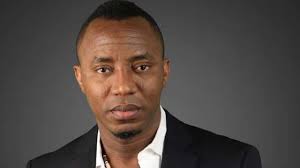
A Federal High Court sitting in Abuja has dismissed cybercrime charges filed against publisher and former presidential candidate Omoyele Sowore by the Nigeria Police Force, citing the prosecution’s failure to diligently pursue the case since the activist’s arraignment in January 2025.
Justice Musa Liman struck out the charges on Tuesday after Sowore’s legal team, led by Marshall Abubakar, filed an application requesting dismissal on grounds of prosecutorial negligence. The court ruled that the police had violated Section 351 of the Administration of Criminal Justice Act by failing to advance the case within the statutory timeframe.
“The charge FHC/ABJ/CR/23/2025 is struck out and accordingly dismissed,” Justice Liman declared, formally terminating the prosecution against the activist and convener of the Take It Back Movement.
The charges, dated January 28, 2025, listed former Inspector General of Police Kayode Egbetokun as the complainant and accused Sowore of publishing false statements through his verified X account that allegedly referred to Egbetokun as “illegal IGP Kayode Egbetokun” and incited public disorder against the Nigeria Police Force.
During Tuesday’s proceedings, the prosecution requested a brief adjournment to allow the lead counsel to personally handle the matter, but the defence opposed the application, arguing that the prolonged inaction warranted immediate dismissal. Justice Liman agreed with the defence, noting that the police had made no meaningful progress since Sowore’s initial arraignment nearly two months earlier.
Section 351 of the Administration of Criminal Justice Act, 2015, requires that criminal trials be conducted expeditiously and mandates that prosecution must proceed with reasonable dispatch once charges are filed. Failure to meet this standard allows defendants to apply for dismissal, a provision designed to prevent indefinite detention and protect defendants from prolonged legal uncertainty.
The original charge sheet contained three counts under the Cybercrime (Prohibition, Prevention, ETC) Act, 2015, as amended in 2024. The first count alleged that Sowore, on December 13, 2024, “intentionally and knowingly sent messages through his verified X handle account and caused a publication against the Inspector General of Police, where he called him ‘illegal IGP Kayode Egbetokun’. This statement, which he knew to be false, was intended to cause a breakdown of law and order.”
The second count accused Sowore of transmitting messages through his X account that tagged the official Nigeria Police Force handle and contained “threats intended to incite Nigerians against the Nigeria Police Force and harm the property or reputation of the Inspector General of Police or the Nigeria Police Force.”
The third count referenced a December 20, 2024 post in which Sowore allegedly stated: “The illegal IG of Nigeria Police Force, Kayode Egbetokun, will make the next #ENDSARS inevitable! He is working tirelessly towards it. Just a matter of time. #EgbetekunMustGo #Revolution.” The charge claimed this statement was false and intended to incite a breakdown of law and order.
All three counts were brought under Section 24(1)(b) of the Cybercrime Act and carried potential punishment under Section 24(2)(c)(ii) of the same legislation. The 2024 amendments to the Cybercrime Act expanded the scope of prosecutable online speech, particularly provisions related to false statements and incitement, a development that has drawn criticism from civil society organizations and digital rights advocates.
Sowore, 54, is a prominent Nigerian activist, journalist, and founder of the online news platform Sahara Reporters. He has been arrested and prosecuted multiple times by successive Nigerian governments, often in connection with his vocal criticism of government policies and security agencies. His most high-profile detention occurred in August 2019 when operatives of the Department of State Services arrested him on the eve of a planned nationwide protest tagged #RevolutionNow. He was held for 125 days despite multiple court orders granting him bail, a detention that attracted international condemnation and interventions from Amnesty International and other human rights organizations.
Sowore contested the 2019 and 2023 presidential elections on the platform of the African Action Congress, positioning himself as an anti-establishment candidate advocating for systemic political and economic reforms. In the 2023 election, he secured 32,337 votes according to the Independent National Electoral Commission.
The charges filed by Egbetokun’s office followed Sowore’s sustained criticism of the Inspector General’s appointment and tenure. Egbetokun was appointed IGP by President Bola Tinubu in June 2023, succeeding Usman Alkali Baba. His appointment generated controversy among some civil society groups and activists who questioned the process and raised concerns about his previous role as head of the Police Intelligence Response Team, a unit accused of human rights violations during the 2020 #EndSARS protests.
Sowore had repeatedly used his social media platforms to challenge the legality of Egbetokun’s appointment, arguing that procedural irregularities marred the selection process. The activist’s December 2024 posts, which formed the basis of the cybercrime charges, referenced these concerns and drew parallels between police conduct under Egbetokun’s leadership and the grievances that sparked the 2020 #EndSARS movement.
The #EndSARS protests, which erupted in October 2020, represented one of the largest youth-led demonstrations in Nigeria’s recent history, with millions of young Nigerians demanding an end to police brutality and the disbandment of the Special Anti-Robbery Squad. The protests, which spread across major Nigerian cities and gained international solidarity, were met with violent crackdowns, culminating in the Lekki Toll Gate incident on October 20, 2020, where security forces opened fire on unarmed protesters, resulting in multiple deaths and injuries.
The Cybercrime Act, under which Sowore was charged, has become a controversial tool for prosecuting online speech in Nigeria. Section 24, which addresses cyberstalking and related offenses, has been invoked in numerous cases against journalists, activists, and social media users who criticize government officials or security agencies. Critics argue that the law’s broad language and vague definitions of “false statements” and “incitement” create opportunities for abuse and stifle legitimate dissent.
Human rights organizations, including Amnesty International Nigeria and the Committee to Protect Journalists, have documented dozens of cases where Nigerian authorities have used cybercrime legislation to silence critical voices. In 2024 alone, at least 17 journalists and activists were arrested under various provisions of the Cybercrime Act, according to data compiled by the International Press Centre Lagos.
The 2024 amendments to the Cybercrime Act, which were signed into law by President Tinubu in July 2024, expanded punitive provisions and introduced stricter penalties for online offenses. Legal analysts have noted that the amendments increased maximum sentences for cyberstalking from three years to five years and broadened the definition of prohibited speech to include statements deemed likely to “incite public disorder” even without evidence of actual disorder occurring.
Sowore’s legal troubles extend beyond the recently dismissed charges. He currently faces separate charges in multiple jurisdictions, including allegations of treasonable felony and money laundering dating back to his 2019 arrest. These cases have experienced significant delays, with hearings frequently postponed due to the absence of prosecution witnesses or requests for adjournment by government lawyers.
The dismissal of the Egbetokun-initiated charges represents a rare legal victory for Sowore and highlights systemic challenges within Nigeria’s criminal justice system. Legal practitioners have long criticized the practice of filing charges without adequate preparation or commitment to prosecution, a pattern that clogs court dockets and undermines public confidence in law enforcement agencies.
Section 351 of the ACJA was designed specifically to address these concerns by establishing clear timelines for trial commencement and progression. The law requires that trials begin within 30 days of arraignment unless the court grants an extension based on compelling reasons. Justice Liman’s ruling reinforces judicial willingness to enforce these provisions and hold prosecution agencies accountable for delays.
Neither Sowore nor his legal team has issued a public statement following the court’s ruling. The Nigeria Police Force and the office of the Inspector General have not commented on the dismissal or indicated whether they plan to appeal the decision.
Legal experts note that the striking out of charges does not prevent the police from refiling them if they choose to do so, provided they can demonstrate readiness to prosecute and meet the statutory requirements. However, the practical and reputational costs of refiling after a dismissal for lack of diligent prosecution typically discourage such action.
The case adds to ongoing debates about the balance between protecting national security and preserving freedom of expression in Nigeria’s digital age. As social media platforms become increasingly central to political discourse and civic activism, tensions between government officials and critical voices continue to generate legal confrontations that test the boundaries of constitutional protections.
Nigeria’s 1999 Constitution, as amended, guarantees freedom of expression under Section 39, which states that “every person shall be entitled to freedom of expression, including freedom to hold opinions and to receive and impart ideas and information without interference.” However, this right is subject to limitations prescribed by law, including provisions aimed at protecting national security, public order, and the reputations of others.
Courts have historically struggled to reconcile these competing interests, particularly in cases involving online speech. The Supreme Court has yet to issue definitive guidance on the constitutional limits of cybercrime prosecutions, leaving lower courts to navigate complex questions about the scope of protected speech versus punishable online conduct.
Sowore’s dismissal comes amid broader concerns about shrinking civic space in Nigeria, with multiple civil society organizations documenting increased harassment of journalists, activists, and opposition figures. The 2024 World Press Freedom Index ranked Nigeria 112th out of 180 countries, citing violence against journalists, restrictive laws, and impunity for attacks on media workers as major challenges.