
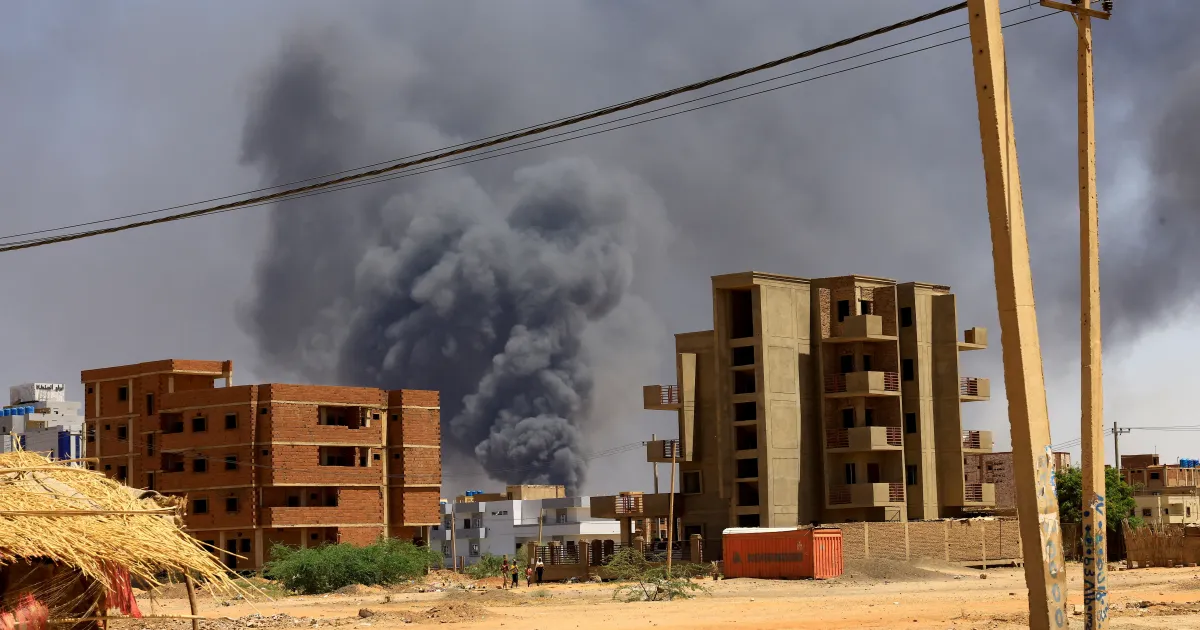
A drone attack launched from war-torn Sudan killed 17 people in the border town of Tine in eastern Chad late Wednesday, marking the deadliest single incident of cross-border violence since the Sudanese civil war began spreading into Chadian territory.
The Chadian government confirmed the revised death toll Thursday, raising an initial figure of 16, and announced that several others sustained injuries when the unmanned aerial vehicle struck the town despite repeated warnings to belligerents in Sudan and the formal closure of the border on February 23.
“Despite various firm warnings addressed to the different belligerents in the Sudan conflict and the closure of the border, the town of Tine has again been the target of a drone attack,” a government spokesman said in a statement. “This latest assault of extreme gravity has caused the death of 17 of our compatriots and left several others injured.”
Military sources attributed the attack to the Rapid Support Forces, the paramilitary group that has been fighting the Sudanese Armed Forces since April 2023 in a brutal civil war that has devastated large swathes of Sudan and triggered one of the world’s largest humanitarian crises.
The RSF denied responsibility in a statement posted on Telegram, instead blaming the Sudanese army for the bombardment. The paramilitary group has repeatedly accused the military of conducting attacks in border areas and attributing them to RSF forces in what it describes as a propaganda campaign.
Chadian President Mahamat Idriss Deby Itno convened an emergency meeting of the defence and security council overnight and issued orders for immediate military retaliation against any further attacks originating from Sudanese territory.
“The president has ordered the army to retaliate starting from tonight to any attack coming from Sudan,” according to a presidency statement posted on social media platforms.
The incident represents a dangerous escalation in the spillover of Sudan’s conflict into Chad, a landlocked nation that has absorbed nearly one million Sudanese refugees since fighting erupted in Khartoum in April 2023. Chad shares a 1,400 kilometer border with Sudan across a largely desert region that remains porous and difficult to monitor despite government efforts to seal crossing points.
Tine, located in the Wadai region of eastern Chad, has become a flashpoint for cross-border violence in recent months. According to an AFP tally, 15 Chadian soldiers and eight civilians had been killed in incidents linked to the Sudanese conflict since late December, with a rocket launched from Sudan causing significant damage in the town at the end of February.
The strategic importance of Tine stems from its proximity to Tina, its twin town on the Sudanese side of the border, from which it is separated only by the narrow bed of a seasonal watercourse that remains dry most of the year. On February 21, the RSF announced it had seized control of Tina from Sudanese government forces, bringing the paramilitary group’s fighters directly to Chad’s doorstep and raising fears of further incursions.
The RSF has consolidated control over vast territories in western Sudan, particularly in the Darfur region, where it has waged a campaign that human rights organizations have characterized as ethnic cleansing against non-Arab communities. In October 2024, the paramilitary force captured El-Fasher, the capital of North Darfur state and the last major government-held city in the region, completing its near-total domination of Darfur.
The civil war in Sudan erupted on April 15, 2023, when longstanding tensions between the Sudanese Armed Forces, led by General Abdel Fattah al-Burhan, and the Rapid Support Forces, commanded by General Mohamed Hamdan Dagalo, commonly known as Hemedti, exploded into open warfare in Khartoum. The conflict originated from disputes over the integration of the RSF into the regular armed forces as part of Sudan’s stalled transition to civilian rule following the 2021 military coup.
What began as a power struggle between two rival military factions has evolved into a devastating war that has killed tens of thousands of people, displaced more than 12 million internally and across borders, and triggered what the United Nations has described as one of the world’s worst humanitarian catastrophes. The conflict has been marked by widespread atrocities, including mass killings, sexual violence, and the deliberate targeting of civilians and civilian infrastructure.
Chad’s position has become increasingly precarious as the conflict has intensified along its eastern frontier. The country, which itself experienced decades of civil war before achieving relative stability under former President Idriss Deby Itno, who was killed in combat in 2021, has struggled to manage the massive influx of refugees while preventing the war from destabilizing its own territory.
President Mahamat Idriss Deby Itno, who succeeded his father and was later elected in controversial polls in May 2024, closed the border with Sudan on February 23 in an attempt to contain the violence and prevent armed groups from using Chadian territory as a staging ground or refuge. However, the length and remoteness of the border have made enforcement extremely difficult, and cross-border movements of both refugees and combatants have continued.
Chad hosts approximately one million Sudanese refugees according to United Nations figures, placing enormous strain on the country’s limited resources and infrastructure. The refugees are scattered across multiple camps in the eastern regions, where humanitarian conditions have deteriorated as international aid agencies struggle to secure adequate funding and access.
The drone attack on Tine raises serious questions about the military capabilities being deployed in the Sudan conflict and the risks of further regional escalation. The use of unmanned aerial vehicles by parties to the conflict represents a significant development in the nature of the warfare and poses new challenges for neighboring states seeking to protect their populations and territories.
International observers have expressed alarm at the growing spillover effects of the Sudanese war, warning that the conflict threatens to destabilize the entire Sahel region, which is already grappling with jihadist insurgencies, military coups, and humanitarian emergencies across multiple countries including Mali, Burkina Faso, and Niger.
The African Union and regional bodies including the Intergovernmental Authority on Development have repeatedly called for an immediate ceasefire and dialogue between the warring parties, but multiple mediation efforts have failed to produce lasting results. The international community’s attention has been divided among numerous global crises, leading to what humanitarian organizations describe as chronic underfunding of the Sudan emergency response.
Chad’s threat of military retaliation marks a significant shift in the country’s posture toward the conflict and could potentially draw it deeper into the Sudanese war. Previous incidents of cross-border violence had been met with diplomatic protests and border security measures, but the scale of Wednesday’s attack appears to have crossed a threshold that the Chadian government considers intolerable.
As of the time of this report, neither the Sudanese government nor the RSF had issued official responses to Chad’s retaliation threat, and no further details were available regarding the specific military measures ordered by President Deby.
The incident underscores the urgent need for international intervention to contain the Sudan conflict before it engulfs the wider region in violence and instability that could take generations to resolve.