


Norwegian Crown Princess Defends Past Links To Epstein
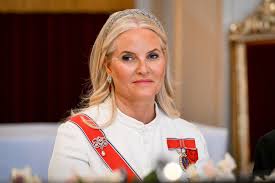
Norway’s Crown Princess Mette-Marit has acknowledged she was “manipulated and deceived” in her past relationship with convicted US sex offender Jeffrey Epstein, as fresh disclosures from US justice records continue to trigger public debate about her judgment and future role in the monarchy.
The admission came during a televised interview with Norway’s public broadcaster NRK, marking her first detailed response since documents released earlier this year by the US Department of Justice placed her name multiple times within Epstein’s network of contacts.
Those documents, which form part of a broader release linked to ongoing scrutiny of Epstein’s global associations, revealed what Norwegian media described as a surprisingly close friendship between the crown princess and the disgraced financier. The disclosures have since fuelled domestic criticism, with recent opinion polls indicating that a majority of Norwegians oppose her eventual ascension as queen.
Addressing the controversy, Mette-Marit stated, “Of course I wish I had never met him,” adding that it was “extremely important” to admit she had failed to properly examine his background. “I was manipulated and deceived to such an extent,” she said.
Epstein, who pleaded guilty in 2008 to soliciting a minor for prostitution, served just over a year in custody. He died in 2019 while awaiting trial on federal sex trafficking charges, in a case that drew sustained international attention and exposed connections to influential figures across politics, business, and royalty.
Seeking to clarify the nature of their relationship, Mette-Marit insisted it remained platonic. “It was a friendly relationship: above all, he was a friend to me. But if your question is whether the relationship had another nature, the answer is no,” she said.
Her explanation comes against the backdrop of earlier written statements in which she had already expressed regret over the association. However, newly surfaced email exchanges have intensified scrutiny of her judgment during the period in question.
Correspondence published by Norwegian media shows that in 2011, three years after Epstein’s conviction, the crown princess wrote that she had “googled” him and that “it didn’t look too good,” ending the remark with a smiley emoji. In the same set of exchanges, a 2012 message from Epstein referencing a “wife hunt” in Paris drew a reply from Mette-Marit describing the city as “good for adultery” and adding that “Scandis (are) better wife material.”
Further records indicate that in 2013, she and a companion stayed for four days at Epstein’s residence in Palm Beach, Florida, a property later identified in multiple legal proceedings involving allegations of sexual exploitation.
Reacting to the tone of the emails, the crown princess described the correspondence as reflective of “friendship” but acknowledged it now appeared “embarrassing.” She said she eventually cut off contact following a series of unspecified incidents. According to Crown Prince Haakon, one such incident left her feeling “a little unsafe.”
“I’m not the one to feel sorry for,” she said during the interview. “It’s all the victims who’ve been subjected to these serious abuses who deserve justice.”
The controversy arrives at a sensitive moment for the Norwegian royal family, which has historically maintained relatively high public trust compared to other European monarchies. Mette-Marit herself entered royal life in 2001 as a commoner, marrying Crown Prince Haakon in a union that initially drew media scrutiny but later gained broad acceptance.
Recent developments, however, have revived questions about accountability within public institutions, including the monarchy’s role in upholding ethical standards. Commenting on the interview, Harald Stanghelle, a royal commentator with Norwegian newspaper Aftenposten, told NRK that the princess “doesn’t concretely answer some of the most difficult questions, the heart of the questions,” suggesting lingering gaps in the public explanation.
Beyond the Epstein revelations, the crown princess is also facing personal and family challenges. Her son, Marius Borg Hoiby, born prior to her marriage, is currently awaiting judgment in a criminal case involving allegations of rape and assault against former partners. He denies the charges. Prosecutors have requested a prison sentence of seven years and seven months, with a verdict expected in June.
Mette-Marit is also managing a long-standing health condition. Diagnosed with a chronic lung disease, she has previously disclosed that the illness affects her breathing and may require a high-risk transplant in the future. She cited both her health and her son’s legal situation as reasons for delaying a full public response to the Epstein controversy.
Despite mounting criticism, the crown princess signalled her intention to remain active within the royal institution. She expressed confidence in the monarchy’s continued relevance and reaffirmed her support for her husband’s future reign. “I want to stand by his side,” she said, before adding, “if my health permits.”
Crown Prince Haakon, who appeared alongside her during the interview, publicly backed his wife, describing her as “caring, wise and really strong,” and stating that he would “always want her by my side if something difficult were ever to happen.”
The episode has added to a broader international reckoning with Epstein’s legacy, as institutions and individuals linked to him continue to face renewed scrutiny years after his death. In Norway, the issue has evolved into a test of transparency and public trust in one of Europe’s most stable monarchies, with debate likely to continue as more details emerge.