
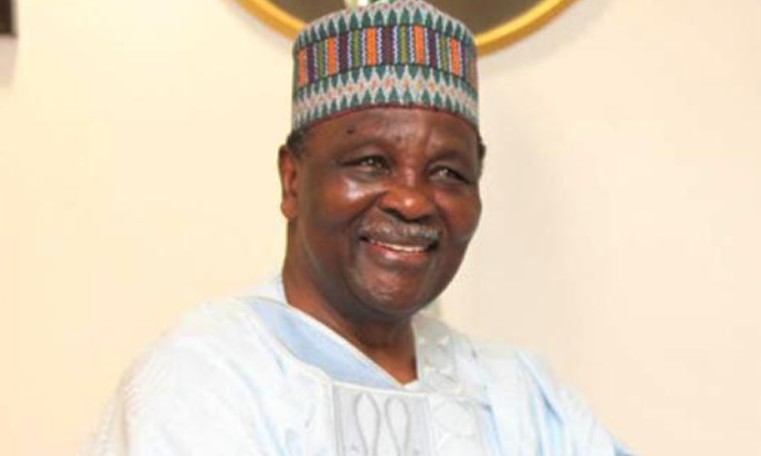
Former Head of State General Yakubu Gowon has finally published his long-awaited autobiography. The book presentation, My Life of Duty and Allegiance, launched in Abuja on Tuesday, drew a vast assembly of veteran rulers, diplomats, and senior government officials to the Bola Tinubu International Conference Centre. Vice President Kashim Shettima represented the head of state, sitting alongside former President Goodluck Jonathan and the Sultan of Sokoto. The sheer scale of the gathering reflects a deliberate effort by elder statesmen to reinforce institutional memory. The 859-page volume arrives exactly sixty years after the country’s first military coup. Gowon insisted that his memoir aims to clarify history rather than settle scores or reopen old wartime wounds. The 92-year-old elder statesman admitted that he never actually desired the office of head of state.
In the book, General Yakubu Gowon revealed that an arms embargo imposed by the United States and Britain during the Nigerian Civil War forced the federal government to buy weapons from the Soviet Union and Ali Jamal, a Lebanese black-market businessman. The strategy worked, prompting the Soviet Union to supply MiG-15 trainers and MiG-17 bombers. This intervention laid the foundation for a close diplomatic relationship between Nigeria and Moscow.
Read Also: Gowon Reveals How USSR Armed Nigeria During Biafra War
Gowon also claimed that Biafran leader Lieutenant Colonel Odumegwu Ojukwu secretly pawned the region’s mineral wealth to the Rothschild banking family. The deal allegedly secured ten million dollars to fund French-backed secessionist efforts. The book also details Gowon’s relationship with Murtala Muhammed, who displayed immense courage during the war before eventually overthrowing Gowon in the 1975 coup.
Catholic Bishop Matthew Kukah reviewed the volume, describing it as an important masterclass in selfless stewardship. He acknowledged that no single autobiography can encapsulate the entirety of a nation’s complex history. Kukah challenged critics who might disagree with Gowon’s perspective to write their own detailed accounts instead of complaining. Former President Jonathan echoed this sentiment, lamenting that valuable chapters of West African history are routinely lost when key actors remain silent.
The public book presentation attracted significant financial backing from Nigeria’s economic elite. Former Defence Minister Theophilus Danjuma donated three billion naira and ordered copies distributed to twenty university libraries. Industrialist Aliko Dangote contributed 500 million naira, while businessman Abdul Samad Rabiu purchased copies worth 25 million naira. Speakers repeatedly warned that failing to document their stewardship allows historical distortions to take root.
The event served as a stark reminder of the deep bonds that still tie Nigeria’s current political structure to its military past. By funding the distribution of Gowon’s truth, the ruling class is actively shaping how younger generations perceive authority and conflict.