

Tehran Accuses US and Israel of Crippling Energy and Water Supplies
Iran’s energy minister, Abbas Aliabadi, has accused the United States and Israel of “terrorist and cyberattacks” that have decimated the country’s vital water and electricity infrastructure. Speaking on Sunday via the ISNA news agency, Aliabadi revealed that dozens of water treatment plants and transmission facilities have been hit, leaving critical supply networks in tatters. These allegations follow nearly a month of joint US-Israeli strikes that began on 28 February 2026, a campaign that reportedly claimed the life of Iran’s Supreme Leader, Ali Khamenei.
The timing of these claims is no coincidence. It follows a direct ultimatum from US President Donald Trump, who has given Tehran 48 hours to fully reopen the Strait of Hormuz or face the “obliteration” of its power plants. Trump’s deadline, set for Monday night, has turned the world’s most important oil chokepoint into a high-stakes bargaining chip. With 20% of global oil and gas effectively blocked, the Iranian government appears to be framing its crumbling infrastructure as a humanitarian crisis caused by Western aggression.
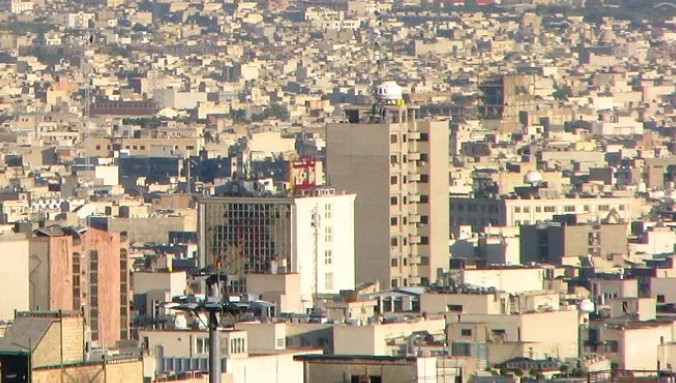
The war has moved from military bases to civilian essentials. In Tehran and other major cities, nightly water cuts have become the norm as the energy ministry struggles to maintain pressure in depleted reservoirs. Before the current conflict, experts had already warned that Iran was in a state of “water bankruptcy” due to mismanagement. The recent bombardment of desalination plants and pumping stations has turned a chronic shortage into a national emergency. Iran has responded by threatening to target similar facilities belonging to US allies across the Persian Gulf.
Maritime transit through the Strait of Hormuz has ground to a near standstill. While the Iranian Revolutionary Guard Corps (IRGC) claims they have achieved “complete control,” the US and its allies have deployed low-flying warplanes and helicopters to challenge the blockade. Iran has recently allowed a handful of “friendly” vessels, linked to Japan and other non-combatants, to pass, but the broader freeze remains. The economic impact is being felt globally, with Brent crude prices surging as insurers pull war-risk coverage for the region.
Retaliation has already breached Israeli borders. On Saturday, Iranian missiles struck the southern Israeli towns of Arad and Dimona, home to Israel’s sensitive nuclear research centre. While 92% of Iranian missiles have been intercepted since the war began, these latest strikes slipped through, injuring over 100 people. Prime Minister Benjamin Netanyahu has vowed that these “direct hits” will not go unanswered. The conflict has now entered a phase where both sides are targeting the very things that keep a modern society functioning: power, water, and fuel.
As the 48-hour clock ticks down, the “winding down” of operations Trump mentioned on Friday seems like a distant memory. The United States has reinforced its presence with thousands of Marines, while Iran’s new Supreme Leader, Mojtaba Khamenei, has called for the removal of “adversaries’ security.” The next 24 hours will determine if the Middle East faces a temporary infrastructure crisis or a total regional collapse. For the citizens of Tehran and Tel Aviv, the primary concern is no longer just the next missile, but whether the taps will run and the lights will stay on.