

Iran Defies Trump Deadline, Threatens Gulf Mines
Iran on Monday issued sweeping threats to deploy naval mines across the Gulf and strike power infrastructure throughout the Middle East, defying a United States ultimatum to reopen the Strait of Hormuz as the military confrontation with Washington and Israel entered its fourth week.
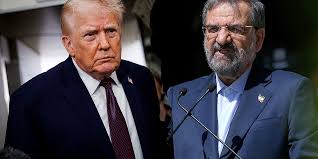
The Islamic Republic showed no sign of backing down ahead of a 2344 GMT deadline set by US President Donald Trump, who warned he would “obliterate” Iranian power plants if Tehran failed to lift its blockade of the strategically vital waterway. Instead, Iranian authorities raised the stakes by threatening to sow “drifting mines” across Gulf waters and publishing maps identifying electricity generation facilities in Israel, Saudi Arabia, the United Arab Emirates, Qatar and Kuwait as potential targets.
“In the event of the slightest attack on the electricity infrastructure of the Islamic republic, the entire region will be plunged into darkness,” read an infographic circulated by Iran’s semi-official Mehr news agency, bearing the headline “Say goodbye to electricity!”
The escalating rhetoric comes as international observers warn of cascading economic consequences from the conflict. Fatih Birol, executive director of the International Energy Agency, cautioned that the world faces an energy crisis worse than the combined impact of both 1970s oil shocks if hostilities continue, with the Strait of Hormuz—conduit for approximately one-fifth of global crude oil supplies—now severely constrained by Iranian restrictions on maritime traffic.
Israel carried out fresh strikes on Tehran early Monday morning, with witnesses reporting a thick plume of black smoke rising from the eastern districts of the Iranian capital. Later in the day, residents heard another series of blasts, though authorities did not immediately confirm what installations had been targeted.
The current confrontation represents the most serious direct military engagement between Iran and a US-Israeli coalition since the Iranian revolution of 1979. Tehran has responded to aerial assaults by throttling shipping through the 21-mile-wide Strait of Hormuz, launching attacks on energy infrastructure and US diplomatic facilities across the Gulf region, and firing missiles at targets inside Israel.
According to Birol, at least 40 energy facilities across the oil and gas-producing nations of the Middle East have sustained severe or very severe damage since the conflict began. Oil prices have climbed above 100 dollars per barrel, prompting economic countermeasures from governments worldwide.
“No country will be immune to the effects of this crisis if it continues,” Birol stated, underscoring the global reach of the disruption.
Financial markets responded to the heightened tensions on Monday with stock indices falling and oil prices rising further. China, the world’s second-largest economy, announced it would cap domestic fuel price increases to shield consumers from the effects of surging crude costs. Greece moved to provide relief for households and agricultural producers, while a major energy supplier in Cambodia said it would halt sales of liquefied petroleum gas due to war-related supply chain disruptions.
The proposed deployment of naval mines represents a particularly dangerous escalation. During the Iran-Iraq War of the 1980s, both nations laid mines in Gulf waters, threatening international shipping and prompting Western naval interventions to protect commercial vessels. The tactic proved highly effective at disrupting maritime traffic and creating widespread uncertainty among shipping companies.
The maps published by Iranian state media identified Israel’s two largest power generation facilities as primary targets, alongside electricity infrastructure in neighbouring Arab states. The threat to regional power grids raises the spectre of widespread blackouts affecting tens of millions of civilians across multiple countries.
Iran operates a decentralised electricity system comprising more than 90 power plants, many situated along the Gulf coast, along with hundreds of substations distributed throughout the country. This dispersed infrastructure would complicate any attempt to disable the nation’s electrical capacity through aerial bombardment.
International diplomatic efforts to contain the crisis have so far yielded limited results. China’s foreign ministry warned from Beijing that further expansion of the conflict could create an “uncontrollable situation,” while Russia, a key Iranian ally, called for renewed diplomatic initiatives to defuse what Moscow described as a “catastrophically tense situation.”
Trump has offered inconsistent signals regarding US objectives and timelines. On Friday, the president suggested he was considering “winding down” military operations, only to issue fresh threats against Iranian power infrastructure hours later. Israeli Prime Minister Benjamin Netanyahu has meanwhile articulated a long-term campaign aimed at weakening Tehran’s government, which Israel and the United States designate as a state sponsor of terrorism.
The conflict traces its origins to the 7 October 2023 attack by Hamas, the Palestinian militant organisation backed by Iran, which killed approximately 1,200 people in southern Israel and triggered the subsequent Gaza war. Netanyahu has framed the current operations against Iran as part of a broader strategy to eliminate threats to Israeli security from Tehran-aligned groups across the region.
Israel has simultaneously expanded ground operations against Hezbollah, the Iran-backed Lebanese militant organisation, with Israeli military officials warning of “weeks of fighting” ahead. According to Lebanon’s health ministry, violence in that country has killed more than 1,000 people and displaced over one million since intensified Israeli operations began.
Despite Israel’s sophisticated multi-layered air defence systems and claims by both Trump and Netanyahu of successful strikes against key Iranian military installations, Tehran’s missiles have penetrated Israeli defences on multiple occasions. On Saturday, Iranian projectiles struck two towns in southern Israel, including Dimona, located approximately five kilometres from what international observers widely believe to be the Middle East’s only nuclear weapons facility, though Israel maintains a policy of neither confirming nor denying possession of atomic arms.
“We thought we were safe,” Galit Amir, a 50-year-old care provider in Dimona, told AFP following the strike that injured dozens of residents.
On Monday, the Israeli military confirmed it was working to intercept a new salvo of Iranian missiles while simultaneously acknowledging that its own artillery fire had killed an Israeli civilian near the Lebanese border the previous day.
Casualty figures from Iran remain difficult to verify independently. The US-based Human Rights Activists News Agency reported that at least 3,230 people have died in Iran since the conflict began, including 1,406 civilians. AFP noted it cannot access strike sites inside Iran nor independently confirm death tolls.
The Strait of Hormuz holds unique strategic significance in global energy markets. The narrow waterway, which separates Iran from Oman and the United Arab Emirates, serves as the only sea passage from the Persian Gulf to the open ocean. Approximately 21 million barrels of crude oil and petroleum products pass through the strait daily, representing roughly 21 percent of global petroleum consumption. Any sustained disruption to this flow would have immediate and severe consequences for energy prices worldwide.
The current crisis evokes memories of the “Tanker War” phase of the Iran-Iraq conflict from 1984 to 1988, during which both nations attacked merchant vessels in the Gulf, prompting the United States to deploy naval forces to escort reflagged Kuwaiti tankers. That episode demonstrated both Iran’s willingness to employ asymmetric tactics to counter conventional military superiority and the international community’s dependence on unimpeded Gulf shipping lanes.
Historical precedents also include the 1973 Arab oil embargo, which quadrupled crude prices and triggered recession across Western economies, and the 1979 Iranian revolution, which removed approximately 5.6 million barrels per day from world markets and contributed to a second oil shock. The IEA’s Birol suggested the current disruption could exceed both events in severity if military operations continue to damage production and transportation infrastructure throughout the Gulf region.
The expansion of targeting to include civilian power infrastructure in multiple countries represents a significant shift in the conflict’s character. International humanitarian law, codified in the Geneva Conventions and their Additional Protocols, places strict limitations on attacks against objects essential to civilian survival, including electrical generation facilities that serve non-military purposes. Deliberate targeting of such infrastructure could potentially constitute war crimes under the Rome Statute of the International Criminal Court, though neither the United States nor Iran are parties to that treaty.
The involvement of Saudi Arabia, the UAE, Qatar and Kuwait—all appearing on Iranian target maps—threatens to widen the conflict beyond the US-Israeli-Iranian triangle. These Gulf Arab states maintain complex relationships with both Washington and Tehran, seeking to balance security partnerships with the United States against economic interests that favour regional stability. Direct Iranian attacks on their territory could compel these nations to take more active military roles or provide greater logistical support for US operations.
As the Monday evening deadline approached, no indication emerged that either side was preparing to step back from confrontation. The absence of active high-level diplomatic engagement and the increasingly maximalist rhetoric from both Washington and Tehran suggested the conflict may intensify before any meaningful negotiations can begin.
The international community faces limited options for intervention. The United Nations Security Council remains paralysed by great power divisions, with Russia and China unlikely to support strong measures against Iran while the United States and its allies block criticism of Israeli actions. Regional organisations lack both the military capacity and political consensus to impose solutions on the antagonists.
Energy markets will likely remain volatile in the coming days as traders assess the credibility of Iranian threats and the likelihood of US follow-through on Trump’s ultimatum. Any actual deployment of naval mines or strikes on regional power infrastructure would trigger immediate and severe market reactions, potentially pushing oil prices well above current levels and accelerating economic disruption globally.