


Oskar Schindler: A Fortune in Souls
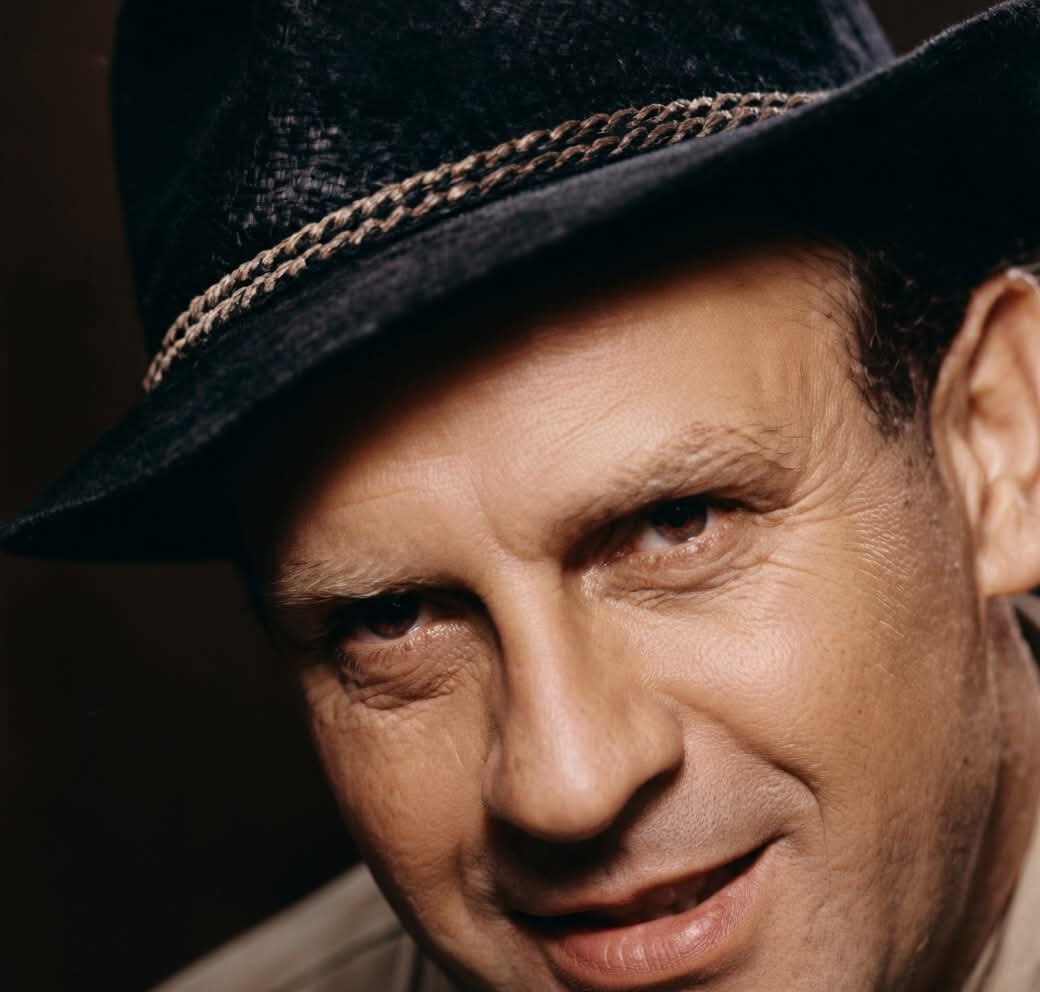
Oskar Schindler was not a good man. He was a drunk. A charmer. A spy who wore a Nazi pin because it opened doors. When Germany invaded Poland in 1939, he didn’t see a tragedy — he saw a market. He leased a bankrupt Jewish-owned factory in Kraków, filled it with Jewish workers from the ghetto, and paid their wages straight to the SS. The workers got nothing. Schindler got rich. By 1942, he was living like a king — expensive car, lavish parties, the best cognac money could buy — while the people running his machines went home to a ghetto being slowly strangled to death. He was exactly who you think he was.
Then came the liquidation of the Kraków ghetto. March 1943. SS troops moved street by street. Doors kicked in. Families dragged out. Bodies left where they fell. Schindler watched from a distance as an entire world was erased in an afternoon. Something broke open in him that day that never closed again. Oskar Schindler — the opportunist, the profiteer, the man who had built his fortune on human misery — made a decision that would cost him everything he owned. He would get them out.
The camp commandant was Amon Göth — a man who shot prisoners from his balcony for sport. Schindler became his closest friend. His drinking partner. His most trusted confidant. And then systematically deceived him for two years straight.
“This old man? Master machinist. Irreplaceable.” “The child? Unique skills. I need her.” “The woman with one arm? Critical to my production line.”
None of it was true. Every exemption cost Schindler money — bribes paid in cash, liquor, black-market diamonds. His personal fortune was slowly hemorrhaging, one saved life at a time.
When the Nazis began liquidating their own labor camps, Schindler pulled off something that bordered on madness: he convinced them to let him relocate his entire operation to Czechoslovakia — and take his workers with him. He wrote a list. Over 1,200 names. Many had never worked for him. Elderly people. Children. Every name cost him money. He paid for every single one. Then something went wrong.
Three hundred women were diverted to Auschwitz-Birkenau. The death camp. The gas chambers were still running. Schindler sent his own secretary — a German woman — directly into Auschwitz to negotiate their release. She walked through those gates and promised seven Reichsmarks per worker per day.
She walked back out with 300 living human beings. It remains the only documented case in Auschwitz’s history of a large group departing alive while the camp was fully operational.
At his new factory in Brünnlitz, Schindler ran what was essentially an elaborate act of sabotage. Shells were deliberately manufactured incorrectly. Machinery “broke down” on schedule. Inspectors were bribed. For seven months, more than 1,200 men and women lived under his roof and his protection. Not one bullet produced in that factory was ever used to kill a single Allied soldier.
May 8, 1945. Germany surrendered. The workers gathered on the factory floor. They had melted gold from one of their own teeth to cast a ring. Inside it, they had engraved a line from the Talmud: “Whoever saves one life saves the world entire.” They placed it in his hand. He wept. Then said something that silenced the room: “I could have done more. This pin — I could have sold it. Two more people. My car — ten more people. I didn’t do enough.” The people he had saved had to convince him he had done enough.
He never quite believed them.
After the war, Schindler had nothing. No factory. No fortune. Every business venture failed. The man who had once bribed SS officers with cognac was now surviving on handouts. The handouts came from his workers. The Schindlerjuden — Schindler’s Jews — sent him monthly payments for the rest of his life. They brought him to Israel. They fed him. They kept him alive. The man who had bankrupted himself saving them was kept alive by their love.
He died on October 9, 1974, in Hildesheim, Germany. Sixty-six years old. His survivors carried his body to Jerusalem. He was buried in the Catholic Cemetery on Mount Zion — the only former member of the Nazi Party ever given that honor. His gravestone reads: “The Unforgettable Rescuer of 1,200 Persecuted Jews.”
Here is what lingers about this story. Schindler wasn’t born a hero. He walked into Poland as a profiteer and spent years being exactly that. What changed him wasn’t religion, ideology, or a lifetime of noble character. It was a single act of witnessing. Of refusing to turn away. He saw what was happening. He saw that he — uniquely, specifically, with his connections and his access and his willingness to lie to monsters — could do something about it. So he did. And it cost him everything.
Today, the descendants of those 1,200 people number in the tens of thousands. They exist because one deeply flawed man, on one terrible morning, looked at what was happening around him and decided he could not live with himself if he did nothing.
You don’t have to be a good person to do a great thing. You just have to choose to see.