


Musk Challenges OpenAI Over Non-Profit Origins in US Court
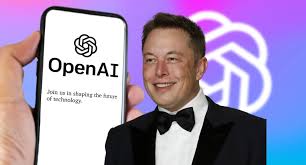
A courtroom battle set to begin Monday will test competing claims over the founding purpose of one of the world’s most influential artificial intelligence labs, as Elon Musk takes on OpenAI in a high-stakes lawsuit centred on trust, control, and the future of AI.
Court proceedings across the bay from San Francisco bring Musk into direct legal confrontation with the company he helped launch in 2015 alongside Sam Altman. At the heart of the dispute lies a central question: whether OpenAI abandoned its original non-profit mission to develop AI for the public good in favour of commercial gain.
Musk, who invested about $38 million in OpenAI before exiting, argues in court filings that he was misled about the organisation’s long-term structure. He points to internal communications, including a 2017 email in which Altman reportedly reaffirmed commitment to a non-profit model. Months later, however, OpenAI created a commercial subsidiary, citing the need for vast capital to fund computing infrastructure.
That transition coincided with major financial backing from Microsoft, whose multi-billion-dollar investment has helped propel OpenAI’s valuation to about $852 billion. The company is also preparing for a potential public listing, further underscoring its shift towards commercial operations.
The trial, expected to run through May, will be decided by a jury tasked with determining whether OpenAI breached any binding commitments to Musk or simply adapted to the economic realities of AI development. Presiding judge Yvonne Gonzalez Rogers has indicated that any damages or remedies will be determined separately if liability is established.
Musk is seeking up to $134 billion in damages and is asking the court to compel OpenAI to return to a fully non-profit structure. He also wants the removal of Altman and OpenAI president Greg Brockman, along with a severing of ties between OpenAI and Microsoft. During pre-trial hearings, the judge raised concerns about how Musk’s legal team calculated the scale of damages, describing the figures as potentially speculative.
OpenAI has rejected the claims, characterising the lawsuit as a competitive tactic. In a public statement posted on X, the company alleged that Musk’s actions are driven by “ego, jealousy and a desire to slow down a competitor,” particularly following the launch of his own AI venture, xAI, and its Grok chatbot.
Internal documents disclosed in the case also reveal earlier tensions within OpenAI, including concerns raised by Brockman in 2017 about the implications of shifting away from a non-profit identity. These tensions resurfaced during the brief removal of Altman as chief executive in 2023.
The outcome of the case could shape governance models across the AI sector, where questions of ethics, funding, and public accountability remain unresolved as competition intensifies.