
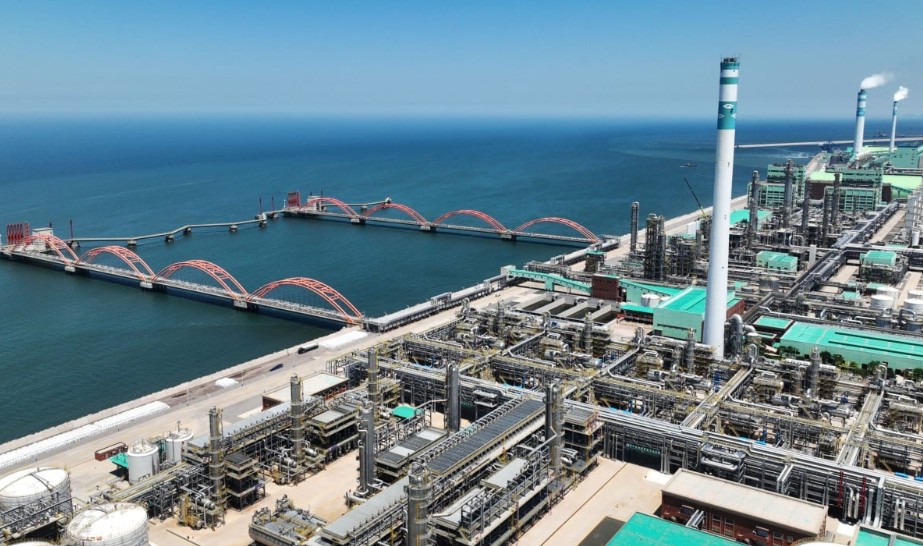
The United States Treasury has sanctioned Hengli Petrochemical, China’s second-largest independent “teapot” refinery, for its role in financing the Iranian military. Officials allege the refinery acted as a primary purchaser of Iranian crude, funneling hundreds of millions of dollars to Tehran. This move intensifies Washington’s broader campaign to dismantle Iran’s “shadow fleet” and starve the regime of oil export revenue. The Treasury also targeted roughly 40 shipping entities linked to this illicit trade.
This sanction signals a sharp escalation in the Trump administration’s economic pressure campaign. By targeting a major player like Hengli, Washington aims to raise the cost of doing business for Chinese firms that rely on discounted Iranian and Russian energy. The US Navy’s ongoing blockade of Iranian ports further tightens the vice, forcing refineries to navigate a market strained by high prices and severe political risk. Beijing has predictably rejected the measures, accusing the US of weaponizing trade and overstepping through extraterritorial sanctions.
“Teapot” refineries, small, private entities often found in Shandong province, have long served as a vital, if opaque, backstop for China’s energy security. They absorb the bulk of sanctioned oil that state-owned giants avoid to remain shielded from global fallout. These firms now face a dual threat: the direct risk of US financial blacklisting and the market reality of extreme replacement costs in a conflict-driven energy environment. As the US Treasury vows to aggressively pursue intermediaries, the space for these independent operators to manoeuvre is shrinking.
The timing is far from coincidental. With potential talks looming regarding the US-Israeli war on Iran, Washington is clearly using the sanctions to tilt the leverage in its favour. For the Chinese companies involved, the calculation is increasingly difficult. They must now choose between the lure of cheap, non-dollar-denominated Iranian barrels and the threat of being severed from the global financial system. This confrontation highlights the deepening rift between US sanctions enforcement and the energy demands of the world’s second-largest economy.