

Court Clears Jonathan For 2027, Throws Out Eligibility Challenge
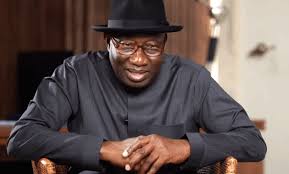
The Federal High Court sitting in Abuja has ruled that former President Goodluck Jonathan is constitutionally eligible to contest the 2027 presidential election, dismissing a legal challenge that sought to bar him from seeking a return to the nation’s highest office.
In a judgment delivered by Justice Peter Lifu, the court held that no legal impediment exists preventing Jonathan from running again. The judge further noted that the question of Jonathan’s eligibility had already been settled by the Court of Appeal in earlier proceedings, leaving no fresh grounds for litigation on the matter.
Justice Lifu dismissed the suit, marked FHC/ABJ/CS/2102/2025, as “frivolous and an abuse of court process,” ruling that the plaintiff, an Abuja based legal practitioner, Mr Jideobi Johnmary, lacked the locus standi, or legal right, to institute the action.
The lawyer had approached the court arguing that Jonathan was constitutionally ineligible to seek a return to power on the grounds that he had previously been sworn in as president on two separate occasions. Jonathan first took the oath of office in 2010 upon the death of former President Umaru Musa Yar’Adua, completing the latter’s unexpired term, before winning a full four year mandate in the 2011 general election.
The plaintiff posed a single question for judicial determination:
“Whether in view of the combined provisions of the entirety of Sections 1(1), (2) & (3) and 137(3) of the 1999 Constitution of the Federal Republic of Nigeria as amended and their conflated interpretation, is the 1st Defendant eligible, under any circumstances [whatsoever], to contest for the office of the President of the Federal Republic of Nigeria?”
Among the reliefs sought was “an order of perpetual injunction of this Honourable Court restraining the first Defendant from presenting himself to any political party in Nigeria for nomination as its candidate for the general election into the office of the President of the Federal Republic of Nigeria, holding in 2027 and years to come.”
The plaintiff also asked the court to restrain the Independent National Electoral Commission from accepting or publishing Jonathan’s name as a presidential candidate, and to direct the Attorney General of the Federation to enforce compliance with the orders sought.
In an affidavit deposed by one Emmanuel Agida in support of the suit, the plaintiff argued that a victory by Jonathan in 2027 would translate to a tenure spanning 2027 to 2031, pushing his cumulative time in office beyond the constitutional eight year ceiling for a Nigerian president.
“The plaintiff believes that the 1st defendant, having completed the unexpired term of late President Yar’Adua and subsequently served a full term after the 2011 election, has exhausted the constitutional limit of two tenures as president,” the affidavit stated.
It added that if Jonathan were elected and sworn in again in 2027, “it will mark the 3rd time the 1st defendant will be taking the oath of office as the President of the Federal Republic of Nigeria.”
The court’s ruling effectively clears the legal path for Jonathan, who served as Nigeria’s 14th president between 2010 and 2015 under the Peoples Democratic Party, to mount a fresh presidential bid should he choose to do so. Speculation around a possible Jonathan comeback has intensified in recent months, particularly amid fluid alignments within the opposition ahead of 2027.
Section 137(3) of the 1999 Constitution, as amended, remains central to the eligibility debate. The provision, introduced through a constitutional amendment, was intended to address scenarios in which a vice president assumes the presidency mid term, and its precise application to Jonathan’s circumstances has been the subject of competing legal interpretations since 2022.