
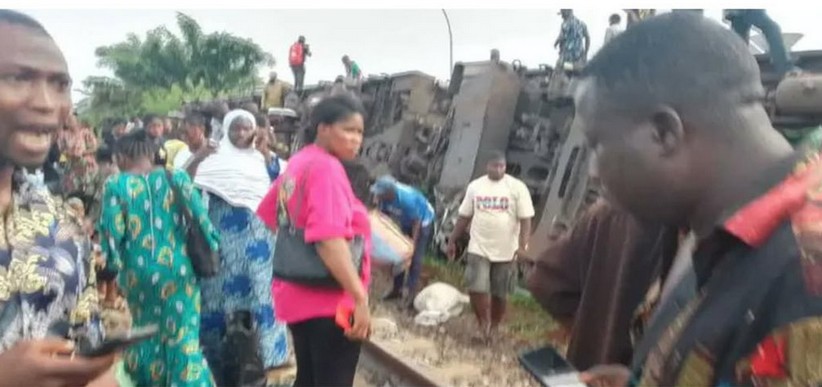
A serious passenger train derailment along the Warri–Itakpe rail corridor has left three people dead and multiple coaches destroyed in Delta State. The fatal accident occurred on Monday near the Agbor axis as the train traveled from Ujevwu station toward its northern terminus. Four commercial coaches left the tracks during transit, causing chaos as hundreds of commuters scrambled to escape the wreckage. The Nigerian Railway Corporation immediately activated emergency procedures to secure the perimeter and account for surviving passengers. National tracking teams confirmed that all remaining travelers on board have now been successfully rescued from the site.
The federal emergency response infrastructure deployed rapidly to the accident zone to manage the immediate aftermath of the crash. The National Emergency Management Agency sent its specialized tactical response team to collaborate directly with railway engineers and regional security forces. Emergency workers focused on providing urgent first aid, clearing debris, and securing passenger luggage scattered along the rail corridor. Dr. Kayode Opeifa, the Managing Director of the railway corporation, stated that technical teams are monitoring developments closely to provide comprehensive updates. The presidency issued a formal statement expressing deep condolences to the families of the three confirmed victims.
The fatal accident follows a controversial period of brief operational adjustments and engineering interventions on the same rail route. The railway corporation had only recently suspended operations on the Warri–Itakpe line to execute critical safety assessments. Technical advisors previously insisted that a temporary closure was necessary to review track reliability and improve overall service delivery along the corridor. This latest disaster raises serious questions regarding the quality of those engineering reviews and the effectiveness of state maintenance programs. For regular commuters, the immediate breakdown of safety protocols thoroughly undermines confidence in the national rail network.
This deadly derailment highlights a persistent structural vulnerability regarding the security and integrity of remote rail lines. Federal investigators have previously blamed recurring accidents along the corridor on organized local syndicates who systematically vandalize vital steel components. Criminal networks frequently strip away critical fishplates, fastening bolts, and track clips to sell as scrap metal in urban markets. These deliberate structural removals create lethal alignment gaps that easily cause heavy passenger coaches to derail during high-speed transit. The vast, unpoliced nature of the tracks through dense agrarian bush makes continuous manual surveillance almost impossible for state authorities.
The persistent failure of national rail infrastructure has drawn intense scrutiny from federal lawmakers and transportation sector analysts. The Senate previously established a special ad-hoc committee to conduct a forensic investigation into recurring train derailments nationwide. Parliamentary investigators are currently reviewing the quality of imported track materials, maintenance budgets, and the procurement of steel components used by the state. Legislative leaders argue that the repeated loss of citizen lives demands strict institutional accountability from the transportation ministry. The ongoing parliamentary probe aims to expose whether systemic corruption or simple administrative negligence is fueling these recurring transport disasters.
The state-backed railway corporation must now brace for an extended period of operational disruptions and financial losses. Engineers must completely repair the damaged Agbor track section and recover the derailed coaches before normal commercial schedules can resume. The suspension of services will immediately paralyze local trading networks that rely heavily on the train to move goods between Delta and Kogi states. For an administration trying to promote mass transit as a cheaper alternative to expensive road travel, the disaster represents a significant setback. The immediate task remains uncovering the exact technical cause of the crash and preventing the next derailment.