
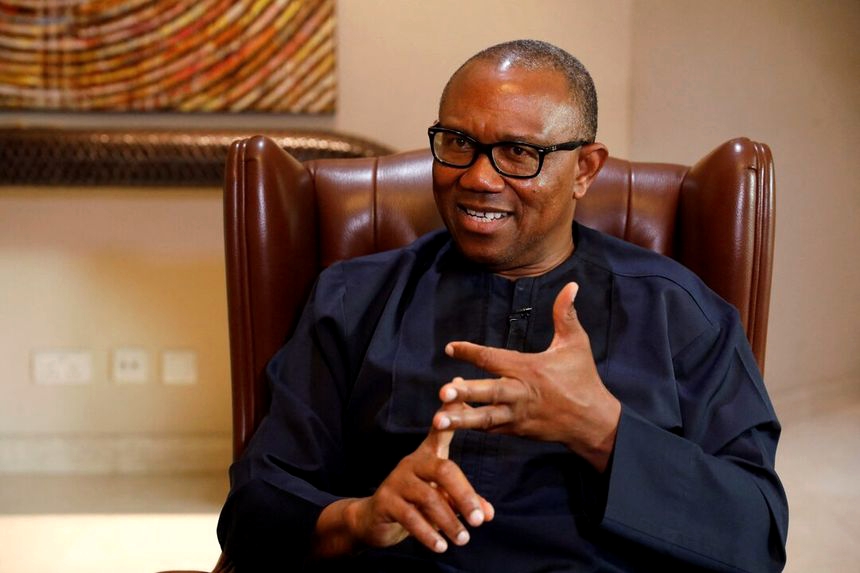
The 2027 presidential candidate of the Nigeria Democratic Congress, Peter Obi, has challenged the federal government to provide an explicit accounting of its massive debt pile. Obi raised the alarm on Tuesday over the national debt profile, which he claimed has soared to approximately 200 trillion naira under the current administration. The opposition leader argued that the state has added more than 100 trillion naira to the nation’s debt burden in just three years. This blistering rate of accumulation represents a stark contrast to the 49 trillion naira recorded during the previous eight-year tenure. The presidency has dismissed the assertions as an inaccurate interpretation of macroeconomic facts.
The core of the political dispute extends far beyond the absolute volume of borrowing to a profound deficit in public accountability. Obi stated that millions of citizens are currently grappling with the economic shock of this unsustainable debt surge. Data from the Budget Office reveals that the government borrowed 11.89 trillion naira during the first three quarters of 2025. This aggressive fiscal maneuvering exceeded the planned congressional borrowing target of 10.34 trillion naira by roughly 1.54 trillion naira. Under a responsible administration, such an unauthorized overshoot should automatically trigger deep institutional scrutiny and detailed public explanations.
The structural distribution of the borrowed cash further fuels accusations of reckless state spending on consumption. Only 3.10 trillion naira of the newly acquired funds were directed toward capital expenditure during that nine-month window. This thin allocation constitutes a mere 17.66 per cent of the 17.58 trillion naira originally earmarked for critical public infrastructure. The opposition wants the treasury to reveal how it deployed the remaining 82.34 per cent of the capital budget. Obi openly questioned whether administrators spent the massive balance on recurrent overheads, elite entertainment at Aso Rock, or political campaigns.
The presidency hit back immediately, describing the 200-trillion-naira calculation as a highly misleading and ridiculous claim. Special Assistant to the President on Social Media, Dada Olusegun, stated that the rising debt portfolio is a mathematical side effect of currency devaluation. Olusegun noted that Nigeria’s foreign obligations have remained relatively stable in absolute dollar terms, hovering around 109 billion dollars. When the central bank unified the foreign exchange market, the local currency value of those same liabilities automatically multiplied on the national balance sheet. The executive maintains that changing the accounting unit does not mean the state took fresh loans.
The administration also pointed out that a significant portion of the current debt liability predated its arrival in power. The Tinubu presidency inherited roughly 20 trillion naira in loose Ways and Means advances from the central bank. The current economic team subsequently securitized those toxic short-term overdrafts into formal bonds to ensure a structured repayment schedule. Government officials urged opposition figures to look at positive financial indicators instead of focusing exclusively on negative metrics. The presidency emphasized that net external reserves have expanded from a low of 3 billion dollars in 2023 to nearly 40 billion dollars.
The intensifying fiscal debate comes as working-class families face severe inflationary pressures triggered by recent economic overhauls. While the International Monetary Fund has praised the removal of fuel subsidies, it warned that structural poverty remains dangerously high. The ultimate success of the ongoing reforms rests on translating macroeconomic stability into lower food prices for ordinary citizens. For now, the political battle lines are clearly drawn ahead of the next national electoral cycle. The public accounts committee will continue to face intense pressure to verify how the treasury deploys every borrowed kobo.