
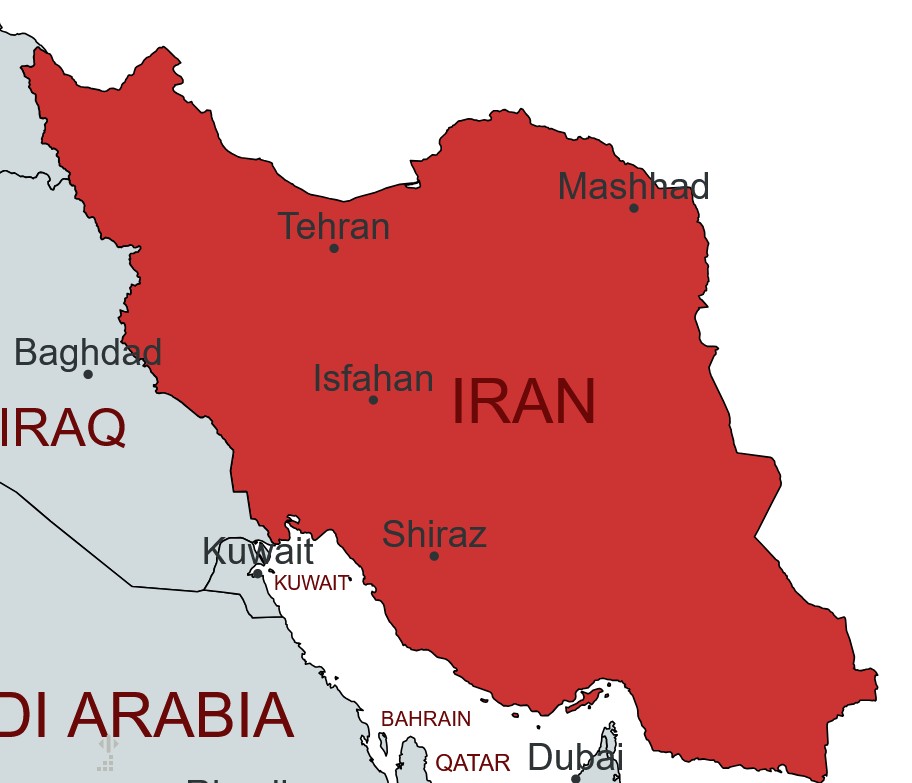
The Islamic Revolutionary Guard Corps has shut down the strategic Strait of Hormuz and launched a massive missile barrage at American military bases across the Middle East. The dramatic escalation marks day 104 of the regional conflict, effectively destroying the fragile April 8 ceasefire framework. Iranian state media confirmed that the highest operational command issued a universal shoot-on-sight order to block all maritime traffic through the vital energy corridor. This total blockade triggered an immediate 27 per cent spike in global Brent crude prices, which jumped rapidly to 91.72 dollars per barrel.
The intense outbreak of direct warfare followed a series of heavy American precision-guided airstrikes inside southern territory on Wednesday night. US Defense Secretary Pete Hegseth confirmed that Central Command targeted key logistics hubs and military assets in Bandar Abbas, Qeshm Island, and Sirik. While the Pentagon defended the midnight raids as limited acts of self-defence, local media reported severe damage to critical civilian water infrastructure. President Donald Trump quickly warned that Tehran would pay a heavy price for dragging out diplomatic negotiations. Washington explicitly aimed to use the heavy bombardment to force the Iranian regime back to the negotiating table.
Tehran replied to the American strikes by launching waves of ballistic missiles and armed drones against multiple regional installations. The Revolutionary Guard claimed direct hits on 21 separate targets, focusing heavily on installations hosting Western personnel in Kuwait, Bahrain, and Jordan. Long-range projectiles targeted the strategic Muwaffaq Salti Air Base in Jordan, forcing the United States State Department to issue emergency shelter-in-place alerts. Kuwaiti authorities temporarily closed the national airspace and diverted all commercial flights to protect civilian aviation from the incoming fire. Explosions also rocked Bahrain’s capital city near the forward headquarters of the American Fifth Fleet.
Regional defense systems were activated across the Gulf to intercept the multi-pronged Iranian morning assault. The Jordanian Armed Forces confirmed that their air defense units successfully shot down five incoming projectiles near Al-Azraq. Preliminary Pentagon assessments indicate that allied defensive hardware successfully neutralized the vast majority of the hostile drones and missiles. American military officials report that no personnel suffered significant injuries during the initial wave of the counter-strike. However, the sheer scale of the bombardment proves that Tehran has abandoned its previous policy of tactical restraint.
The collapse of the Pakistani-brokered diplomatic framework leaves the broader Middle East facing an indefinite period of intense kinetic warfare. Trump told reporters that the previous truce had become the most violated ceasefire in modern international history. The White House had sought to exchange maritime sanction relief for verifiable constraints on Iran’s nuclear and domestic drone production lines. This latest round of direct bombing effectively leaves those delicate diplomatic communications in absolute tatters. Strategic analysts warn that the current conflict lacks an active neutral channel capable of brokering a fresh de-escalation.
The immediate fallout of the Hormuz blockade presents a catastrophic economic threat to neighboring Gulf economies. Energy giants like Saudi Arabia face the immediate disruption of roughly 2.5 million barrels per day of maritime export capacity. The sudden drop in shipping traffic has already triggered severe supply chain anxiety across international shipping and aviation networks. For an American administration facing domestic pressure over rising inflation, a prolonged naval war represents a major political liability. The coming hours will test whether Western naval forces can break the Iranian blockade without provoking a broader continental conflagration.